

Key Takeaways
- Self-regulation activities for kids work best when they teach a child to pause, plan, and recover, not only to calm down in the moment.
- Self-regulation is an executive function skill that involves noticing an internal state, holding a simple plan in mind, and choosing a better response before feelings take over.
- There is no fixed age when self-regulation appears. Children ages 3 to 4 are just beginning to notice body signals, and children ages 5 to 7 increasingly plan, choose, and recover on their own.
- Calming tools like deep breathing often fail during real meltdowns because a dysregulated brain cannot learn a new skill in that moment. Practice has to happen while a child is calm.
- A child who resists a calm-down corner or ignores a strategy has not failed at self-regulation. The skill is still forming and needs repeated practice during low-stress moments.
- Planning and self-control, the capability behind pausing before reacting, is one of the ten capabilities the Pre-Seven Learning Method is built around, alongside working memory and comfort with uncertainty.
The child who falls apart over a broken cracker. The child who hits before thinking. The child who cannot leave the playground without a scene. Most parents searching for self-regulation activities for kids have already tried the obvious things: counting to ten, a calm-down corner, a sticker chart. Some of it works for a day. Then it stops working, usually right when it matters most.
Self-regulation activities for kids work best when they teach a child to pause, plan, and recover, not merely calm down. Calming is one small piece. Regulation is the fuller skill: noticing what is happening in the body, holding a simple plan in mind, and choosing one action instead of reacting on impulse. That skill is built slowly, in ordinary moments, long before it is needed in a real meltdown.
What Self-Regulation Really Means Before Age Seven
Self-regulation before age seven is not obedience and it is not quietness. It is a young child learning to notice an internal state, hold a simple plan, and choose one better action before a feeling takes over completely.
This distinction matters because a lot of advice treats regulation as a behavior to enforce. Sit still. Stop crying. Use your words. But a three-year-old who screams when a tower falls is not being defiant. Their brain has not yet built the pathway between noticing frustration and choosing a different response. That pathway is built through practice, the same way a muscle is built through repetition, not through a single lecture about calming down.
Many families notice their child can follow a rule one day and completely lose it the next. That is normal. Self-regulation is not a switch a child flips on around a certain birthday. It develops unevenly, in fits and starts, often faster at school than at home, because school routines are more predictable and home is where a child feels safest to fall apart.
Calming Down vs. Learning Self-Regulation
Calming down is what happens after a feeling has already taken over. Self-regulation is the fuller skill of noticing the feeling early enough to choose a response before it takes over.
A breathing exercise can help a child recover once they are already flooded with frustration. It does not teach them to notice the frustration building in the first place, or to hold a plan for what to do next. That is why so many parents report the same frustrating pattern: a strategy that works beautifully during a calm practice session at the kitchen table completely disappears the moment a real meltdown starts.
This is not a failure of the strategy or the child. It reflects how the brain works under stress. During a genuine meltdown, the parts of the brain responsible for reasoning and planning are much less available (Harvard Center on the Developing Child). Teaching a brand-new skill in that moment is a bit like trying to teach someone to swim while they are already underwater. The strategy has to be practiced and half-automatic before the meltdown starts, not introduced during it.
The Skills Behind Self-Regulation
Self-regulation is not one single skill. It is built from several capabilities working together: noticing a feeling, holding a plan in mind, resisting the urge to react immediately, and recovering afterward. Research also suggests that self-regulation relies on executive functions such as working memory, inhibitory control, and cognitive flexibility, which develop gradually during early childhood (Diamond, 2011).
Trouble with self-regulation usually points to a few capabilities still forming: planning and self-control, working memory, and comfort with uncertainty. These are three of the ten capabilities the Pre-Seven Learning Method is built around. A child who forgets the plan they made two minutes ago (working memory), or who cannot tolerate not knowing what happens next (comfort with uncertainty), will struggle to pause and choose, even if they deeply want to.
The child who looks at a puzzle, scans for the corner pieces, and only then begins is practicing the same underlying muscle a child uses when they notice frustration rising and pause before reacting. Both moments ask a child to think a step ahead before starting, rather than diving straight in and hoping it works out. That is the heart of planning and self-control: not stillness, but a small pause with a plan behind it.
What Is The Pre-Seven Learning Method?
The Pre-Seven Learning Method is a four-stage, screen-free approach for children ages 3 to 7 that builds ten cognitive capabilities underneath learning and academics through small, calibrated thinking missions during the formative years before age seven. For a broader age-by-age view, see Self-Regulation Activities for Preschoolers.
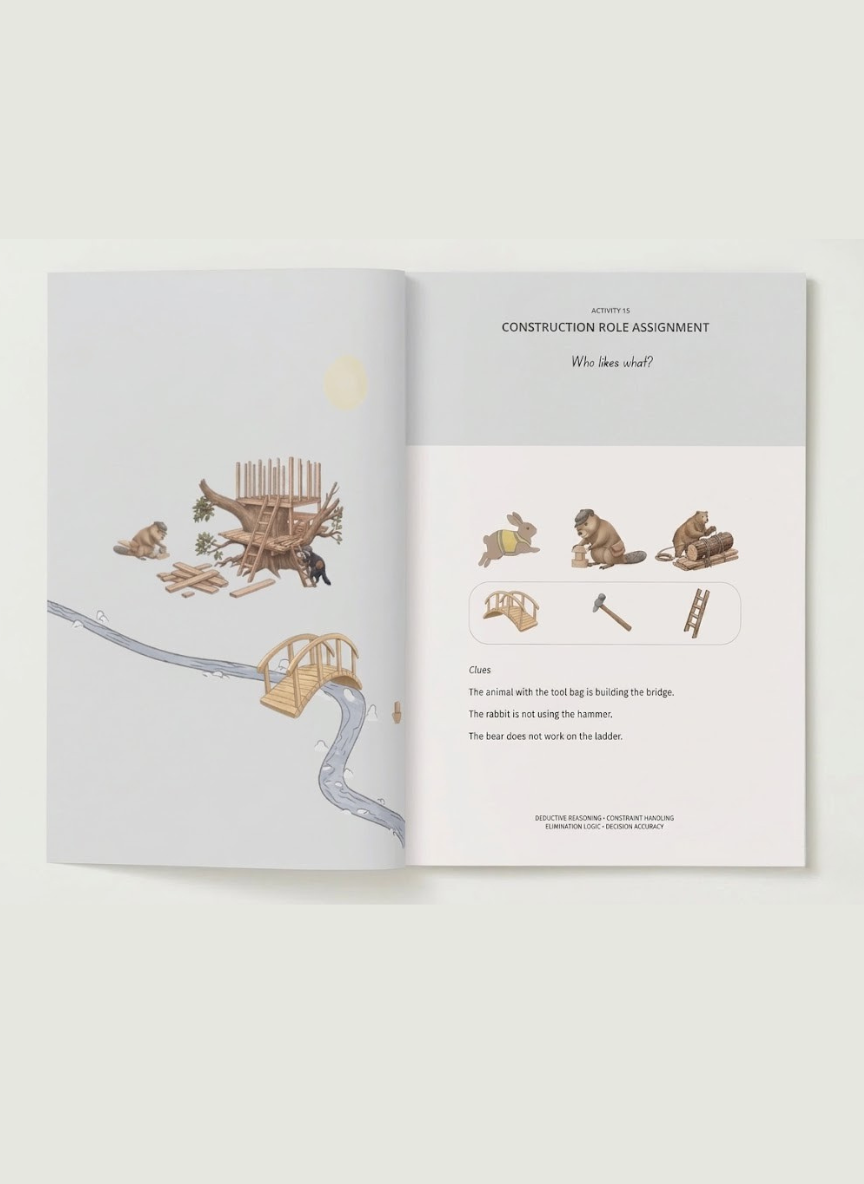
Planning and self-control sits at the center of this article, and it is one of the ten capabilities the method is built around. Inside the method, planning and self-control is practiced through small missions where a child pauses, considers an option, and chooses before acting, the same sequence self-regulation asks for in daily life. Working memory and comfort with uncertainty, two of the secondary capabilities involved in regulation, are practiced alongside it.
Best Self-Regulation Activities for Ages 3-4
At this age, children are just beginning to notice body signals. The goal is not control yet. It is awareness.
- Stop-go games. Red light, green light or freeze dance ask a child to notice a signal and pause a body already in motion. This is one of the simplest ways to practice inhibition before it is needed for anything harder.
- Naming body signals. Ask, does your tummy feel tight, or are your hands squeezy. Three and four year olds often cannot name feelings, but they can point to a body part.
- Simple two-choice practice. Would you like the red cup or the blue cup. Practicing small, low-stakes choices builds the habit of pausing before acting, without asking for more control than a young child has yet.
- Slow breathing paired with a physical prop. Blowing on a pinwheel or blowing bubbles gives breathing a job to do, which makes it more concrete for a three or four year old than breathing alone.
Best Self-Regulation Activities for Ages 4-5
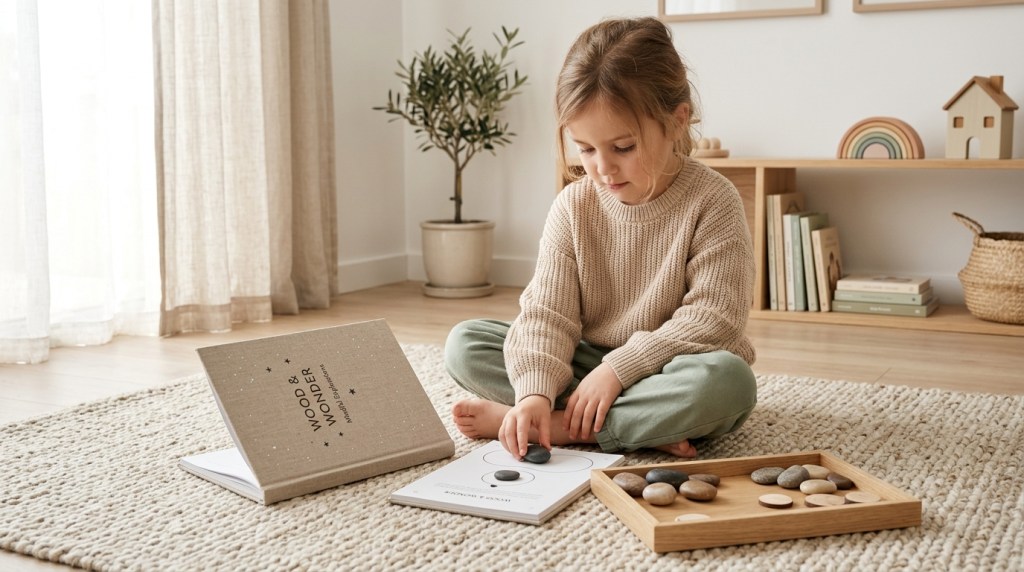
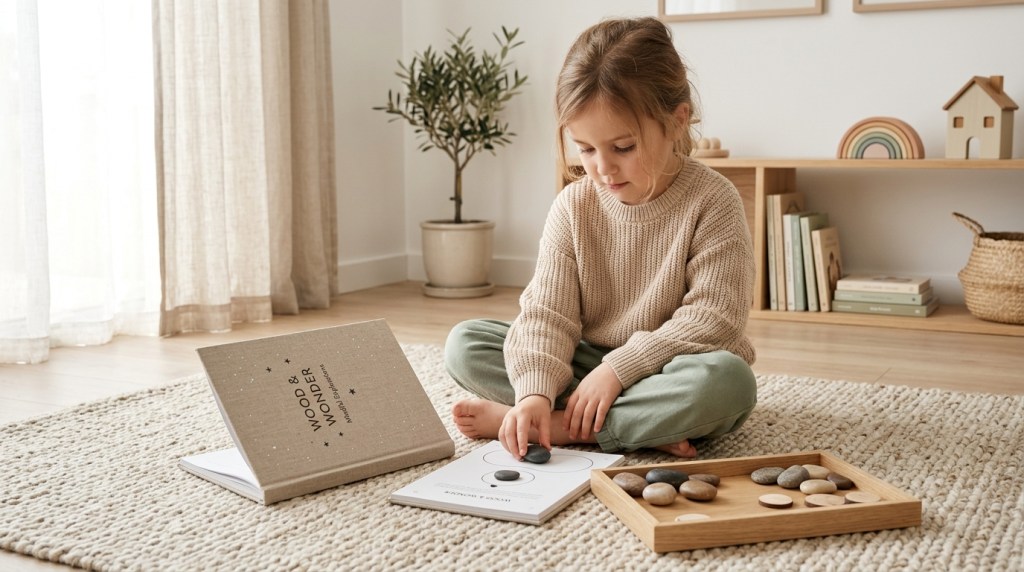
Four and five year olds can start connecting a feeling word to a body signal, and can hold a very short plan in mind.
- Emotion sorting games. Sorting faces or pictures into feeling categories (happy, frustrated, worried) builds the vocabulary a child needs before they can pause and name what is happening inside.
- Two-step transition plans. First we clean up, then we get a snack. Saying the plan out loud before a transition gives a child something to hold onto instead of reacting to the change itself.
- A visual choice board for calming strategies. Three simple pictures (squeeze a pillow, take five breaths, get a hug) that a child chooses from themselves builds ownership, rather than a strategy handed down from an adult in the moment.
- Practising the pause during play, not during upset. Play a game where you call out stop and the child has to freeze and think before continuing. This rehearses the pause when nothing is actually at stake.
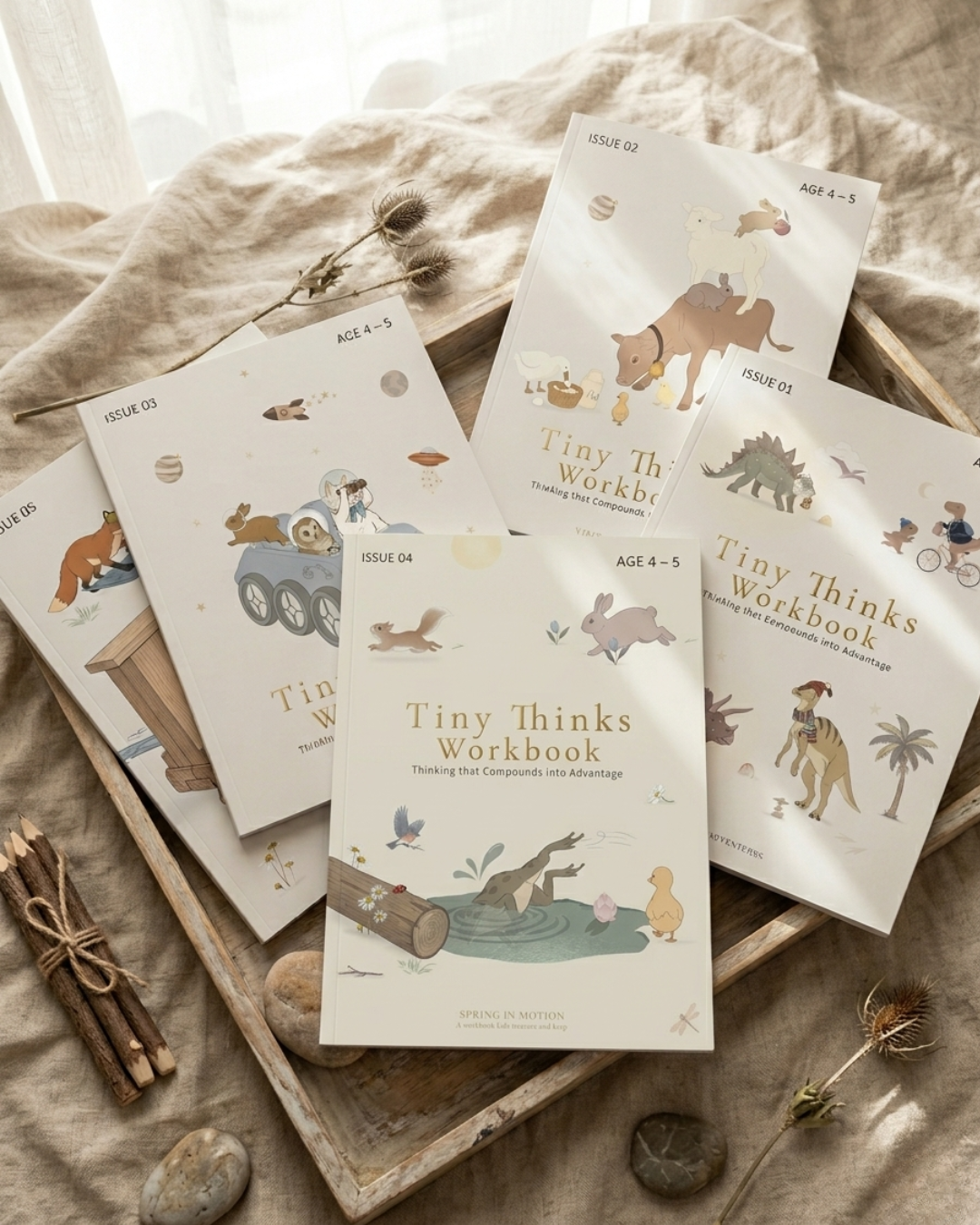
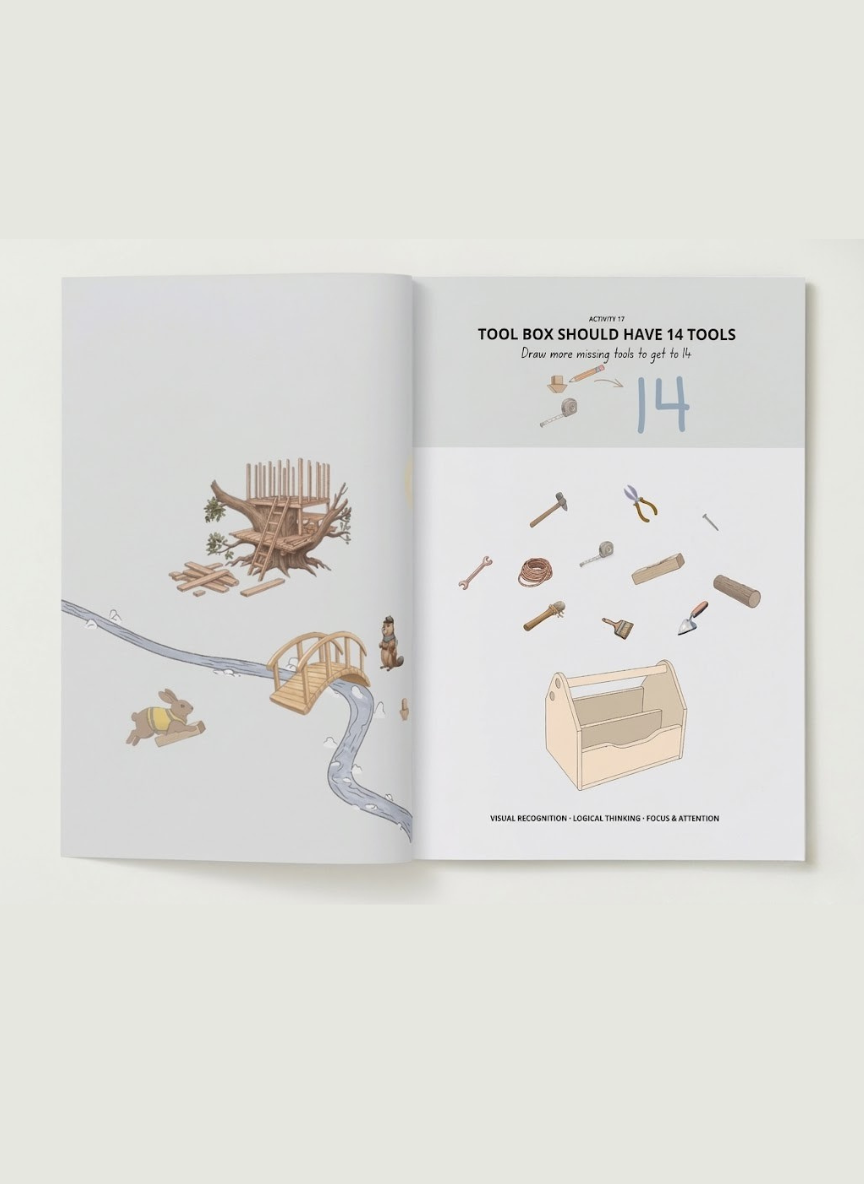
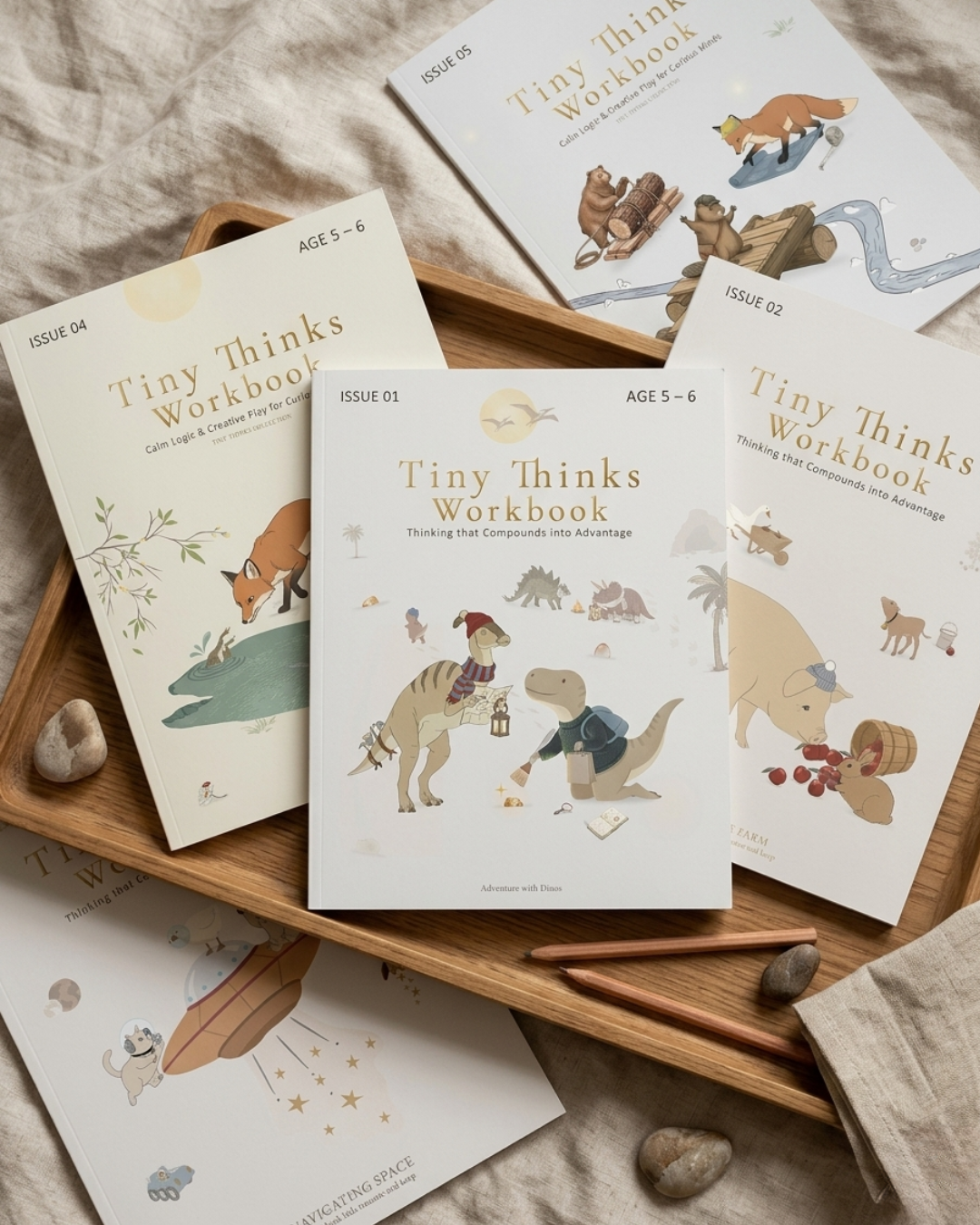
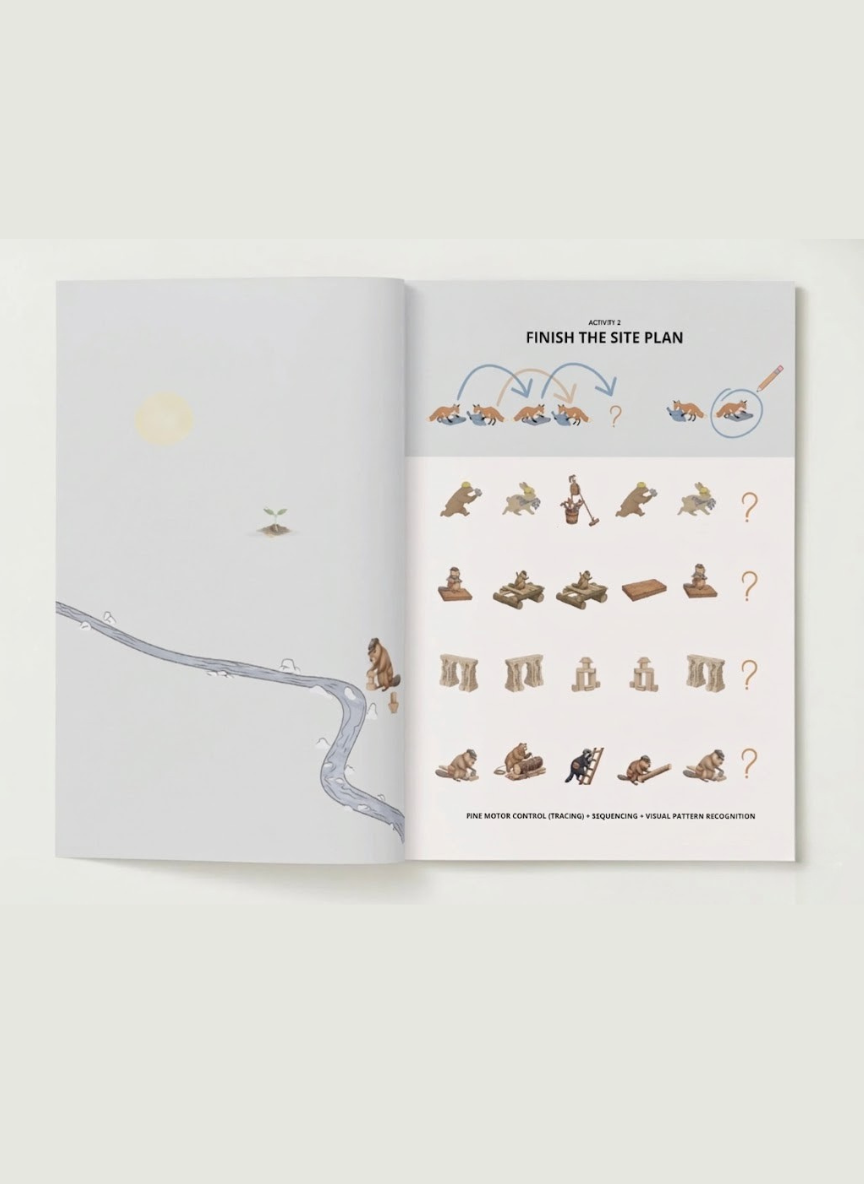
This is the kind of small, repeated practice Tiny Thinks places inside screen-free thinking tasks: a child pauses, chooses, and tries again before the moment becomes emotionally loaded.
Best Self-Regulation Activities for Ages 5-6
Five and six year olds can start choosing between strategies rather than relying on just one, and can begin recovering from frustration without full adult rescue.
- A strategy menu instead of one calming tool. Offer three or four options (walk away, squeeze hands, count backward, ask for help) so a child practices choosing, not just complying with a single prescribed technique.
- Frustration-tolerance games with a built-in obstacle. Puzzles with a missing piece, or building towers that wobble, give a child low-stakes practice at staying with something hard instead of quitting or melting down.
- Mistake-recovery routines. After a mistake in a game, practice saying, that did not work, let me try again, out loud together. This builds the habit of recovering rather than shutting down.
- Planning ahead of a known trigger. Before a transition that usually causes trouble, ask the child what they will do if they feel frustrated. Naming the plan in advance is far more effective than introducing it mid-meltdown.
Best Self-Regulation Activities for Ages 6-7
Six and seven year olds can increasingly reflect on what happened after the fact, and can start using strategies independently, without a prompt in the moment.
- After-the-fact reflection, briefly and without blame. What happened, what did you try, what might work better next time. Kept short and calm, this builds the habit of reviewing without shame.
- Multi-step routines with increasing independence. A written or drawn checklist for a morning or bedtime routine lets a child hold the plan themselves, rather than depending on a parent to hold it for them.
- Delay and plan games. Games that require waiting for a turn, or planning several moves ahead (simple strategy games and some board games) build the same muscle used in resisting an impulsive reaction.
- Naming feelings in more specific words. Moving beyond mad and sad toward words like frustrated, disappointed, or embarrassed gives a six or seven year old more precise tools for noticing what is happening before it overwhelms them.
Why Strategies Fail During Meltdowns
Strategies fail during meltdowns because they were never practiced when the child was calm. A brand-new skill introduced in the middle of a flooded, overwhelmed state is very hard for any brain, young or old, to use.
This is the piece most calm-down corners and sticker charts miss. A calm-down corner that a child has never visited except when in trouble starts to feel like punishment, not a tool. A strategy a child has never rehearsed while calm will not appear reliably during a real meltdown, no matter how many times it is explained afterward.
The fix is not a better strategy. It is timing. Practice the pause, the breathing, the choosing, during ordinary calm moments: during play, during a car ride, during a made-up game at dinner. That repetition, done many times when nothing is at stake, is what makes a strategy available later when something actually is.
How to Make Self-Regulation Part of Daily Routines
Self-regulation becomes part of daily life through small, repeated moments woven into routines a family already has, not through a separate lesson or worksheet.
- Narrate your own pausing out loud. I am feeling frustrated the printer jammed again, let me take a breath before I try again. Children copy what they see far more than what they are told.
- Build in a two-minute practice window during a calm part of the day, like after breakfast, rather than waiting for an upset to teach the skill.
- Use the same small phrase every time a transition is coming, so the child has advance warning and time to plan, rather than being surprised by a change.
- Praise the pause itself, not just the outcome. You stopped and thought about it, that is worth noticing, whether or not the final choice was perfect.
Tiny Thinks treats these moments as practice opportunities, not performance tests, so self-control can be rehearsed in short, manageable ways.
When to Seek Extra Support
Most children have big feelings and big reactions at some point between ages 3 and 7, and this alone is not a sign that something is wrong. If meltdowns are frequent, intense, involve harm to the child or others, or are not gradually easing with practice and time, it is reasonable to talk with a pediatrician. They can help rule out or address things like sensory processing differences, anxiety, or other developmental factors that sometimes make self-regulation harder to build. This is a normal, sensible step, not a sign of failure as a parent.
At What Age Do Children Develop Self-Regulation?
There is no single age when self-regulation appears. Children ages 3 to 4 are typically just beginning to notice body signals connected to feelings. Children ages 5 to 7 increasingly plan, choose a strategy, and recover from upset with less adult help, though this varies widely between children.
If you want a simple next step at home, Tiny Thinks workbooks give children short, screen-free chances to practise pausing, planning, working memory, and trying again through The Pre-Seven Learning Method. You can start with the Free Calm Pack for a gentle regulation routine, or explore the Tiny Thinks workbooks for regular thinking practice across ages 3 to 7.
Frequently Asked Questions
What are self-regulation activities for kids?
Self-regulation activities for kids are simple, repeated practices that help a child notice a feeling, pause before reacting, and choose a calmer response, such as stop-go games, emotion sorting, and transition planning.
How do I teach my child self-regulation?
Teach self-regulation by practicing pausing and choosing during calm moments, not during meltdowns, using games, naming body signals, and short reflection after mistakes. Everyday practice like this is what the Pre-Seven Learning Method focuses on in the years before seven.
What are examples of self-regulation skills?
Examples include pausing before reacting, following a multi-step routine, recovering after a mistake, managing a transition independently, and naming a feeling in specific words.
How can I help my child calm down?
Help a child calm down by offering a small, familiar strategy they already practiced while calm, such as slow breathing with a pinwheel or squeezing a pillow, rather than introducing a new tool mid-meltdown.
Is my child behind if they cannot calm themselves?
No. Self-regulation develops unevenly between ages 3 and 7, and many children who struggle to calm down at age 4 or 5 are still building the underlying skills, not falling behind a fixed timeline.
What actually works besides deep breathing?
Stop-go games, choosing between a small menu of strategies, naming body signals, and practicing a plan before a known trigger often work better than breathing alone, especially if practiced while calm.
Why does my child regulate at school but not home?
Many children hold their feelings together during structured school routines and release them at home, where they feel safest to fall apart. This is common and does not mean home strategies are failing.
What are self-regulation strategies for toddlers?
For toddlers, focus on noticing body signals, simple two-choice practice, and stop-go games rather than expecting them to calm down independently, since awareness comes before control at this age.