


Key Takeaways
- Focus worksheets for kids build attention only when they are short, self-checking, and slightly harder than what a child can already do without help.
- There is no research-backed number for how many minutes a child should focus at a given age, despite the popular rule of one minute per year of age.
- A child who quits a worksheet quickly is often showing normal attention stamina for their age, not a lasting problem.
- Attention grows through repeated small completions, not through longer sitting time or harder content.
- Rushing through a worksheet and making careless mistakes often points to weak error detection alongside attention, not carelessness or laziness.
- Sustained attention and persistence are two of the ten capabilities the Pre-Seven Learning Method is built around, and they grow through small, calibrated thinking missions rather than pressure or repetition alone.
The child who abandons a worksheet after three questions. The child who needs the same instruction repeated four times in one sitting. The child who can lose themselves in a puzzle for twenty minutes but cannot sit through two minutes of a workbook page. Many parents searching for focus worksheets are not actually looking for more paper. They are looking for an explanation, and a way forward.
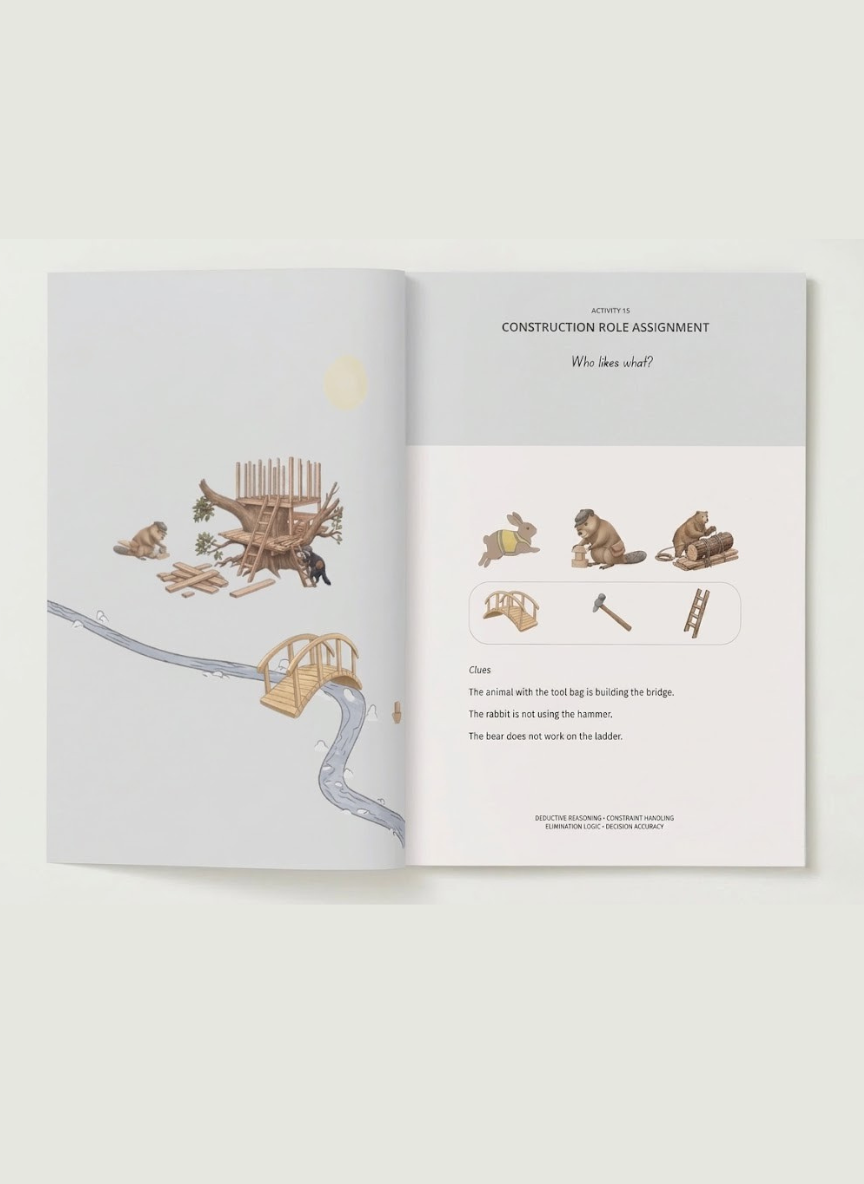
Focus worksheets for kids work best when they are short, build in small steps, and let a child check their own progress, not when they are longer or harder. Before age seven, attention grows through repeated, low-pressure completion of tasks that are slightly harder than what a child can already do alone. A worksheet that is too long or too far above a child’s current stamina usually teaches avoidance, not focus.
What Parents Mean by Focus Worksheets
When parents search for focus worksheets, they usually mean one of two things: printable pages meant to hold a child’s attention, or activities meant to build the child’s ability to concentrate over time. These are not the same thing.
A maze, a word search, or a coloring page can occupy a child for a few minutes. That is entertainment value. A worksheet that asks a child to notice a pattern, hold an instruction in mind, and check their own answer before moving on is doing something different. It is asking the child to practise staying mentally present through a short sequence of demands. That second kind is what actually builds attention stamina over time.
Most search results blur these two together. A worksheet is not automatically useful just because a child finishes it quietly. The real question is whether the task asked the child to sustain focus a little longer than they could comfortably manage before, and whether the child got to finish it under their own steam.
Do Worksheets Actually Improve Focus?
Worksheets can support attention practice, but only specific kinds, used in a specific way. A worksheet that a child can complete without any effort teaches nothing new. A worksheet that is far too long or too hard teaches a child to give up. The useful zone sits in between: a task that stretches current attention span by a small, manageable amount.
This is why generic printable packets often disappoint parents. A stack of twenty identical addition problems does not build attention. It tests whether attention already exists. Real practice looks more like a short visual search task, a five-step sequencing card, or a small pattern to complete and check, sized to the child’s current stamina and increased gradually.
Worksheets are not harmful on their own. But a worksheet handed to a child with no thought to length, difficulty, or self-checking is closer to busywork than to attention training. The difference is in the design, not the paper.
What Focus Looks Like From Ages 3 to 7
There is no reliable, research-based number for exactly how many minutes a child should be able to focus at a given age. The commonly repeated rule that attention span equals one minute per year of age is a popular guideline, not an established finding, and it does not hold up consistently across tasks or children. A child might sustain attention for twenty minutes on a puzzle they chose and two minutes on a worksheet handed to them cold. Both can be normal in the same week.
What is well established is that attention develops gradually through early childhood and depends heavily on the task itself: how interesting it is, how clear the goal is, and whether the child has some sense of control over it (American Academy of Pediatrics). A three or four year old typically needs very short, concrete tasks with an obvious finish line. A five to seven year old can usually hold attention longer, especially when a task has a few visible steps and a way to check their own progress.
Under the Pre-Seven Learning Method’s progression, ages three to four focus on building short bursts of attention through noticing and finishing small things. Ages five to seven deepen that into longer stamina, self-monitoring, and completing tasks with less adult involvement. Neither stage is about sitting still for a set number of minutes. It is about finishing something small, reliably, before adding more.
The Best Types of Focus Worksheets
The most useful focus worksheets share a few features, regardless of the topic they cover.
- Visual attention tasks: spotting a specific shape, letter, or object among distractions, which practises scanning and noticing detail.
- Matching and sorting tasks: holding a rule in mind while comparing several items, which uses working memory alongside attention.
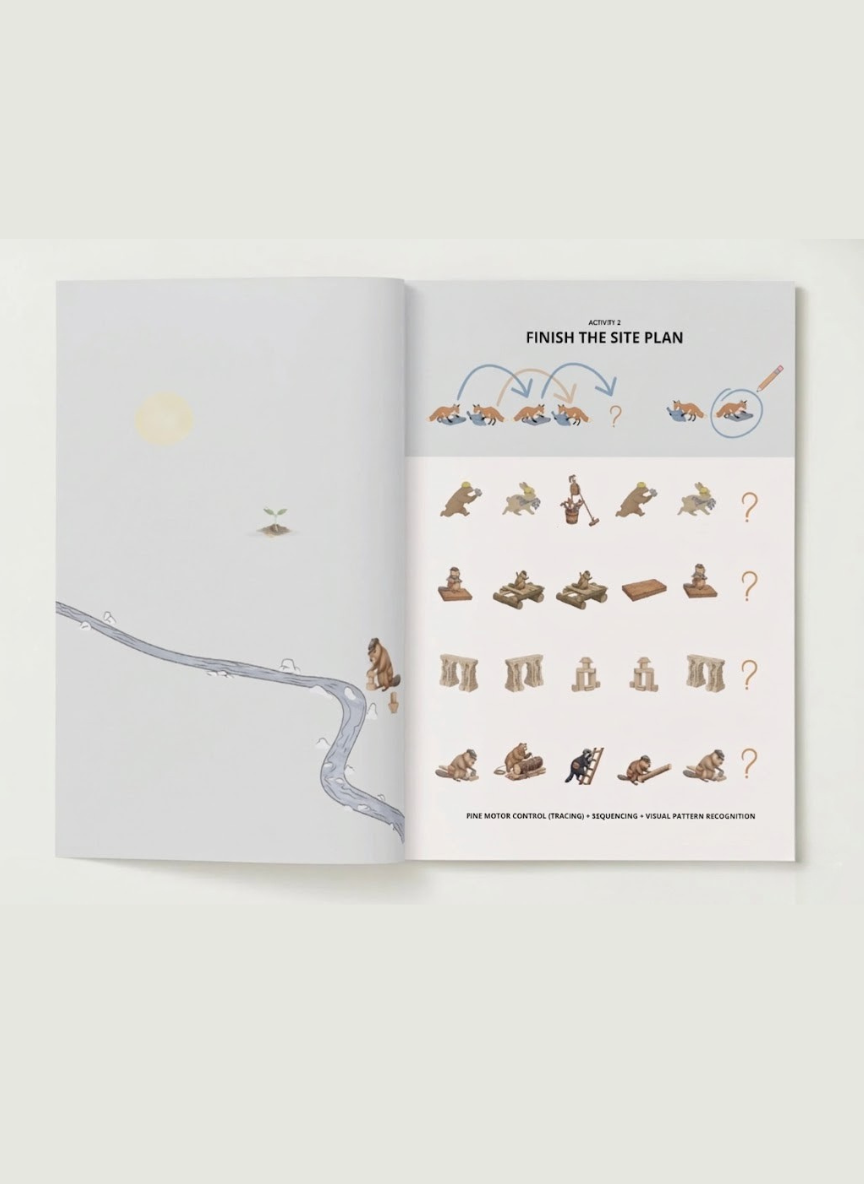
- Short sequencing tasks: following two or three ordered steps, which builds planning alongside sustained focus.
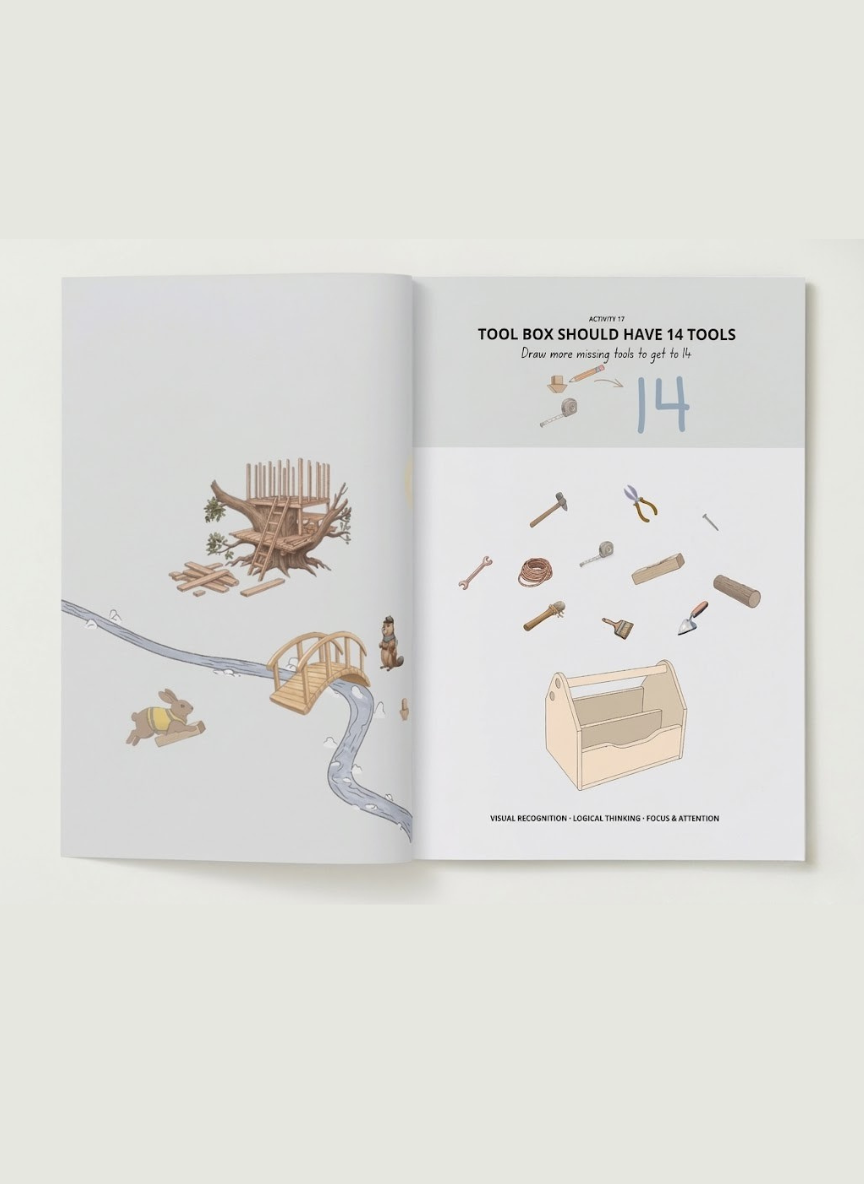
- Self-checking tasks: a built-in way for the child to see whether their answer is right, which supports error detection without an adult stepping in.
- Clear, visible endpoints: a task where the child can see exactly how much is left, which reduces the sense of an open-ended demand.
Compare this to a full page of unrelated academic drills with no natural stopping point. That kind of worksheet can be useful for skill practice, but it rarely builds attention stamina, because the child cannot see progress and has no way to check their own work along the way.
How Long Should a Child Practice?
Start shorter than feels necessary, then build slowly. For a three or four year old, one to three minutes on a single small task is a reasonable starting point. For a five to seven year old, five to ten minutes on a task with a few steps is often manageable, especially once self-checking is built in.
The goal is not to reach a specific number of minutes. It is to string together small, complete successes. A child who finishes a two-minute task without a reminder is building something real, even if the total time looks small next to a classroom worksheet packet. Once a task is reliably finished without prompting, length or difficulty can increase in small steps, not large jumps. Doubling the length of a task overnight is one of the fastest ways to trigger a meltdown or a refusal.
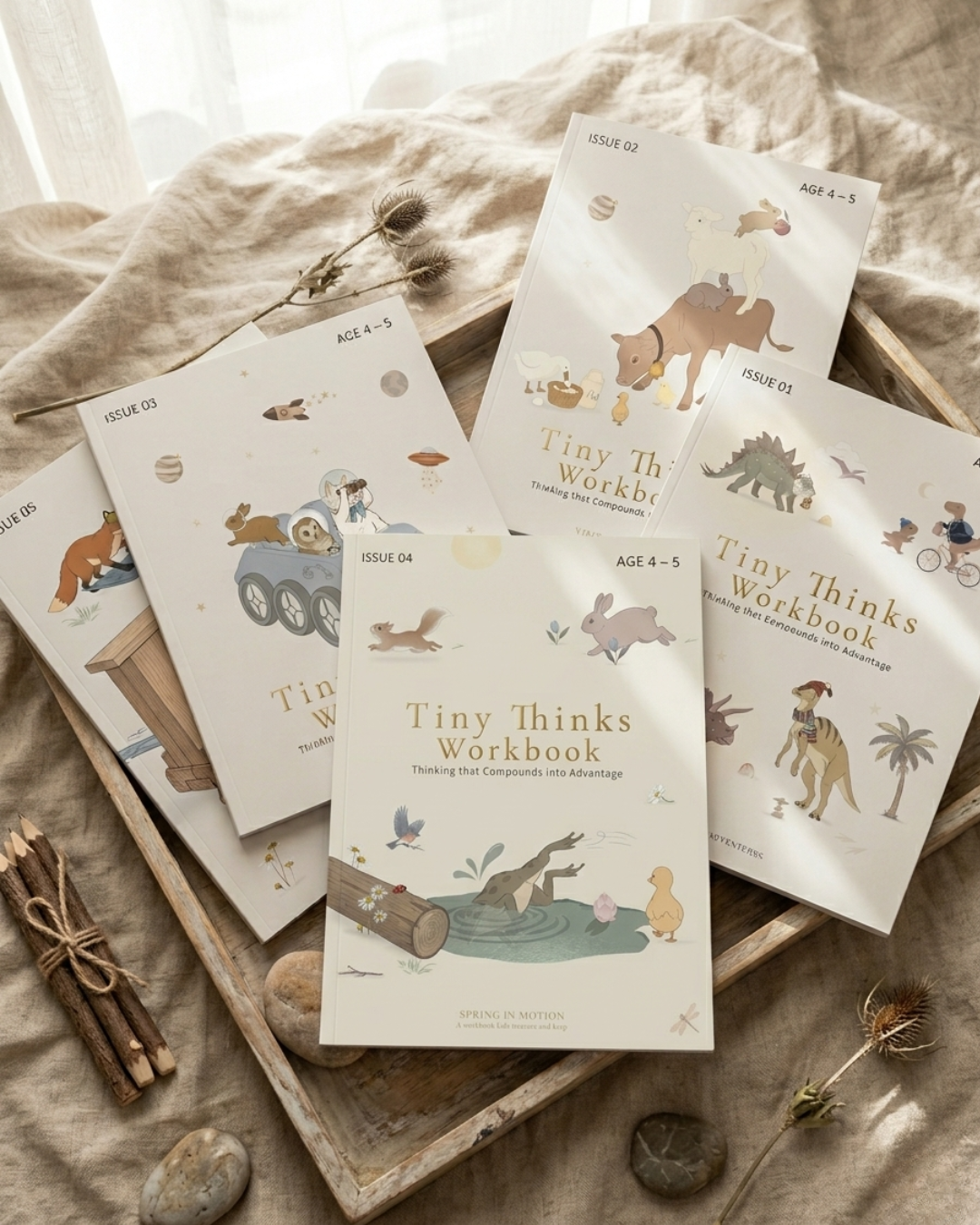
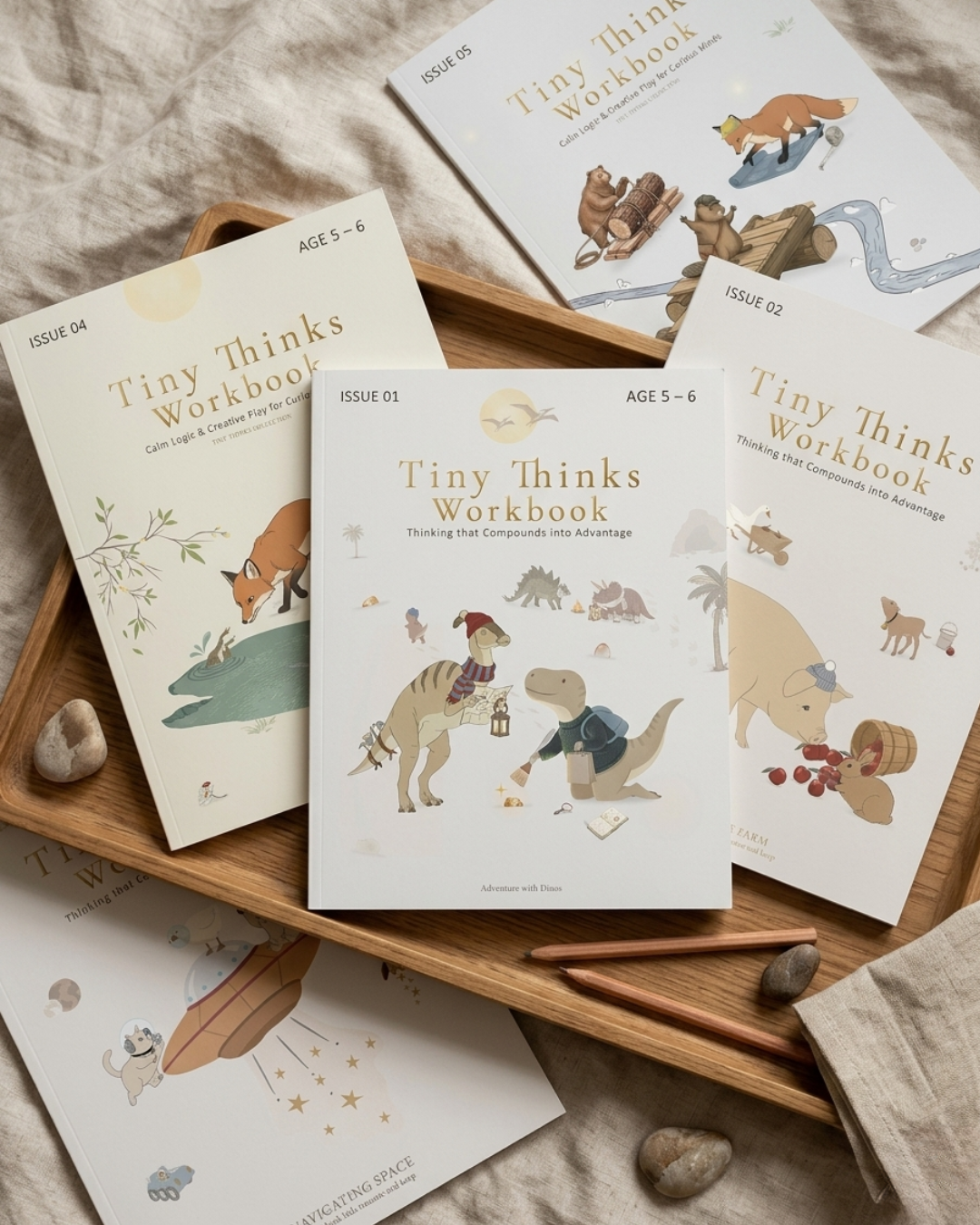
This is the kind of small-step attention practice Tiny Thinks designs around: not longer sitting for its own sake, but a clear little challenge a child can actually finish.
What to Do When a Child Quits

A child quitting a worksheet is not automatically a sign of a problem. It is often useful information. Quitting quickly and consistently across many kinds of tasks, especially tasks the child previously managed, is worth noticing. Quitting one specific, too-long worksheet is usually just a sign that the task was mismatched to current stamina.
When a child quits, a calm, useful response looks less like persuasion and more like reducing the task, not the expectation. Instead of insisting they finish the original ten questions, ask them to finish the first three, then stop and notice that they did. This keeps the completion habit intact while respecting where their attention actually is right now.
Avoid the two most common reactions: forcing them to sit until it is done, which usually teaches the task itself is unpleasant, and letting the demand disappear entirely, which does not give attention a chance to build. The middle path, a smaller task fully completed, teaches something a longer unfinished task never can: what it feels like to see something through.
Some children rush through the visible part of a task and skip the checking step entirely, especially when a worksheet has no built-in way to notice mistakes. That points to weak error detection alongside attention, not carelessness. A simple self-check step, comparing an answer to a picture or counting again before moving on, gives that skill somewhere to practise.
When Focus Problems Need More Than Worksheets
Some attention difficulties are not about worksheets at all. A child who has not slept well, who has had little movement all day, or who is hungry will struggle to concentrate regardless of how well-designed the task is. Movement breaks, consistent sleep, and enough unstructured outdoor time often do more for a child’s ability to sit and focus than any printable page.
Sensory needs also play a role for some children. A child who cannot sit still on a hard chair, in a loud room, or under bright lights may be responding to their environment, not lacking focus itself. Adjusting the setting sometimes solves what looks like an attention problem.
If a child struggles to sustain attention across nearly every activity, not just worksheets, and this pattern persists over months and across settings like home and school, it is reasonable to mention it to a pediatrician (American Academy of Pediatrics). This is worth naming plainly and calmly: occasional distractibility is typical of early childhood, but a consistent, cross-setting struggle is a conversation worth having with a professional, not something to diagnose from a blog post.
What Is The Pre-Seven Learning Method?
The Pre-Seven Learning Method is a four-stage, screen-free approach for children ages 3 to 7 that builds ten cognitive capabilities underneath learning and academics through small, calibrated thinking missions during the formative years before age seven. For a broader overview, see Attention and Persistence Activities for Kids Ages 3–7.
Sustained attention and persistence sit at the center of this article, alongside working memory, planning and self-control, and error detection, which all support a child’s ability to stay with a task. Within the method, attention is not built by asking a child to sit longer. It is built by giving them tasks sized just above their current stamina, with a clear finish line and a way to notice their own progress, then increasing the challenge in small steps as completion becomes reliable.
Seen this way, a good focus worksheet is less about the page itself and more about the thinking moment it creates: notice, hold on, check, and finish.
The child who stays with a challenge when others have gotten distracted or given up is usually not a naturally patient child. More often, they are a child who has had many small chances to finish something on their own terms, at a length their attention could actually hold, and felt what it was like to get to the end without being rescued or rushed.
Tiny Thinks workbooks are built to give children these short, screen-free chances to practise focus, persistence, and self-checking without turning attention into a battle. You can start with the Free Calm Pack for a simple home rhythm, or explore the Tiny Thinks workbooks for staged Pre-Seven Learning Method activities that make focus practice feel small, clear, and finishable.
Frequently Asked Questions
My kid cannot finish worksheets. Is this normal?
Yes, this is common and often points to a mismatch between the worksheet length and the child’s current attention stamina, not a lasting problem.
How do I build focus without making learning miserable?
Use shorter tasks than feel necessary, let the child finish them fully, and increase length or difficulty gradually rather than forcing longer sessions. Everyday practice like this is what the Pre-Seven Learning Method focuses on in the years before seven.
Are attention worksheets useful or just busywork?
Worksheets help build attention when they are short, self-checking, and slightly harder than what a child can already manage alone, otherwise they mainly function as busywork.
How long should a five-year-old sit still?
There is no reliable research-based number, but five to ten minutes on a clear, multi-step task is a reasonable starting point for many five-year-olds.
Is poor focus normal at age three?
Yes, short attention spans and quick task-switching are typical for three-year-olds, and focus stamina develops gradually over the following years.
Should I force my child to finish a worksheet?
Forcing completion of an overly long or hard task often teaches a child to dislike the task, so it is usually better to shorten the task and let them finish it fully.
Why can my child focus on games but not learning tasks?
Games often have a clear goal, visible progress, and a sense of control, features many worksheets lack, which makes sustained attention easier to access.
When should I worry about ADHD instead of normal distractibility?
Occasional distractibility is typical in early childhood, but a consistent struggle to sustain attention across many settings and months is worth discussing with a pediatrician.
References
Executive Function & Self-Regulation , Harvard Center on the Developing Child https://developingchild.harvard.edu/science/key-concepts/executive-function/
Praise for Intelligence Can Undermine Children’s Motivation and Performance (Mueller & Dweck, 1998) , Journal of Personality and Social Psychology https://pubmed.ncbi.nlm.nih.gov/9686450/