

Key Takeaways
- Independent play is self-directed engagement, not isolation: a child holding an idea long enough to develop it without constant adult direction.
- The point of independent play is not less attention from you. It is more practice for your child in choosing, continuing, and finishing their own activity.
- There is no reliable minutes-per-age rule for play; expectations should follow the child, with shorter nearby stretches at 3 to 4 and longer self-directed projects by 5 to 7.
- Children play and explore more independently when a trusted adult is nearby as a secure base, a pattern long described in attachment research (Ainsworth, 1978).
- Open-ended materials sustain attention longer than single-purpose electronic toys, which is consistent with findings that fewer toys can lead to longer, deeper play (Dauch et al., 2018).
- Independent play strengthens sustained attention and persistence, two of the ten capabilities the Pre-Seven Learning Method is built around, by giving children regular calm chances to direct their own thinking.
You hear the question before you see the face. “Play with me.” You set up the blocks, the figures, the little world on the rug. The moment you stand to start dinner, it collapses. “Where are you going?” Some children seem to need an adult in the room as the engine of every game. The toys are not the problem. The child can play. What they have not yet practised is playing without you driving it.
This is the worry underneath a lot of searches: my child cannot entertain themselves, I have somehow made them dependent, I feel guilty wanting twenty minutes to think. None of that means you did something wrong. Independent play is a skill children build, not a trait they are born with. And the version that matters most has nothing to do with how long you can leave the room. It is about whether your child can hold their own idea long enough to develop it.
What independent play really means
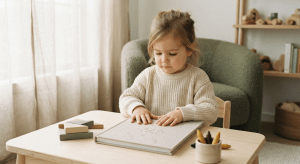
Independent play is when a child starts, sustains, and develops their own activity without an adult directing it. It is self-directed engagement, not being left alone. The child is choosing what happens next, not waiting to be told.
That distinction matters because two children can look identical from across the room. Both are on the floor with animals and blocks. One is genuinely playing: the lion is being chased, the wall is being rebuilt taller, the story keeps moving. The other is waiting, glancing toward you, stalling until you come back and supply the next idea. The first child is doing the real work of independent play. The second is occupying time.
Independent play sits inside the broader idea of unstructured play, which simply means play with no fixed outcome or instructions. A child stacking cups in their own order is doing unstructured play. A child following an adult’s step-by-step craft is not. Both have value. Only one builds self-direction.
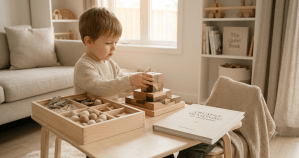
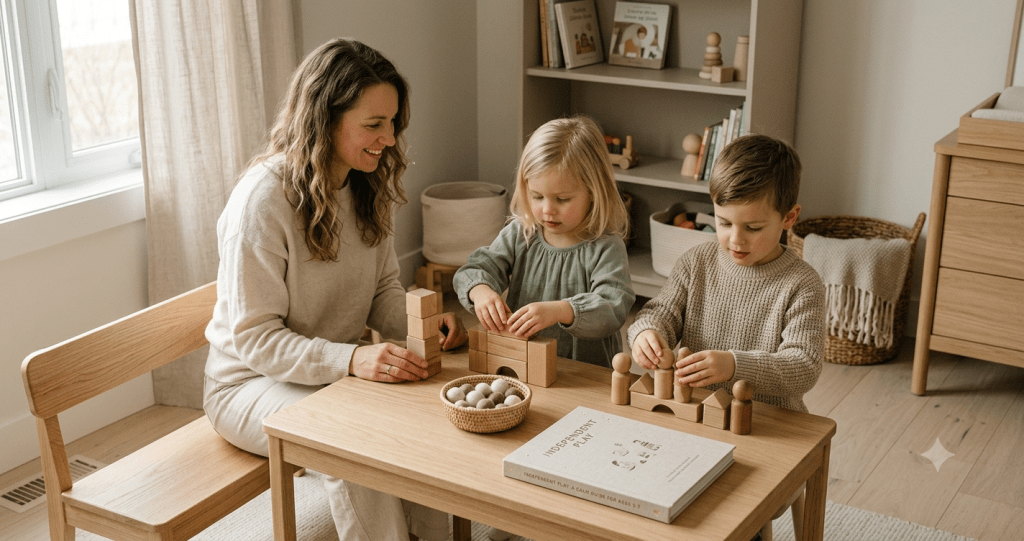
A caregiver nearby does not cancel independence. A three-year-old playing on the kitchen floor while you chop vegetables is playing independently, even though you are six feet away. Presence is not the same as participation.
Why independent play matters before age seven
Independent play matters because it is one of the earliest, most natural ways a child practises directing their own attention before formal learning demands it. School later asks children to begin a task, keep going when it gets dull, and finish without someone standing over them. Play is where that muscle first develops.
Watch what a child actually does in a good stretch of solo play. They pick something. They run into a problem (the tower keeps falling, the story has no ending). They adjust. They keep going past the boring middle. That sequence is the same shape as almost everything school will later ask of them.
Trouble settling into solo play usually points to two capabilities still forming: sustained attention and persistence. Sustained attention is staying with one thing when newer, easier things are available. Persistence is continuing after the first failure or the first wave of boredom. These are two of the ten capabilities the Pre-Seven Learning Method is built around: a phased, screen-free approach for ages 3 to 7 that builds the thinking underneath learning through small, calibrated thinking missions.
Two more capabilities show up quietly in the best play. Planning and self-control appear when a child decides what they are building before they touch a block. Creativity and storytelling appear when the same four animals become a rescue, then a parade, then a bedtime. None of this requires worksheets. It requires a child who can stay with an idea long enough for it to grow.
There is a reason to care about this beyond school. The capability you are really hoping for is the one that does not go out of date: a child who can hold their own attention and develop their own ideas is better prepared for whatever future they grow into. The most telling moment is small and easy to miss. Your child works something out alone, the bridge finally holds, and they look up at you surprised at themselves. You did not do that for them. That look is the whole point.
This is the kind of quiet practice Tiny Thinks pays attention to: not performance, but the small moments when a child chooses, continues, and adapts.
How much independent play is realistic by age
There is no reliable research number for how long a young child should play alone. The popular rule of “one minute per year of age” is a rule of thumb, not a finding. Expectations should follow the child in front of you, not a clock.
What the developmental picture does support is a rough direction of travel:
- Ages 3 to 4: Short, nearby stretches. A few minutes of self-directed play while you are in the same room is normal and useful. Expect frequent check-ins and a need to know you are close.
- Ages 4 to 5: Longer stretches, more story. Many children at this stage can sustain a self-chosen game for ten to twenty minutes, especially with familiar open-ended materials.
- Ages 5 to 7: Planned, self-directed projects. A child may set up an elaborate scene, leave it half-built, and return to it later. This is independent play maturing into self-directed learning.
Treat these as a sequence, not a target. A four-year-old who manages four focused minutes today is on the path. The Pre-Seven progression is exactly this: brief nearby play early on, expanding into longer planned projects as attention and self-control develop. The minutes are not the goal. The growing ability to continue without you is.
Why some children resist playing alone
Most resistance to solo play comes from one of four things: attachment, habit, boredom tolerance, or overstimulation. Naming which one you are seeing tells you what to do next.
Attachment. Young children explore best when they feel securely connected. A child who follows you from room to room is often not being difficult. They are checking the secure base before venturing out, which is exactly what the attachment research describes. The fix is not distance. It is reliable, calm presence nearby.
Habit. If play has always come with an adult narrator, the child has learned that play requires one. This is the most common pattern in homes where a parent worries they “created the dependency.” You did not damage anything. You built a routine, and routines can be gently rebuilt.
Boredom tolerance. The hardest moment in any solo play is the gap right after “I’m bored” and right before a new idea arrives. Children who are used to instant input, from us or from a screen, often quit in that gap. The skill of sitting in mild boredom until an idea surfaces is one of the most valuable things independent play builds.
Overstimulation. A child surrounded by too many toys, or coming off a fast-moving screen, often wanders rather than settles. More options can mean less play, not more.
A quick word on the worry that independence means emotional distance. It does not. Independence and connection are not opposites. A securely attached child plays alone because they trust you are there, not in spite of it. If your child can wander off to play and then come back to you happily, that is connection working, not breaking.
How to encourage independent play gently
The most effective way to encourage independent play is to start playing alongside your child, then slowly do less, rather than abruptly leaving the room. You shrink your role gradually so the child grows into the space you leave.
A low-pressure starting process:
- Set the scene, then go quiet. Help start the play, then stop narrating. The single biggest change many parents notice is when they stop being the entertainer and let silence do the work. If you are talking constantly, you are still the activity.
- Stay nearby at first. Sit close with your own thing: a book, folding laundry, a coffee. Your presence is the secure base. Leaving the room entirely too soon usually backfires.
- Resist the first “I’m bored.” Wait. Say something like, “I wonder what you’ll think of.” The idea has to come from them, or it does not build the skill.
- Lengthen the leash slowly. Move from beside them, to across the room, to the next room with the door open, over days and weeks. Not in one afternoon.
- End before the meltdown, not after. Stop while it is still going well. You want the child to associate solo play with success, not with being abandoned mid-frustration.
Skip the timer at first. For many children a visible countdown to “now play alone” adds pressure and makes the whole thing feel like a test they are failing. In Tiny Thinks terms, the aim is a manageable thinking stretch: close enough to feel safe, open enough for the child to practise staying with their own idea.
What activities work best for independent play
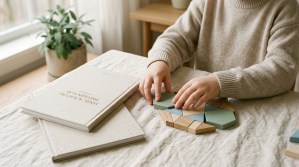
Open-ended materials work best for independent play because they hand the child the next decision instead of making it for them. A toy that does one thing entertains briefly. A toy that does a hundred things invites the child to think.
The materials that tend to sustain the longest play are the plainest ones:
- Blocks, wooden or otherwise, with no instructions
- Animal or people figures for pretend scenes
- Loose parts: cups, scarves, boxes, stones, lids
- Drawing materials with blank paper, not colouring sheets
- Dolls or vehicles a child can build a story around
The pattern matters more than the brand. Single-purpose electronic toys that light up and talk tend to do the playing for the child, and play often ends when the novelty does. Fewer, simpler toys frequently lead to longer, deeper engagement, which is what the toy-reduction research points to.
One practical move many families find useful: toy rotation. Put most toys out of sight and offer a small selection. Swap them every week or two. A toy a child ignored in a crowded room often comes back to life when it is one of only five things available.
What parents should avoid
The main things to avoid are over-prompting, defaulting to screens, and setting unrealistic targets. Each one quietly undermines the skill you are trying to build.
Over-prompting. Asking “what are you making? what’s that? what next?” turns you back into the engine of the play. Helpful silence is doing more than helpful questions.
Screens as the substitute. A screen reliably occupies a child, which is sometimes exactly what a hard day needs, and that is not a failure on your part. But a screen and independent play are not the same training. One supplies the attention for the child; the other asks the child to supply it. When you can, after a screen, offer a plain set of materials and a quiet room rather than nothing, so the child has a soft landing back into self-direction.
Unrealistic targets. Expecting a four-year-old to play alone for forty minutes sets you both up to feel like failures. Build from where they actually are.
On “how much is too much”: independent play is rarely the problem. The thing to watch is not the amount of solo play but the quality of connection around it. A child who plays happily alone and also seeks you out, laughs with you, and comes for comfort is thriving. If a child withdraws from everyone, plays in a rigid, repetitive way they cannot break from, or seems flat rather than absorbed, that is worth a calm conversation with your pediatrician. Not because independent play caused it, but because those are signals worth a professional eye.
What progress looks like
Progress in independent play looks like a child beginning their own activity, sitting in boredom a little longer before quitting, and developing an idea over time rather than abandoning it at the first wobble. The minutes grow, but the deeper signs are about self-direction.
Concrete signs many families notice as it builds:
- Your child starts a game without asking you to set it up.
- The phrase “I’m bored” arrives later, and sometimes resolves itself.
- A scene survives an interruption: they come back to it after lunch.
- They problem-solve out loud (“that won’t work, I’ll try the big one”) instead of calling you.
- The room goes quiet because they have fallen into the play, and you realise you have not been needed for a while.
That last one is the moment worth waiting for. Not the silence itself, but what it means: your child is staying with something on their own, the way they will need to long after the blocks are packed away. That is the capability that holds in any future: a child who can stay with a challenge when others have drifted off or given up.
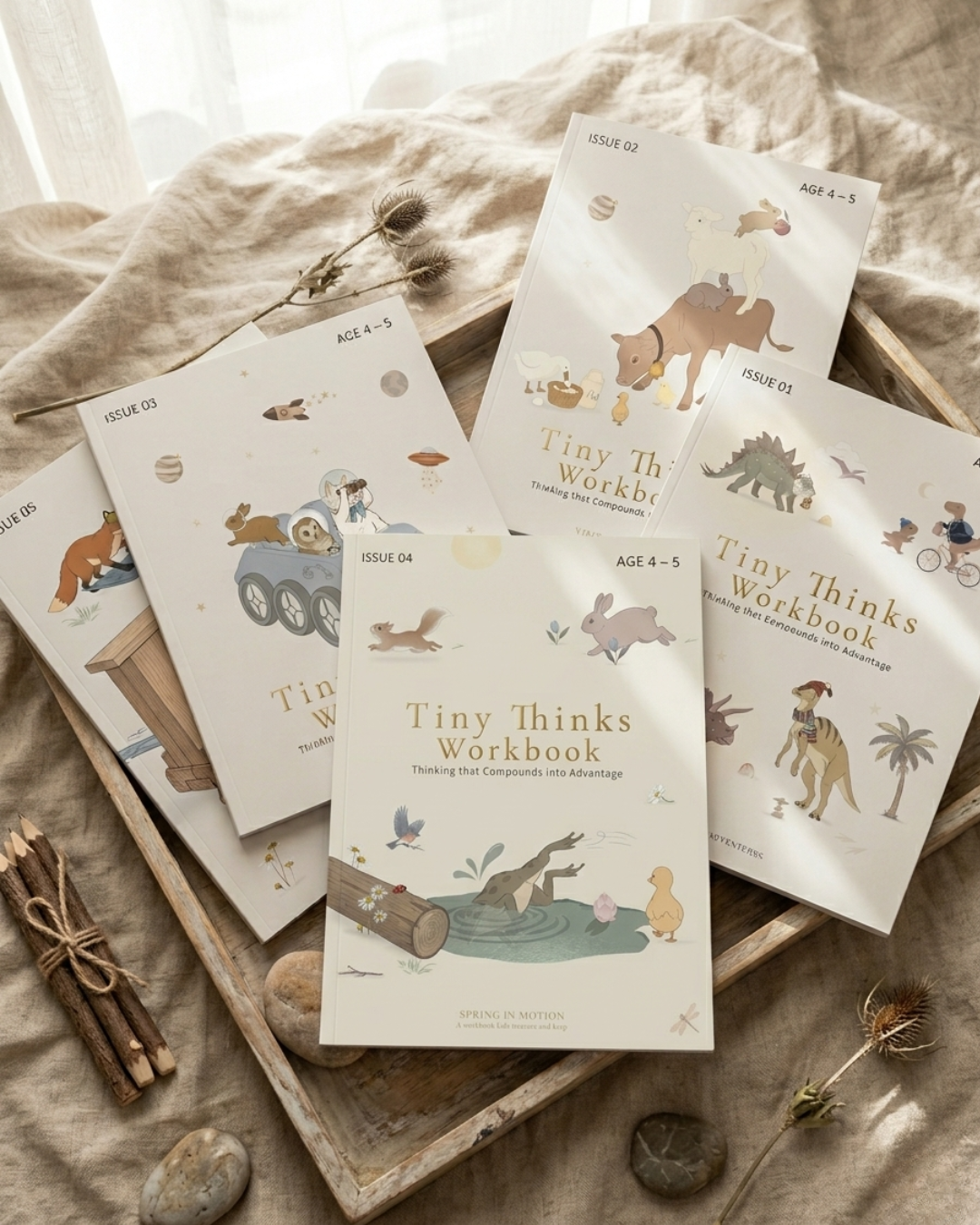
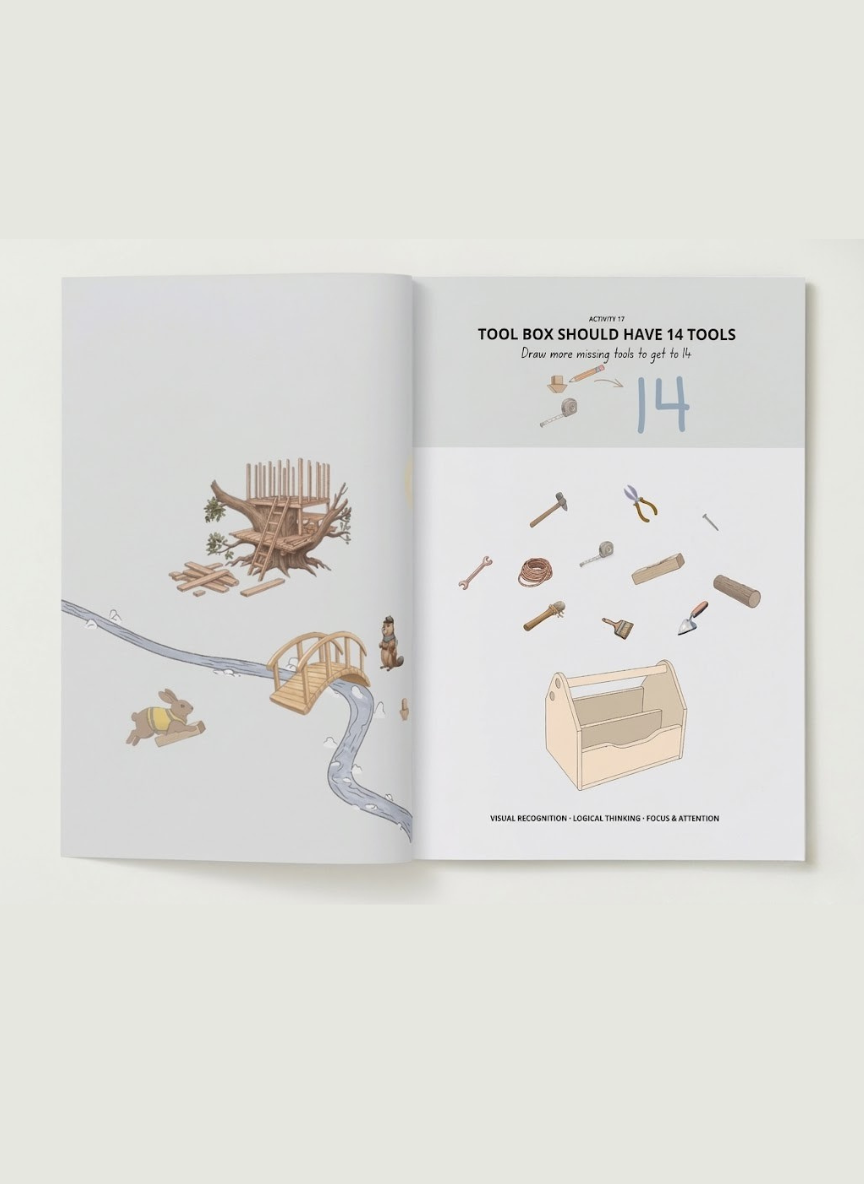
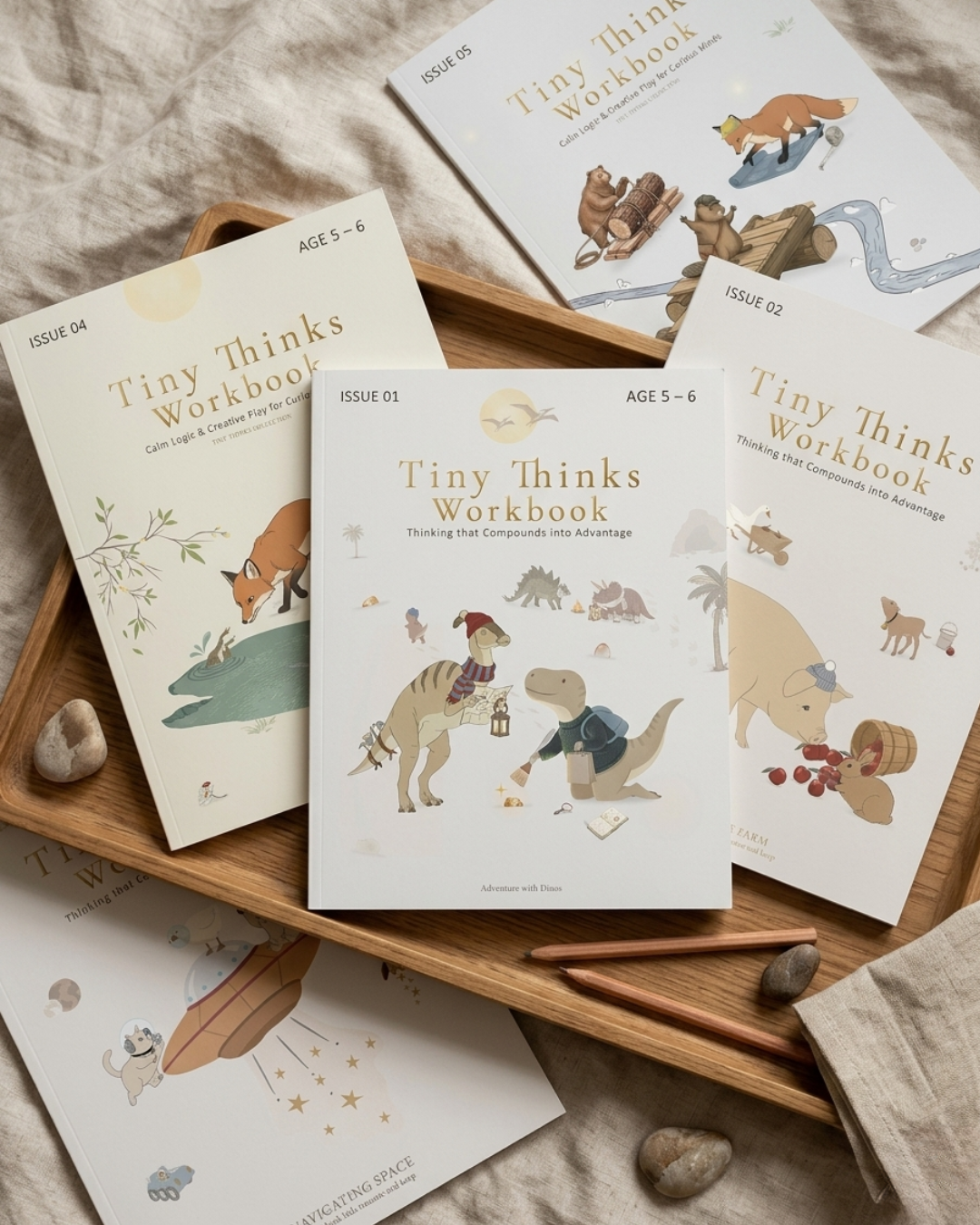
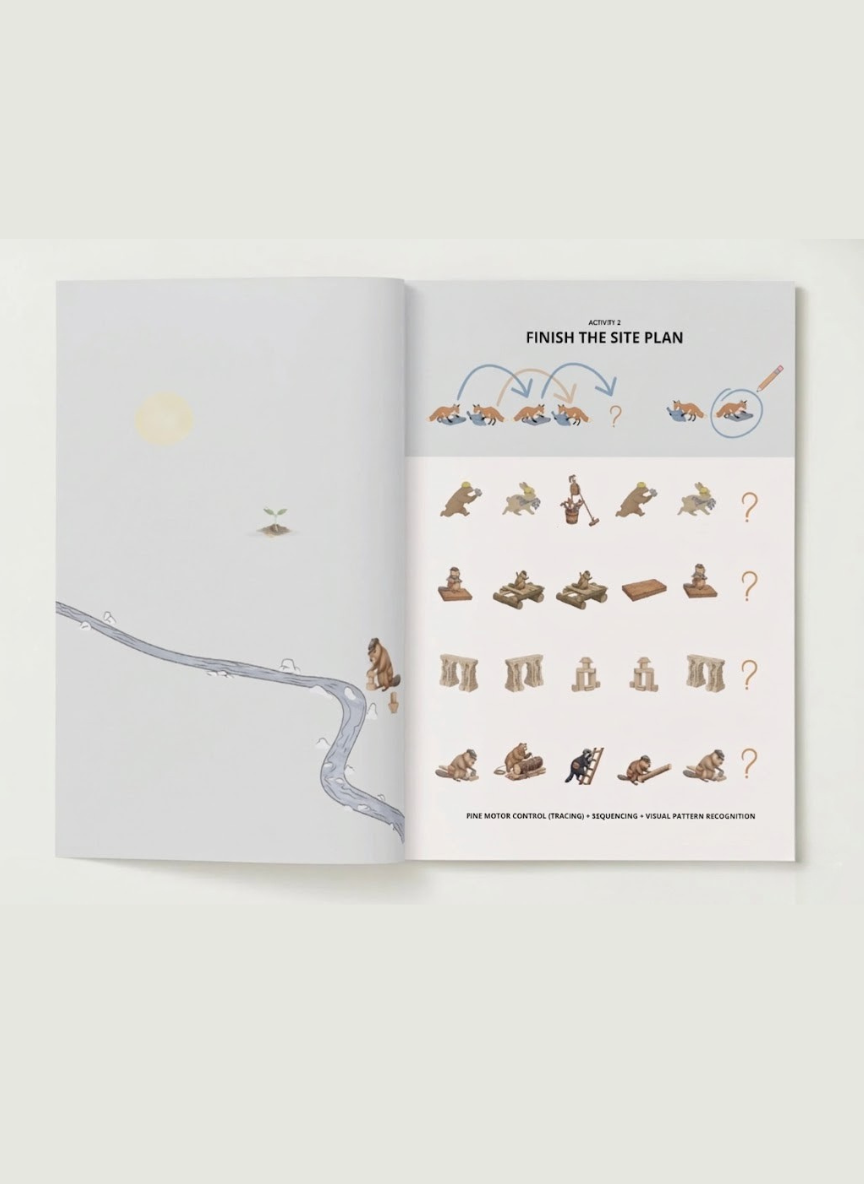
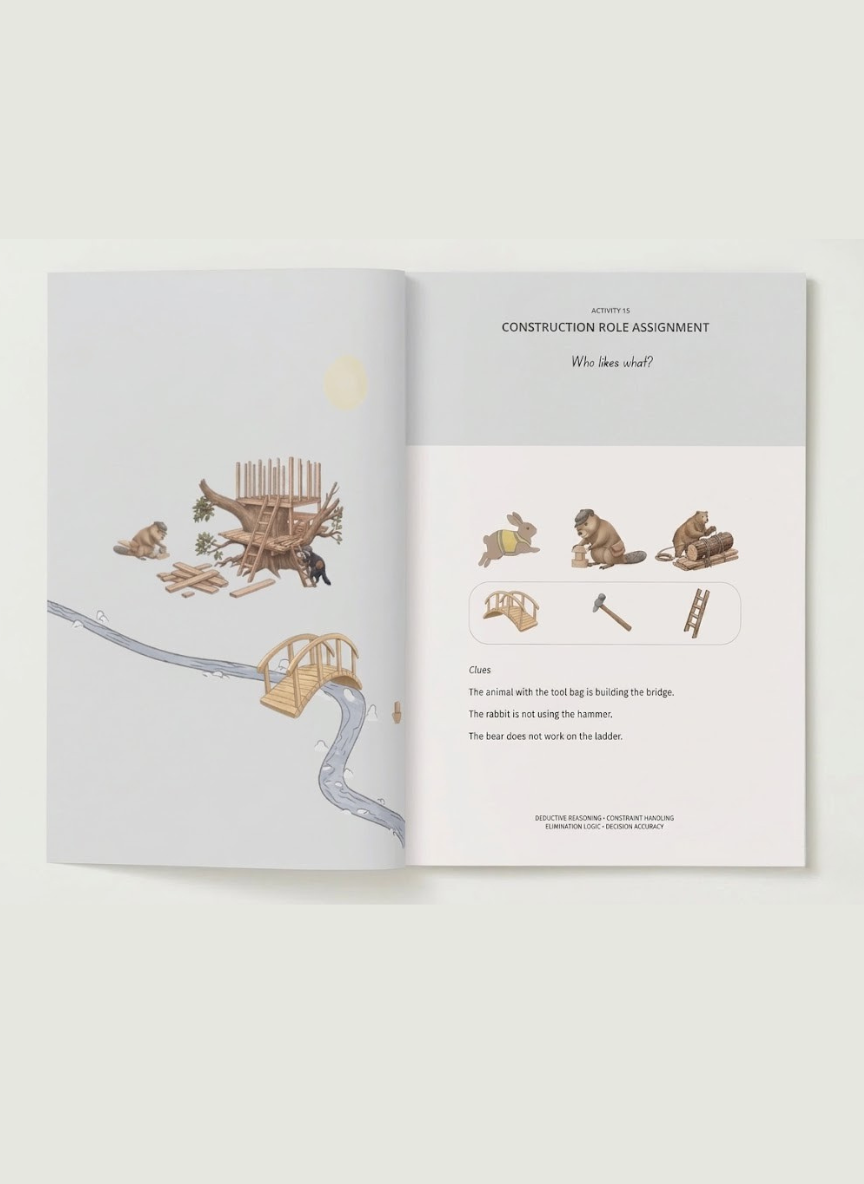
Tiny Thinks workbooks give children short, screen-free thinking missions that encourage independent play while building problem-solving, creativity, planning, and self-confidence through everyday exploration.
You can start with the FreeCalmPack for a simple at-home routine, or explore the full range of Tiny Thinks workbooks built around The Pre-Seven Learning Method.
Frequently asked questions
What is independent play?
Independent play is when a child starts, sustains, and develops their own activity without an adult directing it. It is self-directed engagement, not being left alone.
Why is independent play important?
Independent play is one of the earliest ways children practise directing their own attention, the same skill formal learning later depends on. It builds sustained attention and persistence, two of the ten capabilities the Pre-Seven Learning Method is built around.
How do I encourage independent play?
Start by playing alongside your child, then gradually do and say less while staying nearby. Stop narrating, resist solving the first “I’m bored,” and lengthen your distance slowly over days rather than leaving the room all at once.
How long should a preschooler play independently?
There is no reliable research number. Many three to four-year-olds manage a few minutes of nearby solo play, expanding to ten to twenty minutes around four to five, and longer planned play by five to seven. Follow the child, not a clock.
Can too much independent play be bad?
Independent play itself is rarely the problem. The thing to watch is the quality of connection around it: a child who plays alone happily and also seeks you out for comfort and conversation is doing well.
My five-year-old wants me constantly. Did I create this?
Probably not in any way that broke something. If play has always come with an adult, the child has learned play needs one, and that habit can be gently rebuilt by doing less alongside them rather than disappearing.
What if my child cries when I stop playing?
Crying usually means you moved away too fast or too far. Stay closer, stay quieter, and shorten the stretch, then build back up slowly so solo play stays linked to feeling secure rather than abandoned.
Is independent play harder with an only child?
An only child can absolutely build independent play; they simply do not have a sibling as a default play partner. The skill being built is the same: holding and developing their own idea without an adult driving it.
Is it wrong to want my child to play alone so I can do things?
No. Wanting time to cook, work, or think is normal, and the skill it asks your child to practise is genuinely good for them. Independent play serves the child and the household at once.
Have screens ruined my child’s ability to play alone?
A screen supplies attention for a child, while independent play asks the child to supply it, so the two are different kinds of practice rather than one ruining the other. Offering plain open-ended materials after a screen gives a softer landing back into self-direction.
References
Executive Functions (Diamond, 2013) , Annual Review of Psychology https://www.annualreviews.org/content/journals/10.1146/annurev-psych-113011-143750
Annual Review of Psychology , PNAS
https://www.pnas.org/doi/abs/10.1073/pnas.1010076108