


Key Takeaways
- The Pre-Seven Learning Method is a screen-free approach that gives children regular, calm chances to practise the ten thinking capabilities underneath learning, in the years before formal academics intensify.
- The years before seven are when children build the mental control systems, including planning and self-control, that later make academic learning possible, not just a warm-up for letters and numbers (Center on the Developing Child, Harvard University).
- Executive function skills in early childhood are associated with later reading and maths achievement, sometimes more strongly than IQ (Blair & Razza, 2007, Child Development).
- There is no reliable “one minute per year of age” rule for attention span: it is a popular folk claim, not a research finding, and a child’s focus varies with interest, difficulty, and tiredness.
- Screen-free, hands-on tasks ask a child to notice, choose, complete, check, and explain, which is active thinking work that passive watching does not require.
- The lead capability the method builds is planning and self-control, the ability to think a step ahead before starting, and it is one of the ten capabilities the Pre-Seven Learning Method is built around.
What Is The Pre-Seven Learning Method?
The Pre-Seven Learning Method is a screen-free approach that builds the ten thinking capabilities underneath learning, through small, calibrated tasks in the years before age seven. It is not tutoring, academic drill, or a school replacement. It is calm, structured practice of the thinking that school and life later depend on.
The simplest way to say it: most early learning aims at content. The method aims at capability. Content is letters, numbers, shapes, facts. Capability is whether your child can stay with a task, hold the steps in mind, notice a mistake, and plan before rushing in.
A child can know every letter and still not be able to sit with a hard task long enough to use them. The Pre-Seven Learning Method is designed to strengthen these capabilities through calm, screen-free thinking practice.
The ten capabilities span attention, persistence, pattern recognition, working memory, flexibility, problem-solving, error detection, comfort with uncertainty, planning and self-control, and creativity. This article is mostly about one family of those: the planning and self-control side, sometimes called executive function. That is the capability of thinking a step ahead before starting.
Why the Years Before Seven Matter
The years before seven matter because this is when the brain’s control systems develop fastest, the systems a child uses to direct attention, hold information, and resist the first impulse. These are the foundations later academic learning sits on top of.
Executive function, which covers working memory, flexible thinking, and self-control, develops most rapidly in the preschool and early-school years (Center on the Developing Child, Harvard University). This is not a closing door. Older children and adults keep developing. But the early window is unusually responsive, and small repeated practice fits it well.
Here is the quiet worry many parents carry. It is not really “does my child know enough.” It is something they watch for at the kitchen table: the child who gives up the moment something is hard, the child who waits to be told the next step, the child who rushes and misses the obvious thing. Those are not character flaws. They are capabilities still forming.
And then there is the other moment, the one parents do not name out loud. The afternoon a child works something out alone, sits back, and looks up surprised at themselves. That look is the thing underneath the question “is my child doing enough.” It is not about being ahead. It is about being able to think without someone standing over them.
That is why the Pre-Seven Learning Method focuses on strengthening thinking skills during these early years.
What Children Are Really Learning
When a young child works through a good task, the visible output is small: a finished page, a sorted pile, a chosen answer. The real learning is underneath. They are practising how to think, not just what to think.
Try reading behaviour as a window into capability rather than as a verdict:
- The child who gives up quickly is practising, or avoiding, persistence and comfort with uncertainty.
- The child who waits to be told what to do is reaching for problem-solving and self-control.
- The child who rushes and misses details is working on attention, planning, and error detection.
- The child who forgets the next step is exercising working memory.
- The child who melts down when the task changes is stretching cognitive flexibility.
The Pre-Seven Learning Method creates these opportunities through short, carefully designed thinking activities.
The Four Developmental Stages
The Pre-Seven Learning Method moves through four rough stages between ages three and seven, from simple focus toward independent planning. These are not strict age rules. Children move at their own pace, and a four-year-old may sit in two stages at once.
- Ages 3 to 4: focus and completion. The work is staying with one short task and finishing it. Noticing, choosing, completing. Success looks like a child who starts something and reaches the end without wandering off after ten seconds.
- Ages 4 to 5: holding steps. The child begins to keep two or three steps in mind: do this, then this. Working memory carries more. They start to follow a small sequence without being reminded at every turn.
- Ages 5 to 6: checking and adapting. The child starts to notice their own mistakes and try a second approach when the first one fails. Error detection and flexibility appear. They can pause and reconsider rather than push the wrong answer through.
- Ages 6 to 7: planning and explaining. The child can think a step ahead before starting, manage a more complex task, and explain why an answer makes sense. This is planning and self-control working together, and it is the doorway to independent learning.
The Pre-Seven Learning Method follows this progression so children practise skills that match their stage of development.
The Capabilities Built by the Method
The Pre-Seven Learning Method is built around ten capabilities, but most tasks lean on a smaller set at once. The lead capability is planning and self-control: the ability to think ahead, hold back the first impulse, and organise steps before acting.
Around it sit three more that show up constantly:
- Sustained attention and persistence: staying with a task when it stops being easy.
- Problem-solving: trying a route, hitting a wall, and trying another.
- Critical thinking: deciding whether an answer actually makes sense, not just whether it is finished.
These four belong to the family educators call executive function. Strong early executive function is associated with better later reading and maths, in some studies more strongly than measured intelligence (Blair & Razza, 2007, Child Development). It is worth being honest about what that means. Association is not a promise. No activity makes a child smarter or permanently raises capacity. What good practice does is give children regular chances to use and strengthen these capabilities, which is a more modest and more truthful claim.
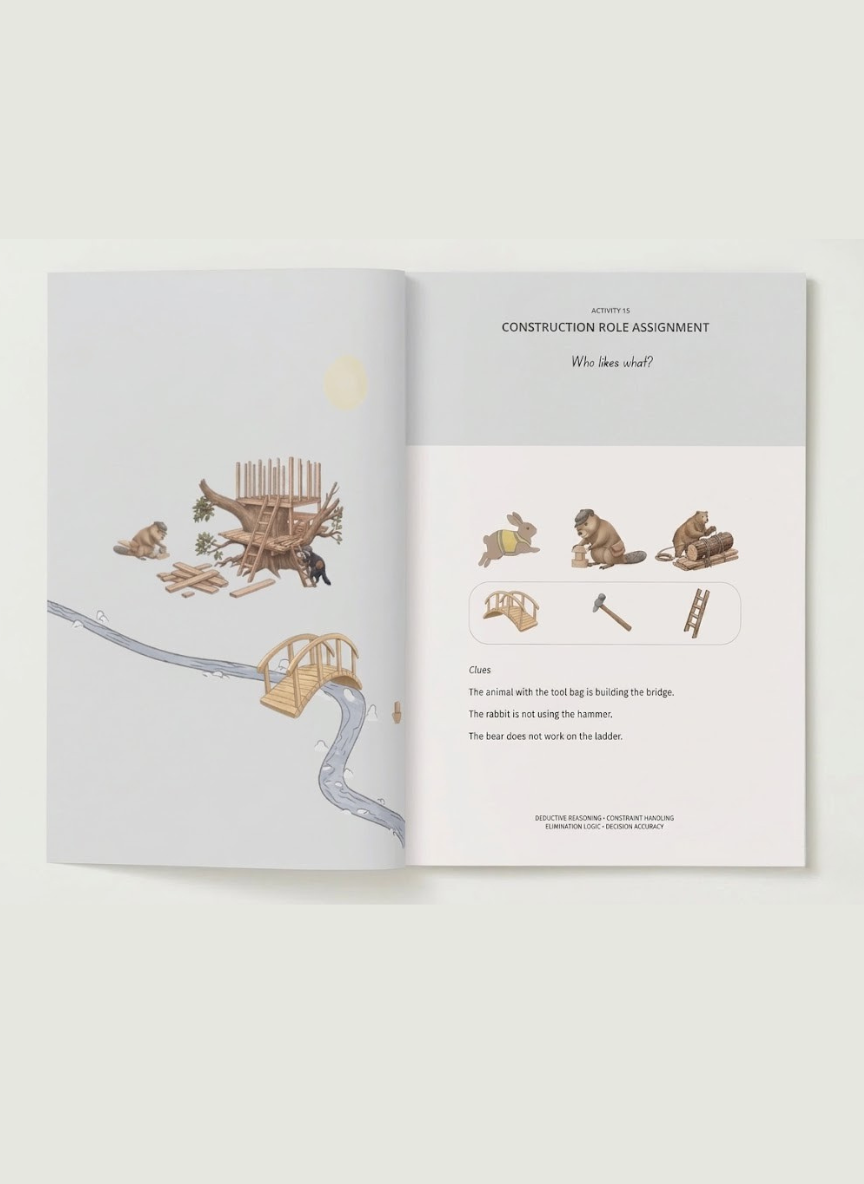
This is the natural moment a parent asks: how do I build the planning side at home, without turning it into a lesson? A Tiny Thinks page works best here when it creates one small pause before action, so the child practises planning without feeling like they are in a lesson.
How Screen-Free Practice Supports Thinking
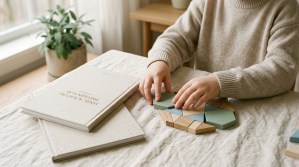
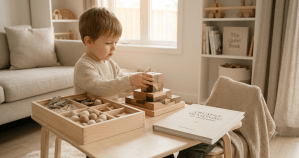
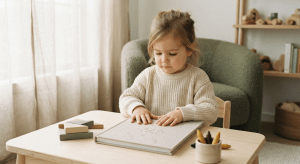
Screen-free practice supports thinking because it makes the child do the work, rather than watch it happen. A paper task waits. It does not animate the answer, reward a tap, or move on for you. The child has to notice, choose, and decide what comes next.
This is the real difference, and it is not about screens being bad. Many apps marketed as educational are well made. The issue is the kind of thinking they ask for. A lot of digital learning rewards quick recognition and fast tapping. A child can complete a great deal of it without ever planning a step, holding a sequence in mind, or sitting with the small discomfort of not knowing yet.
The American Academy of Pediatrics frames screen use around quality and context rather than fear, and emphasises that young children learn best through hands-on, interactive experience (American Academy of Pediatrics, 2016, Pediatrics). Screen-free practice fits that: it is slow, active, and physical. The pencil pause before a child commits to an answer is the planning capability showing up in real time.
This screen-free approach is one of the defining features of the Pre-Seven Learning Method.
How Parents Can Tell It Is Working
You can tell the method is working when you see changes in how your child approaches tasks, not in how many facts they can recite. The signs are quiet and behavioural.
Many families notice some of these over weeks, not days:
- The child starts finishing a task without being prompted at every step.
- They begin to explain why an answer makes sense, in their own words.
- They catch a mistake themselves and fix it, without being told it is wrong.
- They stay with something a little longer before declaring it too hard.
- Screen-free time at the table becomes calmer and needs less refereeing.
The Pre-Seven Learning Method measures progress through these everyday improvements rather than perfect performance.
How The Pre-Seven Learning Method Differs From Worksheets
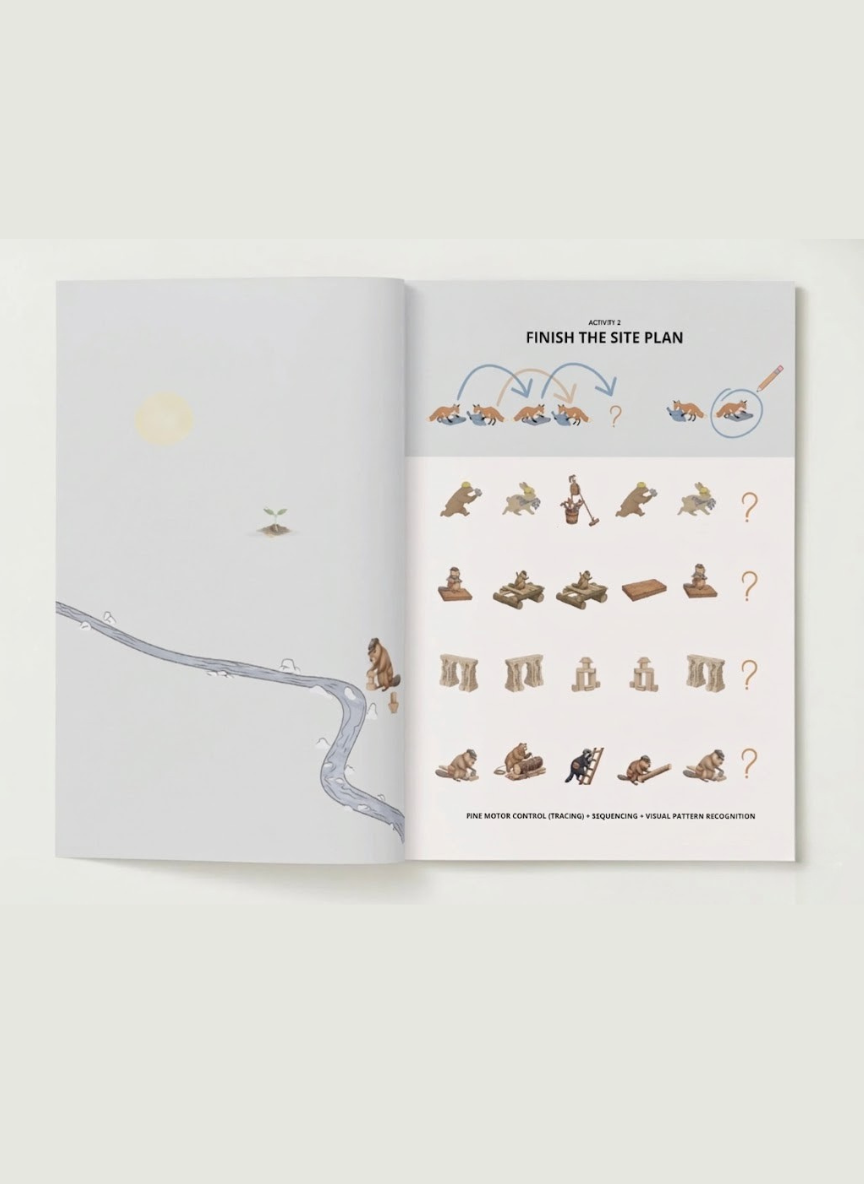
The difference is intent. A typical worksheet asks a child to reproduce: trace this, copy that, fill the blank. The method asks a child to think: notice the pattern, choose between options, check whether your answer holds, explain your reasoning.
Tracing a letter twenty times builds a motor habit. It does not build planning. A task that asks “which of these does not belong, and why” builds something else entirely: the child has to compare, decide, and justify. Both have a place, but only the second is cognitive practice.
Here is a quick test for any activity you are considering. Ask whether it requires the child to make a decision and check it. If the right answer is obvious, pre-filled, or impossible to get wrong, it is keeping hands busy, not minds. If the child has to pause, choose, and could plausibly catch their own error, it is building real thinking.
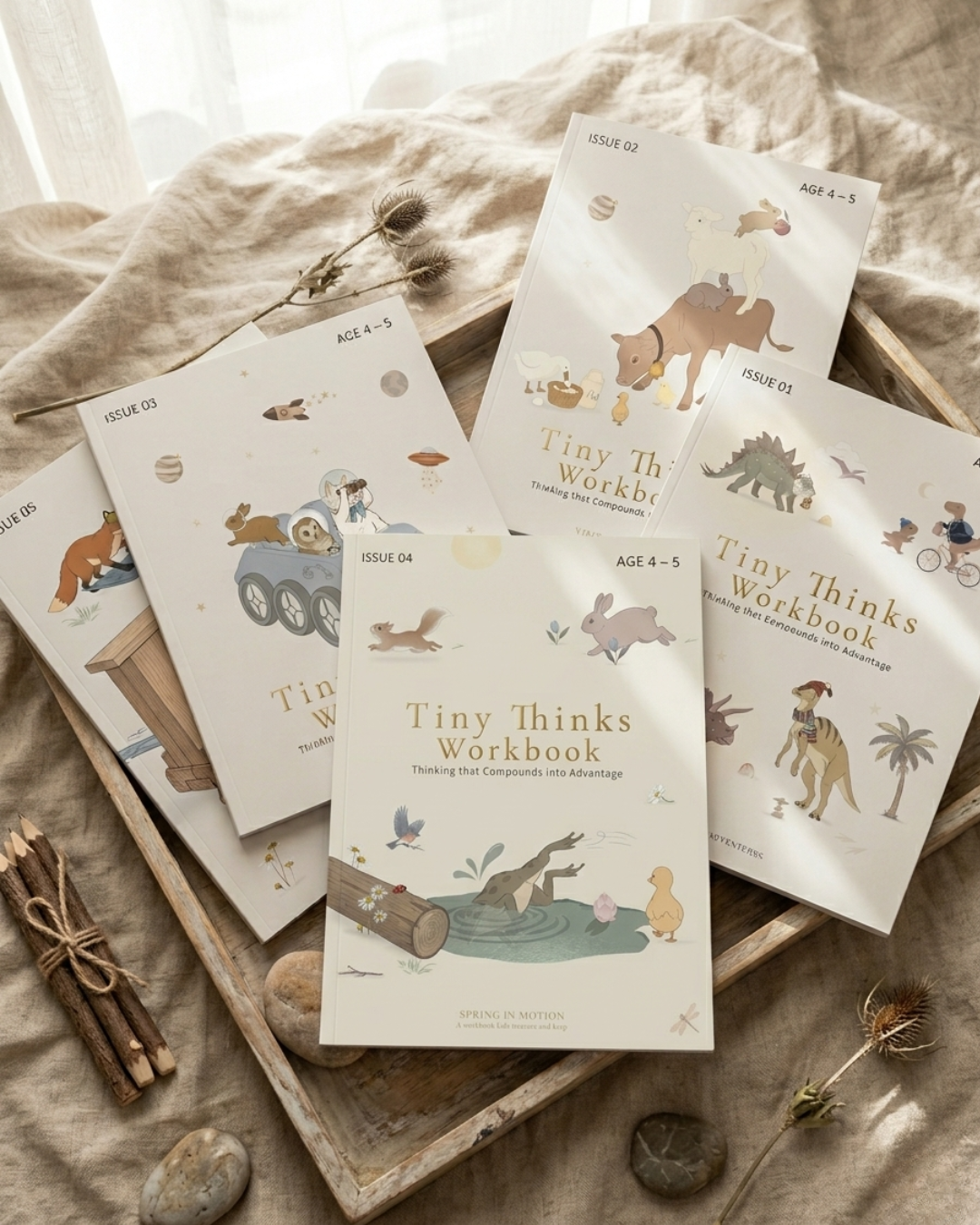
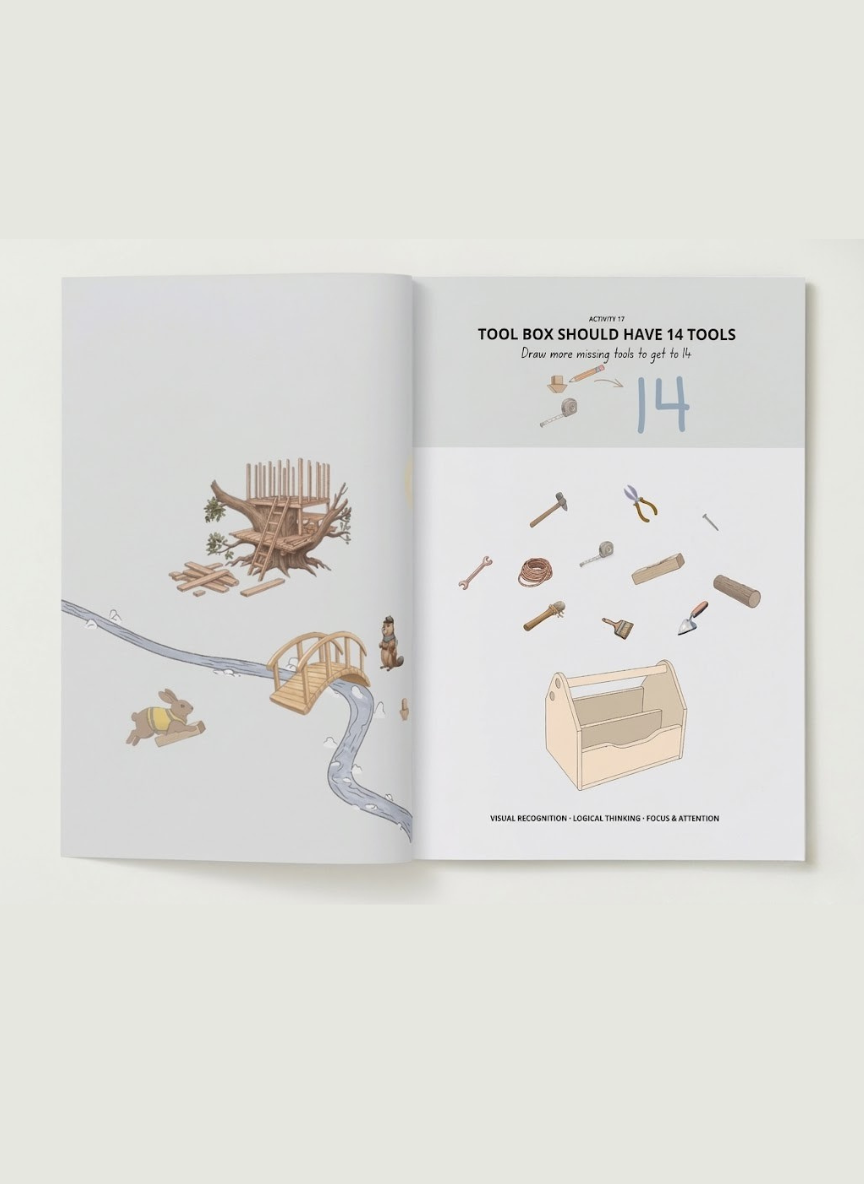
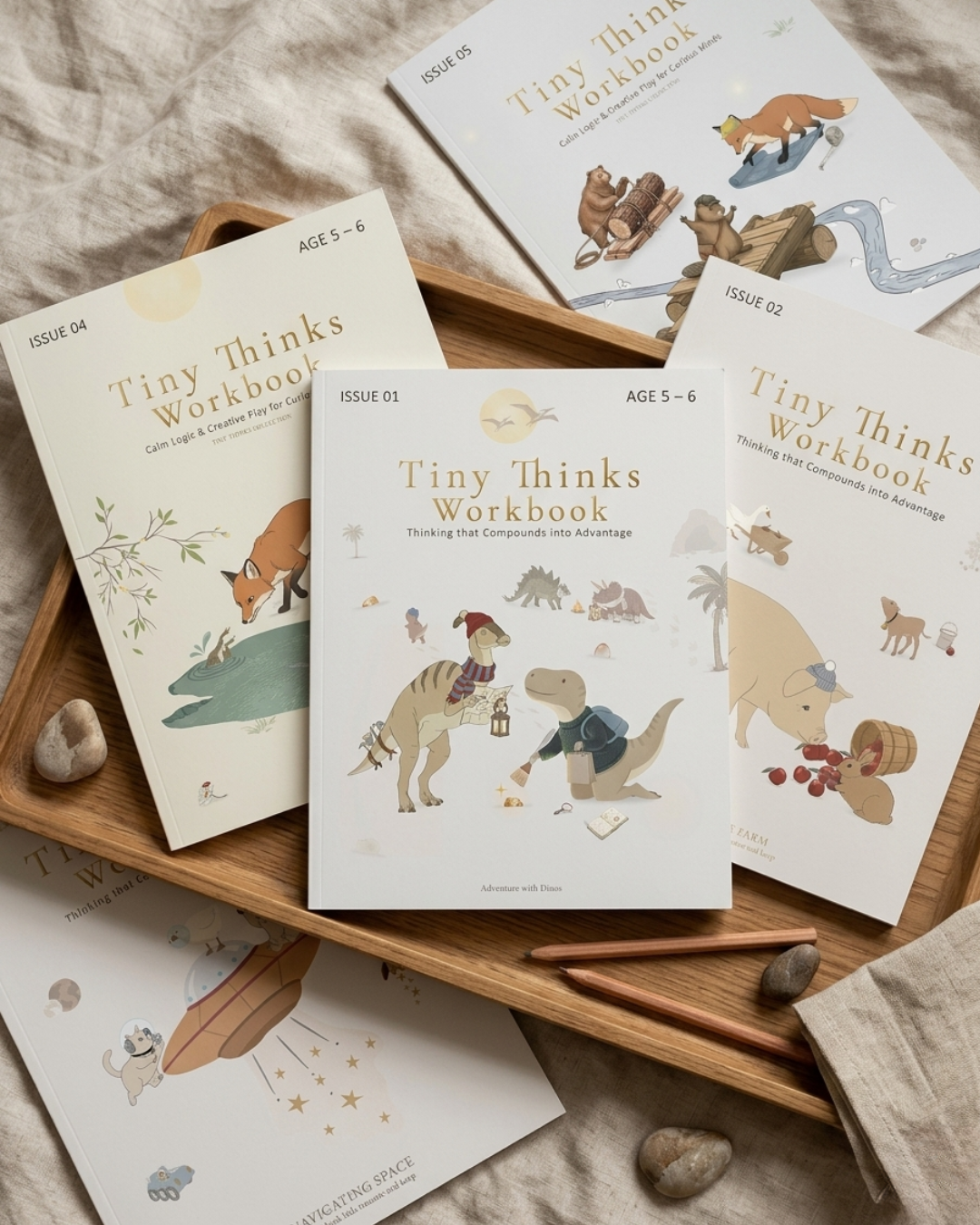
Tiny Thinks is the practical expression of this method: short, screen-free tasks that ask a child to notice, choose, complete, check, and explain, calibrated to the four stages above. The point is not the page. The point is the small decision the page forces.
Who This Method Is Best For
The Pre-Seven Learning Method suits families who want something simple but meaningful in the years before seven, and who would rather their child practise thinking than memorise content. It fits ordinary moments: after school, while dinner cooks, in a waiting room, on a quiet weekend morning.
It tends to suit the parent who has tried workbooks that turned out to be tracing, or apps that taught the answer instead of the thinking, and felt the gap. It suits the child who is bright but rushes, or who can focus on what they love and abandons everything else.
It is not a fix for any clinical concern, and it does not claim to be. It is not therapy, assessment, or a diagnosis. If your child is being evaluated for attention, sensory, or speech differences, the method is calm general practice, nothing more. And it is not a school replacement. It works alongside whatever learning your child already does.
One honest note for the worried parent: using screens in the past has not broken anything. Children are remarkably adaptable. The only useful question is what your child can practise next, starting today.
How to Begin at Home
When starting the Pre-Seven Learning Method, begin small and end on a win. A young child’s thinking practice does not need a special hour. It needs a short task, a calm tone, and an adult who resists jumping in to rescue.
A simple way to start:
- Pick one short task that has a clear end. Five focused minutes beats thirty distracted ones.
- Before they start, ask one planning question: “what will you do first?” That single pause is the planning capability in training.
- When they get stuck, wait. Count to ten in your head before offering help. The struggle is where the learning lives.
- When they finish, ask them to check it, then explain one answer. Checking and explaining are the highest-value moves you can prompt.
- Stop while it is still going well. Leaving them wanting more protects tomorrow’s session.
You do not need to be a teacher to do this. The whole approach is built so a tired parent can run it without preparation. The work is mostly in what you don’t do: not finishing the task for them, not correcting the moment they pause, not turning five calm minutes into a drill.
This is the natural place to bring in structured tasks designed for the four stages, so the practice has a real progression rather than a random pile of pages. Tiny Thinks uses that staged progression, so a child is not just filling pages but meeting the next kind of thinking task at the right level.
Tiny Thinks workbooks bring The Pre-Seven Learning Method to life through short, screen-free thinking missions that help children build planning, working memory, problem-solving, attention, and self-control in everyday moments before age seven.
You can start with the Free Calm Pack for a simple at-home routine, or explore the full range of Tiny Thinks workbooks built around The Pre-Seven Learning Method.
Frequently Asked Questions
What is The Pre-Seven Learning Method?
The Pre-Seven Learning Method is a screen-free approach that builds the ten thinking capabilities underneath learning, through small, calibrated tasks in the years before age seven. It focuses on capability, such as planning and attention, rather than content alone.
Is age three too young for structured learning?
No, as long as the structure is short and playful. At three to four, the goal is simply staying with one task and finishing it, not academics. A minute or two of focused noticing and choosing is plenty.
Are workbooks actually useful for preschoolers?
Workbooks help only if they ask the child to think, not just trace. A page that requires noticing, choosing, checking, and explaining builds reasoning. A page that only asks for copying keeps hands busy without building planning.
How is this different from preschool worksheets?
Most worksheets ask a child to reproduce an answer. The Pre-Seven Learning Method asks a child to make a decision and check it, which exercises planning, problem-solving, and error detection rather than repetition.
How do I reduce screens without constant battles?
Offer a replacement rather than a removal. A short, doable task that ends in a small visible win competes for attention far better than taking a screen away with no alternative.
What should a four-year-old be learning at home?
A four-year-old is mainly practising focus, finishing a short task, and holding two or three steps in mind. The capability matters more than the content, so a small sequence completed independently is real progress.
How do I know if an activity builds real thinking?
Ask whether the child has to make a decision and could plausibly get it wrong. If the answer is obvious or pre-filled, it is busywork. If they must pause, choose, and check, it builds thinking.
How much focus is normal at five?
There is no reliable number for attention span by age, despite the popular “one minute per year” claim, which is not a research finding. A five-year-old’s focus varies with interest, difficulty, and tiredness.
How much time does the Pre-Seven Learning Method require?
The Pre-Seven Learning Method requires very little time. Five focused, calm minutes a day is more useful than a long distracted session because the value is in the quality of thinking, not the quantity of pages.
Will this make my child smarter or guarantee school readiness?
No honest approach can promise that. The method gives children regular chances to strengthen the thinking school later depends on, and early executive function is associated with later achievement, but association is not a guarantee.
References
School Readiness and Later Achievement (Duncan et al., 2007) , Developmental Psychology (APA) https://www.apa.org/pubs/journals/releases/dev-4361428.pdf
A Gradient of Childhood Self-Control Predicts Health, Wealth, and Public Safety (Moffitt et al., 2011), PNAS
https://www.pnas.org/doi/abs/10.1073/pnas.1010076108