

Key Takeaways
- School readiness means a child can participate in learning: listen, wait, remember instructions, switch tasks, and act with growing independence, not just recognise letters.
- Research links early self-regulation and executive function to later school performance more reliably than early academic facts alone (Moffitt et al., 2011).
- There is no reliable “minutes per year of age” rule for attention span; what matters is whether a child can settle into a task and return to it, which develops with practice.
- Children develop unevenly, so a child can be ahead on letters and still behind on managing transitions, and a checklist alone rarely shows this (Center on the Developing Child, Harvard).
- Crying at drop-off is common in the early weeks and is not by itself a sign a child is not ready for school.
- Planning and self-control is the lead capability behind school readiness, and it is one of the ten the Pre-Seven Learning Method gives children calm, regular chances to practise before age seven.
The worry usually sounds like this. Your child knows their letters, can count, maybe writes a wobbly version of their name. And yet you watch them shut down when a game changes the rules. They wait to be told what to do next. They forget the second half of a two-part instruction before they reach the door. School is coming, and you’re wondering whether your child’s school readiness goes beyond the usual checklist.
School readiness means your child can take part in learning: listen, wait, hold instructions in mind, switch tasks, keep going when something is hard, and do some of it without an adult standing over them. It is not a test children suddenly pass on their fifth birthday. It is the visible result of skills that have been forming quietly for years.
What school readiness really means
School readiness is the ability to participate in a structured learning environment, not the ability to perform academic facts on demand. A child with strong school readiness can follow a group instruction, move from one activity to the next without falling apart, remember where their bag goes, and try a task before asking for help.
Most of what dominates search results treats readiness as a program, an enrolment pathway, or an institutional checklist. Those things matter for access. They do not describe what is actually happening inside the child who copes well on day one.
What the teacher notices in September is rarely “this child knows their letters.” It is “this child can wait for a turn, hold a two-step instruction, and come back to a task after a wobble.” Those are thinking skills, and they sit underneath the academics, not beside them.
The five skills that matter most before school
Before school, five observable capabilities tend to predict how smoothly a child settles in. They are not facts to memorise. They are things a child does.
These five skills form the foundation of school readiness.
- Holding instructions in mind. The child who can carry “put your shoes on, then get your coat” all the way to the door is using working memory.
- Managing transitions. The child who can stop one activity and start another without a meltdown is using cognitive flexibility.
- Staying with a task. The child who keeps going on a puzzle after the first hard piece is using sustained attention and persistence.
- Waiting and self-control. The child who can wait for a turn, or hold off on calling out, is using self-control.
- Thinking a step ahead. The child who looks at a task and works out what to do first is planning.
Planning and self-control, sustained attention and persistence, working memory, and cognitive flexibility are four of the ten capabilities the Pre-Seven Learning Method is built around. Together they form what educators often call executive function, and they do more of the heavy lifting in early school than most checklists admit.
School readiness is not the same as early academics
Knowing letters and numbers is useful, but it is not the same as being ready to learn. A child can recite the alphabet and still struggle to follow the routine that lets a classroom function.
This is the gap most readiness advice misses. Letters are easy to see and easy to drill, so they get the attention. The harder-to-see skills, like waiting and remembering steps, are the ones that actually carry a child through a school morning.
Plenty of families have drilled letters all summer and then watched their child cry at the classroom door, not because they couldn’t read, but because they couldn’t yet manage the separation and the new routine. The academics were never the problem.
Strong early teachers know this. They are not looking for a child who arrives knowing everything. They are looking for a child who can engage with what comes next.
This is why school readiness should be viewed as much more than knowing letters and numbers.
How to know if your child is ready
The most useful signs of readiness are things you can watch at home, not scores on a sheet. Look at how your child handles ordinary, slightly demanding moments.
These are practical signs of growing school readiness.
- Can they follow a two-step or three-step instruction without each step being repeated?
- Can they wait a short time for something they want, like a turn or a snack?
- Can they move from play to dinner without a full meltdown most days?
- Do they try a tricky task before asking for help, even briefly?
- Can they separate from you for a short period in a familiar setting?
- Can they put a few things away or manage a simple routine with reminders?
None of these need to be perfect. You are watching for a direction of travel, not mastery. A child who can do these things some of the time, and gets better with practice, is showing the thinking school later depends on.
If you regularly see something that worries you, like a child who cannot separate at all or whose distress is intense and persistent across settings, a calm conversation with your pediatrician is a reasonable next step. Readiness signs are not diagnoses.
What affects a child’s readiness for school
A child’s school readiness is shaped by attention, language, routines, confidence, and the ability to regulate emotions, far more than by how many facts they know. These develop at different rates in different children.
A few things many families notice:
- Age within the year. A child with a summer birthday may be nearly a year younger than classmates, which can show up in attention and self-control.
- Predictable routines. Children who live with consistent daily rhythms often find school routines easier to slot into.
- Language and listening. Following group instructions leans heavily on listening stamina, which builds through everyday conversation and being read to.
- Temperament. A shy child is not an unready child. Shyness affects how a child warms up, not whether they can think and participate.
- Emotional regulation. The ability to recover after frustration is part of readiness, and it is still very much under construction at this age.
It helps to separate shyness and youth from genuine difficulty. A quiet four-year-old who watches first and joins later is doing something developmentally sensible, not failing.
Best school readiness activities by age 3 to 7
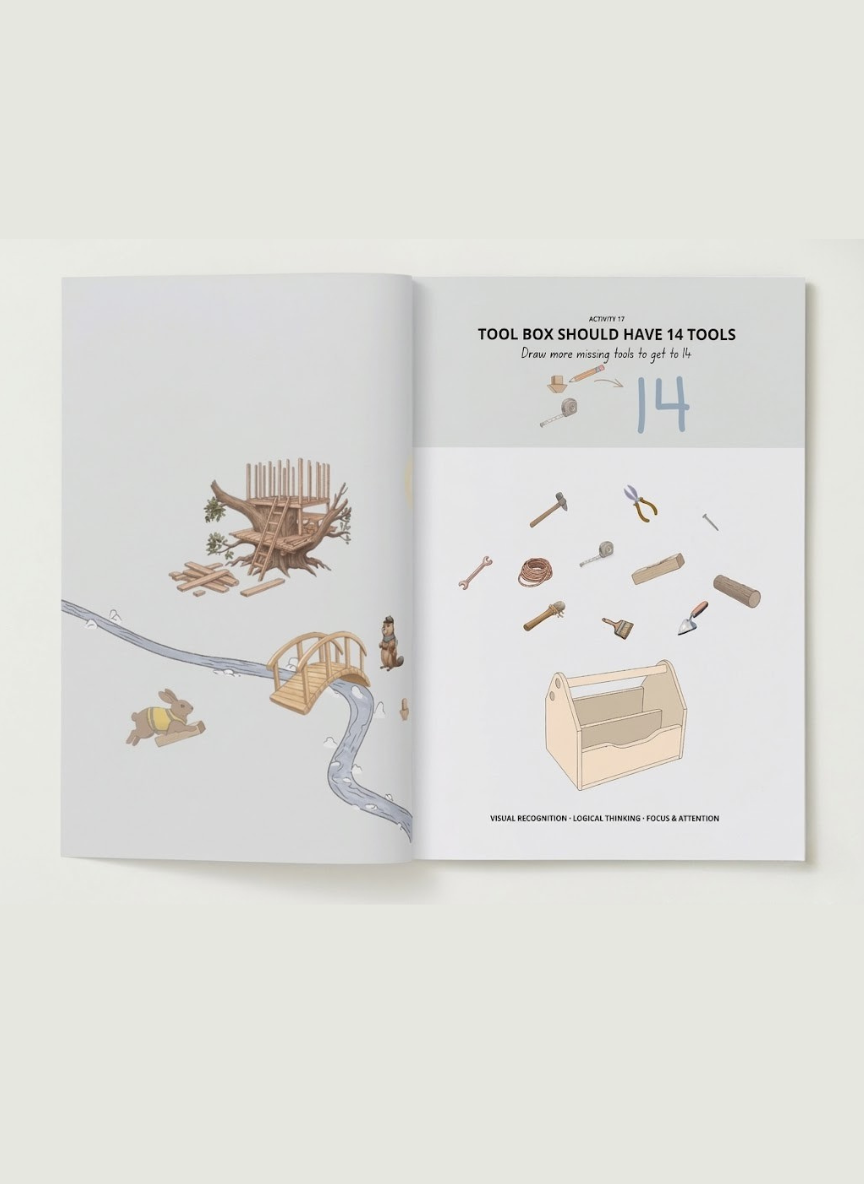
The best readiness activities are short, play-based, and built into ordinary days, not worksheets. They give children regular chances to practise holding steps, taking turns, and thinking ahead. This is the kind of small, screen-free practice Tiny Thinks treats as readiness work: not busywork, but a chance to hold a step, wait, and try again.
Ages 3 to 4: build simple routines. Keep it to one or two steps. “Find your shoes, then bring them here.” Sort socks by colour. Take turns in a simple game. Let them put one thing away by themselves. You are building the habit of following a step and finishing it.
Ages 4 to 5: compare and follow steps. Add a third step to instructions. Play games with rules that must be remembered. Sort objects by two features, like big red blocks versus small red blocks. Tell a story together where they decide what happens next. Self-checking starts here: “Did you get everything on the list?”
Ages 5 to 7: plan ahead and recover from mistakes. Let them plan a small task before starting, like setting the table or packing for the park. Play “pretend school” so the routine feels familiar before day one. Use visual step cards for getting ready. When something goes wrong, talk through what to try next instead of fixing it for them. This is where thinking a step ahead becomes visible.
Across all ages, the goal is not to fill time with activities. It is to give a child small, repeated chances to use the capability, then step back so they can do it themselves.
When a checklist can mislead parents
A readiness checklist can mislead because it makes uneven development look like failure. Children rarely develop in a straight line, so a child can be advanced in one area and still forming another, and a list that adds everything up loses that picture.
Every checklist online seems to say something slightly different, which tells you how loose the consensus actually is. If three lists disagree, none of them is a gate your child must pass.
The thing a checklist cannot capture is movement. A child who couldn’t wait for a turn in June and can wait by September is showing exactly the readiness that matters, even if a one-time list caught them on a hard day.
So use checklists as a prompt to observe, not as a verdict. Notice what is developing. Notice where to practise. Skip the panic.
Should you delay kindergarten for maturity?
Delaying school entry is a reasonable option some families consider for younger children, but it is a personal decision, not an automatic fix. A child being young for the year can affect self-control and attention, and an extra year sometimes helps. It is not guaranteed to.
What helps regardless of timing is practising the underlying capabilities. A child who gets regular, calm chances to hold instructions, wait, and recover from frustration is building readiness whether they start this year or next.
If you are genuinely unsure, the most useful conversation is with the people who will see your child in a group: the receiving school or an early-years educator who can observe how your child engages with a task, not just what they know.
How the Pre-Seven Learning Method builds readiness
The Pre-Seven Learning Method is a phased, screen-free approach for ages 3 to 7 that builds the thinking underneath learning through small, calibrated thinking missions. It treats readiness as something a child practises in ordinary moments, not paperwork to complete or a milestone to hit.
The connection to school readiness is direct. The same capabilities a teacher watches for in September are the ones the method gives children regular chances to practise: planning and self-control, sustained attention and persistence, working memory, and cognitive flexibility. These are the thinking skills that do not go out of date, the ones a child will lean on in whatever future they grow into.
It is not tutoring, drilling, or a school replacement. It is calm, structured thinking practice for the years before seven, designed to slot into the moments you already have: getting ready in the morning, waiting somewhere, the quiet stretch before bed. In Tiny Thinks language, those small missions are where readiness becomes something children can rehearse, rather than something adults simply hope will appear.
The aim is simple and worth naming plainly. You want a child who can enter a new room, work out what to do, and get on with it. The surprised look on a child’s face when they finish something hard on their own, before anyone helps, is the readiness no checklist measures.
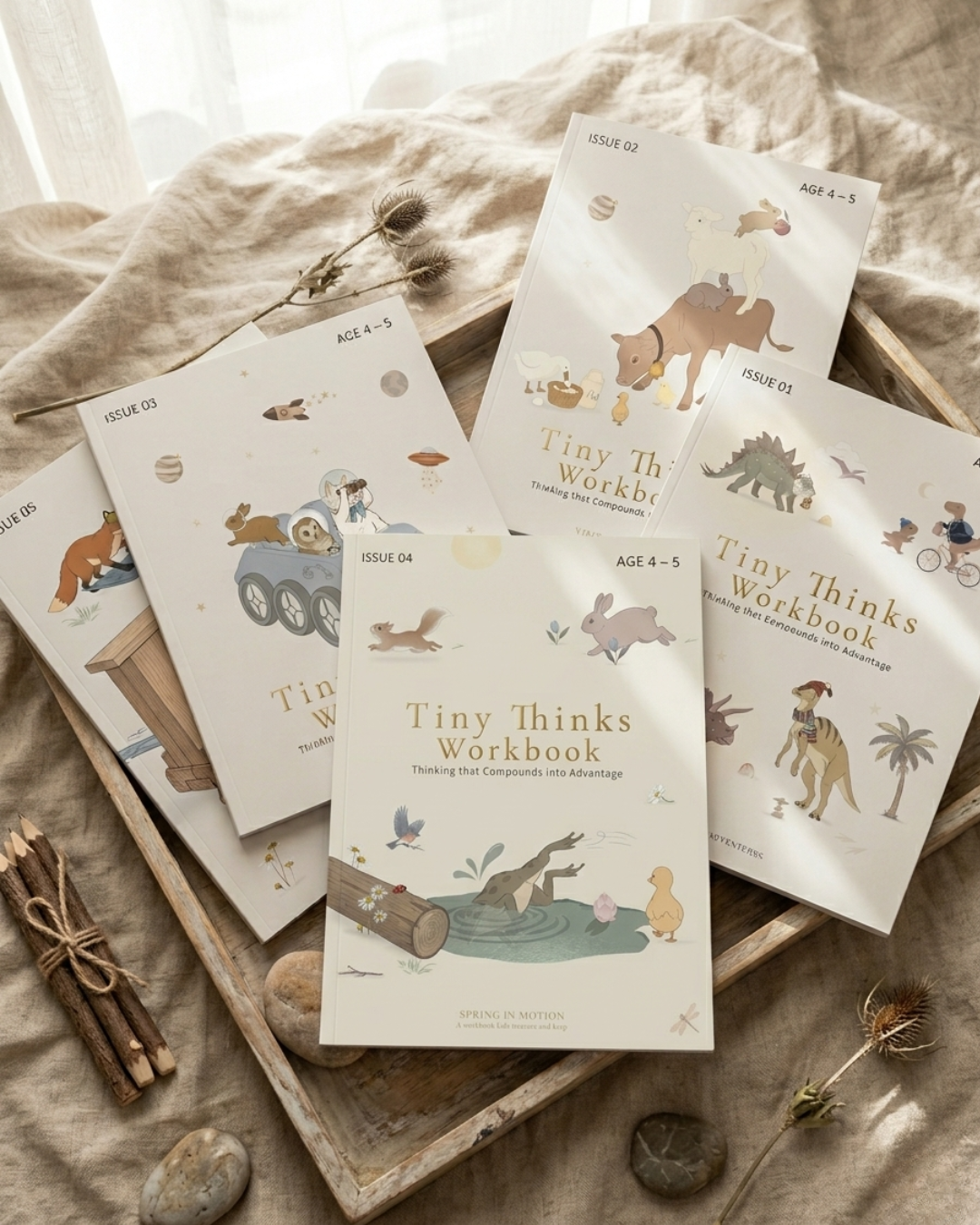
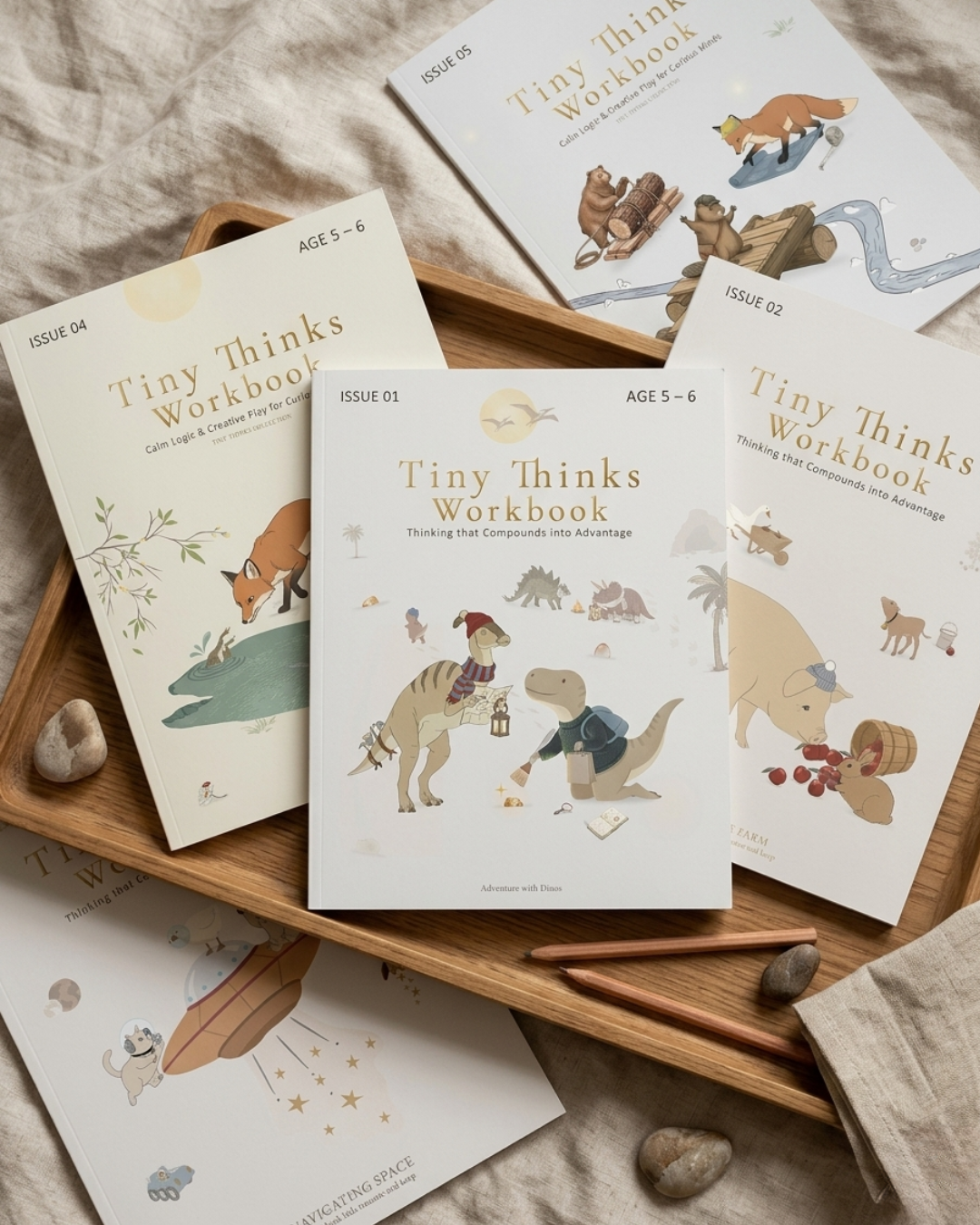
Tiny Thinks workbooks give children short, screen-free thinking missions that build the skills behind school readiness, including planning, attention, working memory, problem-solving, and self-control through everyday practice.
You can start with the Free Calm Pack for a simple at-home routine, or explore the full range of Tiny Thinks workbooks built around The Pre-Seven Learning Method.
School readiness FAQs for worried parents
Is my child behind if they cannot write their name?
No. Writing a name is a fine-motor and academic skill, not a measure of school readiness. Many children learn it in the first months of school, and it sits well below skills like following instructions and managing transitions.
Should my child already know all their letters before kindergarten?
Most kindergartens do not expect children to arrive knowing all their letters or reading. They expect children who can listen, take turns, and engage with a task. Letter knowledge is taught at school.
Will crying at drop-off mean my child is not ready?
No. Crying at drop-off is common in the early weeks and usually settles as the routine becomes familiar. It reflects the separation, not a lack of readiness.
How do I prepare a shy child for school?
A shy child is often ready in thinking but slower to warm up socially. Familiar routines help, so playing pretend school, visiting the building, and practising small separations can ease the first days. Shyness is not unreadiness.
Am I behind because we avoided worksheets?
No. Readiness is built more through play, conversation, and everyday routines than through worksheets. Short games involving turn-taking, sorting, and multi-step instructions practise the capabilities that matter most.
My child knows facts but cannot follow routines. Is that a problem?
It is common and worth practising. Facts are easy to see, but classrooms run on routine, attention, and self-control. Daily two- and three-step instructions at home give children chances to build the part that lags.
What single skill matters most before school?
If you focus on one thing, focus on self-regulation: waiting, following steps, and recovering from frustration. It underpins almost everything a child does in a classroom day.
Is it bad that my child cannot manage the toilet or wiping independently yet?
Self-care independence helps and is worth practising before school, but it is a skill that develops with opportunity, not a sign of unreadiness on its own. Gentle daily practice usually closes the gap.
How long should my child be able to focus before school?
There is no reliable number for attention span by age. What matters more is whether your child can settle into a task and return to it after a distraction, which improves with regular practice.
References
School Readiness and Later Achievement (Duncan et al., 2007) , Developmental Psychology (APA) https://www.apa.org/pubs/journals/releases/dev-4361428.pdf
A Gradient of Childhood Self-Control Predicts Health, Wealth, and Public Safety (Moffitt et al., 2011),PNAS
https://www.pnas.org/doi/abs/10.1073/pnas.1010076108