



Key Takeaways
- Executive function in children is the set of mental skills that lets a child hold a goal, control impulses, remember steps, and adjust when things change.
- Executive function develops slowly across childhood and is still very much under construction before age seven, so forgetting instructions and struggling with transitions is common and expected, not a failure of parenting.
- Researchers describe three core executive functions: working memory, inhibitory control (self-control), and cognitive flexibility, which together support planning and reasoning (Center on the Developing Child, Harvard University).
- Executive function skills are not fixed traits a child either has or lacks; they can be practised, and short rule-based games and everyday routines give children regular chances to strengthen them (Center on the Developing Child, Harvard University).
- Executive dysfunction is associated with ADHD, but difficulty with focus or transitions in a young child does not on its own mean a child has ADHD (Centers for Disease Control and Prevention).
- Planning and self-control sit at the heart of independent learning, and they are among the ten capabilities the Pre-Seven Learning Method gives children calm, regular chances to practise in the years before seven. For a young child, that can look as simple as pausing, remembering the next step, and trying again without a screen doing the work for them.
What executive function means in children
Executive function in children is the child’s ability to organise attention, memory, action, and behaviour toward a goal. It is what lets a four-year-old hold an instruction in mind, ignore the toy on the floor, and actually get their shoes on.
Think of it as the mental control room. When you ask your child to put their cup in the sink and then wash their hands, executive function is what holds both steps, blocks the urge to wander off, and checks whether the job is done.
It is not a single skill children either have or lack. It is a cluster of related abilities that grow unevenly across the early years. A child can be strong at remembering a sequence and still fall apart the moment a plan changes.
Most parents meet executive function before they ever hear the term. It is the boy who cannot get started. It is the girl who forgets what you said the second you said it. It is the everyday task that turns into a battle.
What are the core executive function skills?
Researchers group executive function in children into three core skills: working memory, self-control, and cognitive flexibility. Planning and sustained attention grow out of these three.
Here is what each one looks like in a young child:
- Working memory: holding information in mind and using it. The child who can keep “socks, then shoes, then coat” in their head without being reminded at each step.
- Self-control (inhibitory control): pausing the first impulse. The child who waits a turn, or who stops reaching for the snack because you said wait.
- Cognitive flexibility: switching when the situation changes. The child who can move from one game to another, or try a different way when the first one fails.
- Planning: thinking a step ahead before starting. The child who looks at a puzzle and works out the corners first.
- Sustained attention: staying with a task long enough to finish it, even when it gets dull or hard.
These overlap constantly in real life. Getting dressed alone needs all five at once, which is exactly why it is so hard for a five-year-old, and why it gets easier with practice rather than pressure.
What does executive function look like from ages 3 to 7?
Executive function grows fast between ages three and seven, but it grows in small steps, and three-year-olds and seven-year-olds are doing very different jobs. There is no single chart that fits every child, so treat these as rough patterns, not a test. Executive function in children develops gradually, with every child progressing at their own pace.
Across the early years, the shape is roughly this:
- Ages 3 to 4: can follow one clear instruction, can wait a short time with support, and is starting to hold a simple goal. Two-step directions are often too much without a reminder. Transitions are genuinely hard.
- Ages 4 to 5: can usually manage two steps, can wait a little longer, and is beginning to switch between rules in a game. Still forgets quickly. Still melts down when a plan changes without warning.
- Ages 5 to 6: can hold a short sequence, plan a simple task, and catch some of their own mistakes. Getting dressed alone is becoming possible, though slow.
- Ages 6 to 7: can plan ahead, follow multi-step routines with less prompting, and recover from a changed plan with fewer tears.
A note on attention spans. The popular rule that a child can focus for one minute per year of age is not research. There is no reliable number. What is well established is that attention grows gradually and depends heavily on whether the task interests the child.
What are the signs of poor executive functioning in a child?
Signs of weak executive function include constant reminders, forgetting instructions immediately, struggling to start or finish tasks, and big reactions to small changes. In a young child, most of these are signs of skills still forming, not signs of a problem.
Many families notice some mix of the following:
- You repeat the same instruction three times and it still does not land.
- Routines that should take five minutes take twenty.
- Small tasks become battles, and getting started feels impossible.
- Your child forgets what you asked the moment you walk away.
- Transitions, like leaving the park or stopping a game, trigger meltdowns.
It helps to separate three things. Immaturity is a skill that has not developed yet, and it improves with age and practice. Stress is when a tired, hungry, or overwhelmed child temporarily loses skills they usually have. Persistent difficulty is when the same struggles are much bigger than other children of the same age, happen everywhere, and do not shift over months.
One question parents ask quietly: is this laziness? Almost never. A child who cannot get started is usually missing a piece of the thinking the task needs, not the will to do it. “He just cannot get started” is far more often a planning and self-control issue than a character one.
Why does executive function matter for school readiness?
Executive function in children matters for school readiness because classrooms ask children to manage themselves: to follow directions, wait, remember steps, and keep going without an adult beside them at every moment. Learn more in our guide on school readiness. These skills predict how a child copes with learning, not just what they already know.
This is the part most advice misses. Parents are not only watching whether their child knows letters and numbers. They are watching something quieter: can my child handle a task on their own when I am not there to prompt every step?
You see the answer in small moments. The child who works out a tricky puzzle piece alone and looks up, surprised at themselves. That look is executive function doing its job. The child held a goal, tried, adjusted, and finished without being carried through it.
The deeper reason these skills matter is that they hold up in any future a child grows into. Knowledge dates. The ability to stay with something hard, remember the next step, switch strategy, and check your own work does not go out of date. This is the thinking that learning later depends on.
How does executive function develop before age seven?
Executive function develops before age seven through thousands of small, repeated moments of holding a goal, resisting an impulse, switching when needed, and checking progress. It is built through practice, not installed at a fixed level.
This matters because of the timing. The brain’s executive systems are developing fastest in early childhood, which is exactly when most executive-function advice is aimed at school-age children instead. The years before seven are not too early. They are the main window.
The trouble most families recognise points to a small set of capabilities still forming: planning and self-control, working memory, and cognitive flexibility. These are among the ten capabilities the Pre-Seven Learning Method is built around: a phased, screen-free approach that gives children small, calibrated thinking practice in the years before seven.
Practice does not mean drilling. A three-year-old practises self-control every time they wait their turn in a game. A six-year-old practises planning every time they decide which step comes first. The ordinary moments are the training ground. This is why Tiny Thinks treats games and workbook moments as small rehearsals for planning, working memory, and flexible thinking, not as busywork.
What are the best activities for building executive function?
The best executive function activities for young children are simple games and routines that involve a rule to hold, a step to remember, a turn to wait for, or a plan to follow. Play does the work, not worksheets.
Activities that give children regular chances to practise these skills include:
- Rule games: Simon Says, freeze games, and “do the opposite” games. Holding a rule and stopping an impulse is self-control in action.
- Sequencing tasks: “First we wash, then we dry, then we put away.” Saying the order out loud builds working memory and planning.
- Memory games: matching pairs, “I went to the shop and bought,” or hiding three objects and recalling them. These stretch working memory in a way children enjoy.
- Sorting and switching: sort cards by colour, then switch and sort by shape. Switching the rule practises cognitive flexibility.
- Self-checking: “Have a look. Did we get everything?” before leaving the house. Checking your own work is a skill, and it starts small.
Keep sessions short. A few focused minutes of a game beats a long activity that ends in frustration. The goal is to finish on a good note so the child wants to come back to it.
What should parents avoid when building executive function?
Avoid overloading a young child with too many instructions at once, shaming slow progress, and relying on long explanations in a hard moment. These tend to make executive-function struggles worse, not better.
Some honest patterns many parents report:
- Too many steps at once. A four-step instruction is often three steps too many. The child loses the thread and freezes.
- Long explanations during a meltdown. When a child is overwhelmed, more words rarely help. Fewer, calmer words and a clear next step usually work better.
- Sticker charts that fade. Many families find reward charts stop working after a while, because they do not teach the missing skill. They reward an outcome the child does not yet know how to reach.
- Punishing the struggle. Punishment for forgetting or melting down tends to raise stress, and stress shrinks the very skills you are hoping to grow.
- Skipping warnings before transitions. A surprise change is hard. A short heads-up gives a young child time to switch gears.
None of this means you are failing. If you feel like a broken record, you are not doing it wrong. You are watching a skill that is still being built.
When should I seek extra support?
Consider talking to your pediatrician if your child’s difficulties with attention, self-control, or following directions are much greater than other children of the same age, happen across home and other settings, and do not improve over several months. A professional can help you understand what you are seeing.
Most young children who struggle with executive function are simply still developing it. But trust your own observation. If something feels persistently and unusually hard, a calm conversation with a pediatrician is a sensible next step, and asking is never an overreaction.
Is executive dysfunction related to ADHD?
Yes, executive dysfunction is closely associated with ADHD, but difficulty with focus or self-control in a young child does not on its own mean a child has ADHD. Many children without ADHD have developing executive function that simply needs more time.
ADHD is diagnosed by qualified professionals using specific criteria, not by a single behaviour at home. Forgetting instructions, struggling with transitions, and acting on impulse are common in early childhood across the board. If you are concerned, a pediatrician is the right place to start. Practising executive function skills at home supports development, but it is not a treatment for any diagnosed condition.
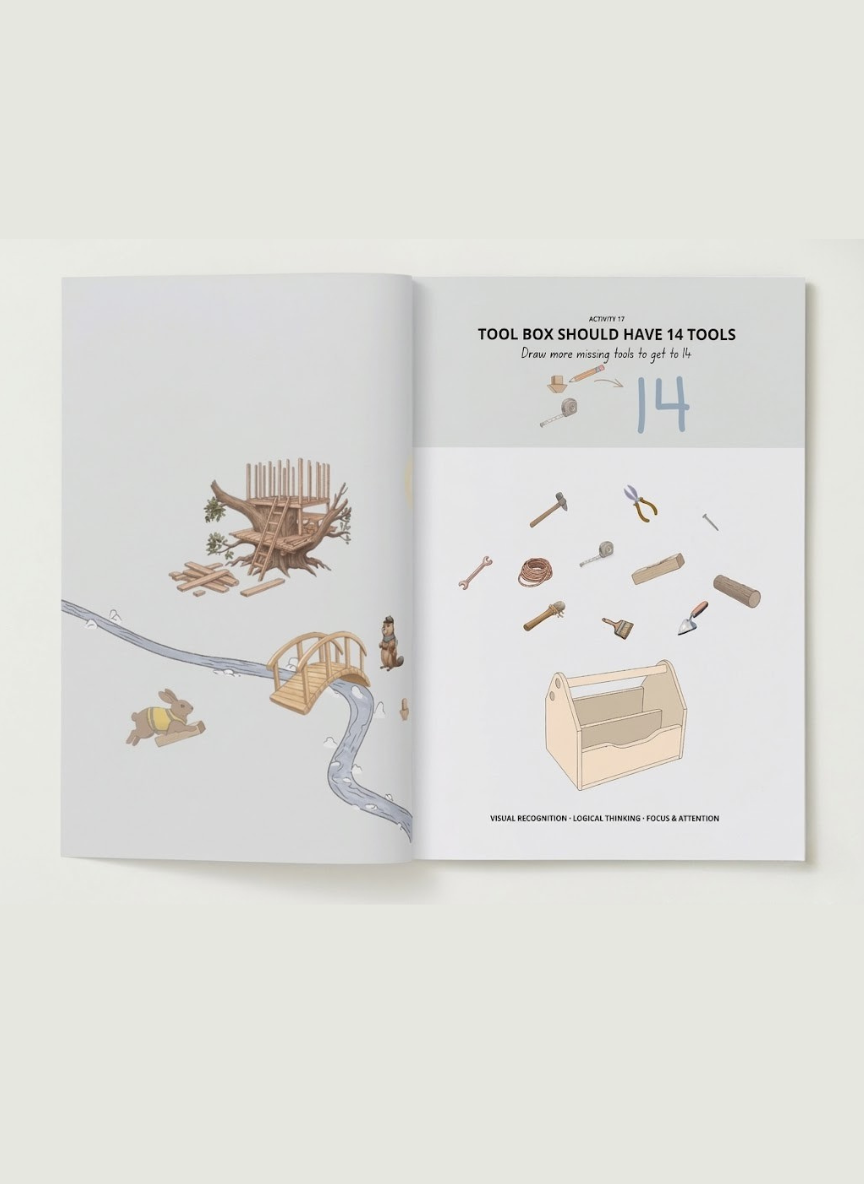
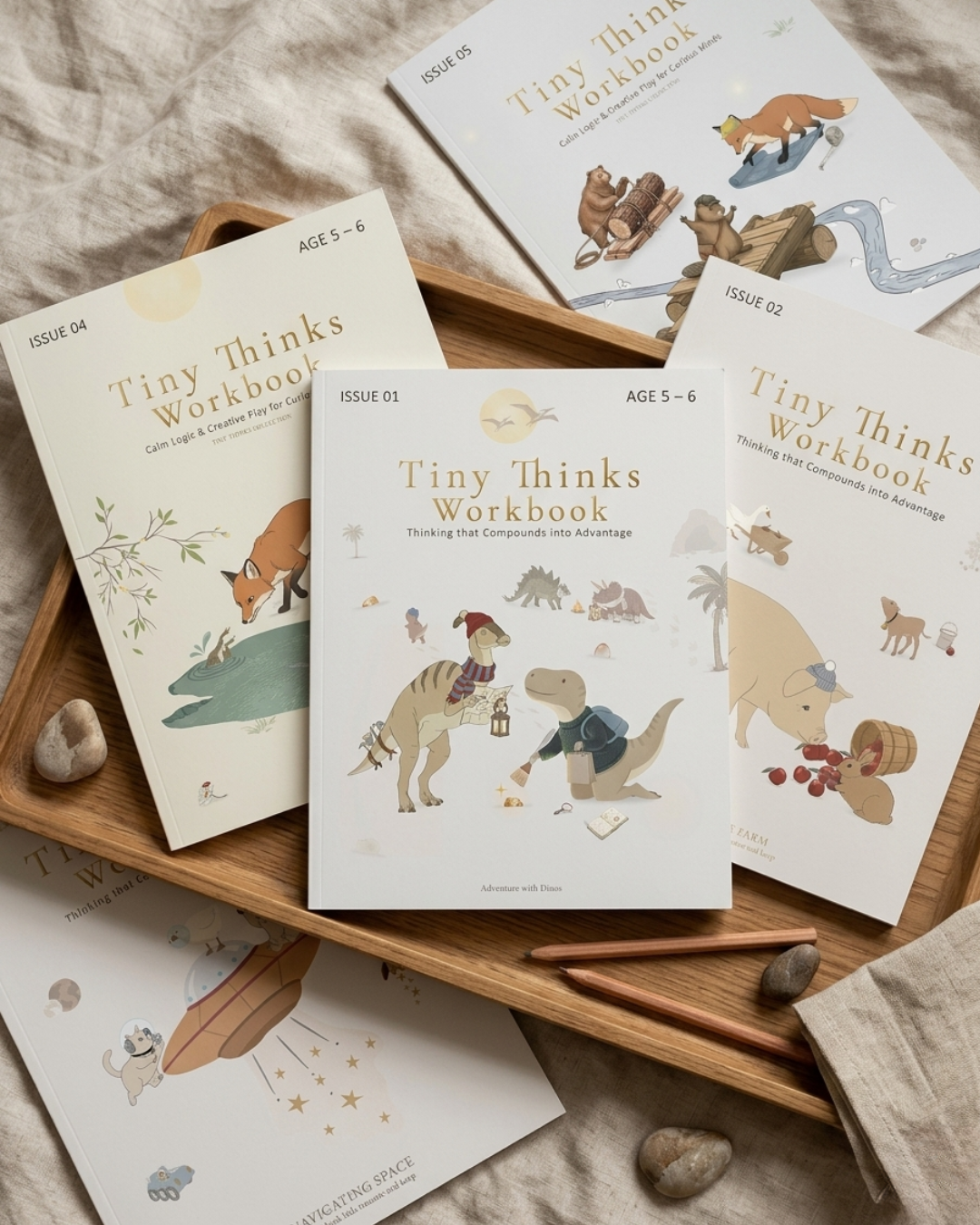
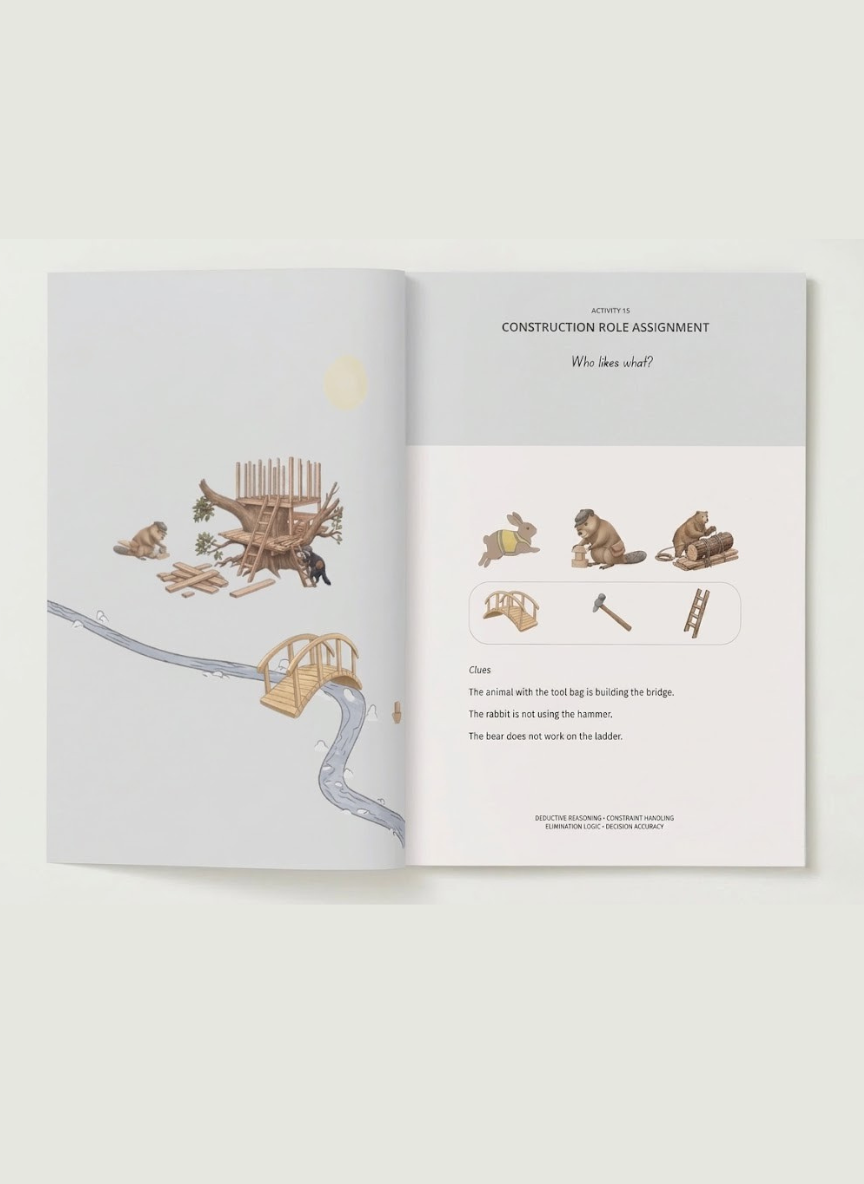
Tiny Thinks workbooks give children short, screen-free thinking missions that strengthen executive function through activities that build planning, working memory, attention, self-control, and flexible thinking in everyday moments.
You can start with the Free Calm Pack for a simple at-home routine, or explore the full range of Tiny Thinks workbooks built around The Pre-Seven Learning Method.
Frequently Asked Questions
What is executive function in children?
Executive function in children is the set of mental skills that lets a child hold a goal in mind, control impulses, remember steps, plan ahead, and adjust when things change. It is the mental control behind following directions and finishing tasks.
At what age does executive function develop?
Executive function begins in toddlerhood and develops rapidly between ages three and seven, then continues maturing into the mid-twenties. The early years before seven are a key window for building these skills through play and routine.
Is my child lazy or struggling with executive function?
A young child who cannot get started or finish a task is almost never lazy. They are usually missing a piece of the thinking the task needs, such as planning or self-control, which is still developing and can be practised.
How do I help a kid who cannot follow directions?
Give one step at a time, keep instructions short, and ask the child to repeat the step back to you. Following directions depends on working memory and self-control, both of which a young child is still building.
Why does my child melt down during transitions?
Transitions are hard because switching from one activity to another requires cognitive flexibility, a skill still forming before age seven. A short warning before the change gives a young child time to adjust and often reduces meltdowns.
Can executive function improve without therapy?
Yes. For most children, executive function strengthens through everyday practice: rule games, sequencing routines, memory play, and waiting their turn. Therapy is only needed when difficulties are persistent and much greater than expected for the child’s age.
What is normal for a five-year-old?
Many five-year-olds can follow two-step instructions, wait short periods, and begin planning simple tasks, though they still forget quickly and struggle when plans change. Getting dressed alone is becoming possible but is often slow.
Did screens make my child’s executive function worse?
There is no simple cause-and-effect answer here. What helps is shifting attention to what your child can practise next: short, screen-free moments of waiting, remembering, and planning give them regular chances to strengthen these skills.
Should a four-year-old follow two steps?
Many four-year-olds can manage two simple steps with a reminder, but it is common for two-step directions to be too much without support. Holding two steps in mind depends on working memory that is still developing.
References
Executive Functions (Diamond, 2013) , Annual Review of Psychology https://www.annualreviews.org/content/journals/10.1146/annurev-psych-113011-143750
Executive Function & Self-Regulation , Harvard Center on the Developing Child
https://developingchild.harvard.edu/science/key-concepts/executive-function/