



Key Takeaways
- Screen time brain fog impairs your child’s ability to think clearly.
- Rapid digital media, especially YouTube, hijack the dopamine circuits and increase kids’ cravings for screen time.
- Extended screen exposure hijacks attention circuits and sleep cycles. All of which can manifest as inattentiveness, hyperactivity, and sleep irregularities.
- Passive screen use can erode language, reading, and memory skills. This is all the more reason to promote hands-on or interactive learning.
- As a parent, you can assist by imposing hard limits on time and quality and promoting screen-free alternatives like outdoor play or family activities.
- It’s open dialogue and routine consistency around technology use that foster digital resilience and establish children’s life-long healthy habits.
Screen time brain fog’ in kids is the mental lethargy, fragmented attention, and energy deficit parents observe after children use tablets or consume rapid-fire videos. Many families experience this in transitions, such as after school, before dinner, or after extended screen-filled car rides.
Studies connect this fog to overstimulation and dopamine surges from fast content. By explaining how digital input transforms kids’ thinking, Screen Time Brain Fog empowers parents to discover quieter, more orderly rhythms that bring back clarity.
Parents describe a screen time brain fog child as “present but not fully here.”
Understanding Screen Time Brain Fog
Screen time brain fog is what parents call it when their kids appear scatterbrained, cranky, or otherwise too zoned out to remember their after morning shower homework ritual after hours of screen time. It’s not some temporary transitional stage. For young children, especially those aged 3 to 7, this fog can show up in small but important ways: trouble following instructions, more frequent meltdowns, or simply zoning out right when you need them to engage.
They’re very real and quantifiable, particularly as pervasive daily screen time becomes standard fare in harried families across the globe.
Many parents find that a screen time brain fog child resets more easily with gentle Screen-Free Activities that slow the nervous system.
Understanding the biology behind a screen time brain fog child helps parents respond with more empathy.
|
Symptom |
Description |
|---|---|
|
Trouble focusing |
Difficulty paying attention to non-digital tasks, constant distraction |
|
Memory lapses |
Forgetting simple things, trouble recalling routines or rules |
|
Irritability |
Emotional swings, more frequent outbursts, “crashing” after screen time |
|
Disengagement |
Lack of interest in physical play, reluctance to join family activities |
|
Restlessness |
Can’t settle to quiet play, always seeking more stimulation |
|
Anxiety |
Worry, stress, or agitation when separated from devices |
|
Slowed problem-solving |
Struggles with puzzles, sequencing, or step-by-step tasks |
When rapid content overwhelms the nervous system, a screen time brain fog child becomes the natural outcome.
Kids’ maturing brains are particularly vulnerable to rapid-fire digital stimulation, such as YouTube Kids or endless cartoon streams. Their nervous systems are still figuring out how to digest sensory input and construct attention. When screens provide incessant novelty, the brain’s outermost layer, critical for memory and cognition, receives scant respite.
In adults, this layer can actually thin with overuse, and for kids, the danger is even more pronounced. Over time, the brain’s “executive” skills, attention, sequencing, and problem-solving can stall or even regress. We call it ‘brain rot’ occasionally, not as a scare tactic, but because parents observe their child’s capacity to think, focus, and make decisions on his own begin to diminish.
This may be because attention spans and memory are particularly vulnerable to extended digital media. When a kid has been with a screen for hours, their brain feels foggy. They have difficulty following a simple routine, lose focus mid-instruction, or forget what they’ve just learned. They’re not character defects; they’re overwhelmed circuits.
Anxiety can manifest when devices are removed, revealing how profoundly such habits impact emotional equilibrium. Screen time affects a child’s emotional regulation. The fast, unpredictable content creates dopamine “spikes” that make real-life, slower moments feel boring.
This can cause meltdowns, push back against quiet time, or even social play withdrawal. Families have observed that after a marathon screen session, their child is more apt to turn down dinner, fight bedtime, or meltdown in public. It’s not only the content but the pace and unpredictability that dysregulate the developing brain.
Recovering concentration and tranquility is not synonymous with banning screens for good. Sure, most families use them for legit reasons road trips, waiting rooms, or simply surviving dinner. Incorporating physical activity, preferably outdoors for a couple of hours daily, assists in recalibrating the nervous system.
Morning rituals such as light exercise, easy play or reading establish a more quiet baseline for the day. For screen-free regulation in the crucial moments, many parents reach for Tiny Thinks™. The Free Calm Pack is purposefully created to captivate kids’ attention with languid, tactile pages that prompt matching, tracing and hushed critical thinking, soothing the nervous system and resetting concentration quickly.
For regular practice, age-specific Tiny Thinks™ Workbooks provide structure and subtle challenge, guiding kids into relaxed, tabletop, solo play, in the car or wherever screens once occupied the void.
How Screen Time Rewires Your Child’s Brain

Digital devices are interwoven into daily family life, with the age of initial exposure falling from four years in 1970 to only four months today. For parents of young kids, the symptoms are difficult to overlook: attention trouble, mood swings, memory issues, impulsiveness, and a screen craving.
Below, the main impacts of excessive screen use are summarized:
|
Cognitive Domain |
Effects of Excessive Screen Use |
|---|---|
|
Attention |
Shorter focus, trouble ignoring distractions, more impulsive behavior |
|
Dopamine/Reward |
Increased craving for screens, need for fast stimulation, risk of compulsive habits |
|
Memory |
Weaker recall, less deep learning, poorer language and reading skills |
|
Emotion Regulation |
Quick frustration, emotional outbursts, lower empathy, difficulty calming down |
|
Sleep |
Disrupted sleep patterns, trouble falling asleep, more tired and irritable |
1. Attention Circuits
Shortened attention spans are one of the clearest patterns in a screen time brain fog child.
Children’s attention circuits are sculpted by what they exercise. Fast screen training teaches the brain to anticipate constant novelty, so that it soon can’t concentrate on slow, real-world challenges.
Once your kid is accustomed to the quick cuts and jump scares on YouTube Kids, normal activities, inner, quiet time, even reading seem boring. This overstimulation causes shorter attention spans and more impulsive behavior. Several studies demonstrate that heavy media multitasking is associated with reduced math and language test scores and increased distractibility in everyday life.
This is why a screen time brain fog child often bounces from one activity to another without settling.
Repeated digital disruption trains your brain to switch off fast. A child who’s hopping between apps, shows or games struggles to complete puzzles, listen to stories, or take turns. These frequent switches fatigue sustained attention, the bedrock of early learning and self-control.
A screen time brain fog child often seeks constant novelty because deeper focus feels uncomfortable.
2. Dopamine Pathways
The dopamine rollercoaster behind a screen time brain fog child explains why real-life moments feel “too slow.
Screen time provides rapid dopamine hits, the pleasure molecule that reinforces rapid input and novelty. Over time, a child’s brain starts to crave this rush, requiring more screen time simply to feel entertained or calm.
Repeated exposure trains it to crave only high-intensity input, leaving ordinary moments wanting. This cycle can begin as early as toddlerhood, with research connecting early heavy exposure to compulsive digital behavior and even the risk of digital addiction.
Parents often see a screen time brain fog child craving fast input and resisting quiet play.
3. Memory Formation
Memory stalls are common in a screen time brain fog child because passive watching blocks deep learning.
Screens make watching not learning. This compromises memory consolidation, and kids retain less of what their eyes and ears encounter. Language and reading skills falter, with screen time displacing talk and hands-on play.
Early high media use has been linked with cognitive impairment, weaker memory recall, and diminished academic achievement later. To back memory, activities that involve doing, such as matching games, tracing, or basic logic puzzles, outperform passive viewing.
A screen time brain fog child may forget routines they normally handle with ease.
Activities that build Early Logic Skills guide help a screen time brain fog child rebuild attention pathways disrupted by passive watching.
4. Emotional Regulation
Emotional spikes, especially after transitions, are typical of a screen time brain fog child.
Screen time rewires your kid’s brain. Emotional reactivity, aggression, and externalizing behaviors occur more in kids with greater screen time, particularly under age two.
Predictable Montessori Quiet Activities help a screen time brain fog child practice self-calming without digital input.
The rapid feedback of digital media provides reduced room for children to practice patience, frustration tolerance, or bounce back from disappointment. Longitudinal work demonstrates that heavy early screen habits forecast lower emotional understanding several years later, particularly when screens are used as a pacifier or stored inside bedrooms.
A screen time brain fog child may struggle to calm their body without predictable, tactile activities.
5. Sleep Cycles
Parents often notice a screen time brain fog child, becoming foggier when bedtime screens disrupt sleep cycles.
Screens hijack the body’s internal clock. Screen time is changing your kids’ brains. Bedtime screens cause later bedtimes, less sleep, and more fatigue, which then exacerbates attention, mood, and learning.
Having calm, screen-free night routines, such as coloring, quiet matching, or story-based logic games, resets sleep cycles and the nervous system.
The Free Calm Pack is a parent favorite for winding down after long days or breaking the “just five more minutes” cycle. When kids have a conquerable, tangible task—matching, tracing, sequencing—they unwind, engage, and regain their organic self-control.
Age-specific Tiny Thinks™ Workbooks provide parents a dependable, real-life anytime/anywhere alternative.
The YouTube Effect on Young Minds
YouTube is engineered to keep kids watching. With its infinite scroll, bright colors, and rapid-fire cuts, the platform’s never-ending queue can lead young eyes to lose all sense of time, hungrily consuming video after video with only short interruptions. For a 3 to 7-year-old, this loop can be particularly potent. Dopamine surges from random rewards, hilarious viral videos, unexpected unboxings, and relentless innovation condition the brain to demand increased amounts.
YouTube’s rapid cuts can turn any child into a screen time brain fog child within minutes.
Many parents notice their child’s mood shift after screen sessions: more irritable, harder to redirect, or restless when off screens. This isn’t bad parenting or an imperfect child. It’s a nervous system responding to overstimulation and reward saturation.
Short video formats, quick cuts, jump scares, and loud sound effects shred attention spans. Young children’s brains are still learning how to screen out information and focus. Fast content yanks their focus a million different ways, leaving less time for deep work and sustained thinking.
This, what researchers call “continuous partial attention,” has kids perpetually semi-distracted and seldom immersed. Even college students, who average 7 hours per day on entertainment screens, exhibit decreases in memory, concentration, and critical thinking. For a preschooler, whose neural circuits are even more malleable, it manifests as what seem like almost symptoms of ADHD: “screen time brain fog,” fidgetiness, memory issues, and difficulty calming down to engage in independent play or fall asleep.
Calm, slower rhythms like Calm Play help a screen time brain fog child recover from fast, overstimulating content.
Parents often see real changes in behavior after heavy YouTube use: increased anxiety, more meltdowns, or arguments over turning the device off. A few kids appear to forget easy directions, tire of toys, or become hyper-sensitive to common sounds. These changes represent not simply “bad habits,” but brain regulatory changes.
The term “brain rot” gets thrown around online, but the process is subtle: less critical thinking, shallow engagement, and a tolerance for only high-stimulation activities. It goes beyond just the content. Young minds are picking up social signals and morals from YouTube that might not align with a family’s culture or emotional requirements.
Controlling both the content and the amount of YouTube exposure is essential. Not all YouTube is bad; some of it can inspire creativity or expose them to new concepts. Without boundaries, the scale swings to overload.
They advocate co-viewing, establishing predictable limits, and providing alternative activities. Gentle, screen-free options such as Tiny Thinks™ Workbooks and the Free Calm Pack go a long way in our daily stress points, such as mealtimes, car rides, and bedtime.
The autoplay loop intensifies the signs of a screen time brain fog child, making transitions much harder.
Beyond The Screen: A Parent’s POV

Parents today experience genuine pressure when it comes to screens. Toddlers as young as four months are now using media on a daily basis, whereas it was four years old in the 1970s. It’s not merely a passing fad; devices are interlaced into family life, frequently appearing when mom and dad need a break or the schedule unravels.
Managing screen time becomes a daily negotiation, especially during those sticky moments: prepping dinner, waiting in line, or calming a post-school meltdown. The temptation of YouTube Kids or high-speed cartoons is overwhelming when work pings on a phone and the clock is ticking. Most parents are stuck between what’s easy and what’s best, often grappling with the cognitive overload that comes from excessive screen use.
There’s the weighty guilt. Parents fret they’re screwing it up too many videos, not enough play, or those precious bonding moments in the silence. The guilt gets worse when news headlines caution against screen-related brain fog, attention issues, or emotional breakdowns.
Research indicates that early and frequent screen time, particularly under the age of two, can impact language, attention, and even later academic achievement. Combine that with research connecting elevated screen time to emotional reactivity and aggression, and it’s easy to be daunted. Life is unpredictable. Occasionally, screens provide a desperately needed breather, and that doesn’t make you a horrible parent.
Open conversations are helpful. Families thrive when they discuss tech openly. They talk about why a video is paused, why a phone stays away from the table, and what everyone feels post-screen time. This creates awareness in kids and empowers them with the words to discuss their own moods. Understanding the cognitive effects of screen time can help families navigate these discussions more effectively.
For instance, “After cartoons you’re acting jumpy should we walk or draw for a while?” It’s about learning together, not shaming anyone. Even talking about the way smartphones blur work and home boundaries helps kids internalize why restrictions are important.
Active parenting counts. Establishing clear screen rules, modeling balanced use yourself, and making physical time a daily non-negotiable, with a minimum of two hours, preferably outdoors, counteracts the impact of digital time. High quality educational shows, if selected carefully and never introduced before age 2, can support some emergent language skills.
Most kids ages 3-7 do best with hands-on predictable activities that encourage real world focus and self regulation. Parents can see what works, establish routines, and modify.
For families seeking alternatives, Tiny Thinks™ workbook provides soothing activities your kid will LOVE at meal times, travel, or after hectic days. The Free Calm Pack is a gentle entry point with simple logic games and pattern tasks that absorb attention, calm the nervous system, and build early thinking skills.
A screen time brain fog child may recall only fragments of what they watched, because passive viewing blocks deeper encoding.
Practical Strategies to Clear the Fog
Screen time is a real issue for families these days, particularly when it comes to young kids and clear thinking. Parents want calm, focused kids, but too much fast-paced digital input induces brain fog, scattered thinking, irritability, and restlessness. Both research and experience indicate that regulation-first routines, predictable structure, and hands-on, screen-free activities make a difference.
Simple routines can gently guide a screen time brain fog child back toward clarity and steady attention.
Some parents need screens, and that’s not a judgment at all. For alternatives, these strategies clear the fog:
- Set hard screen time limits and a screen time curfew, especially before bed to safeguard sleep.
- Swap rapid content for slower, interactive, or educational alternatives.
- Provide practical, screen-less engagement: puzzles, doodling, easy crafts, or pairing games.
- Construct reliable daily rhythms that combine still, deep-labor play with active play.
- Urge frequent breaks from screens every 20 minutes, look away for a minimum of 20 seconds.
- Prioritize sleep: 8–9 hours a night supports clearer thinking.
- Choose regular physical activity at least 30 minutes most days.
- Have balanced meals with protein, fruits, and veggies to fuel your brain.
- Go outside every day for sunlight and a vitamin D boost.
- Practice calm-down strategies: deep breathing, family meditation, or gentle stretching.
Hands-on activities are one of the fastest ways to help a screen time brain fog child reset their nervous system.
The Digital Diet
For all devices, establish media plans that specify daily limits. Harness parental controls to curate content and skip autoplay. See together and discuss what your child is looking at. Schedule device-free times meals, before bed, and family gatherings. Rotate apps and shows so kids do not find themselves stuck in loops of mindless, fast-moving content.
Consciously curate content to build language, critical thinking, and self-regulation. Learning apps and documentaries are great, but only in moderation. At least make slower-paced, interactive media your priority instead of junk food cartoons.
Monitor your child’s reactions: if they seem irritable or unfocused after screen time, adjust the balance. Regular check-ins keep you on track toward a healthy digital diet. Tiny Thinks™ Workbooks are a trusted screen-free replacement for focus-building parents.
A predictable media plan prevents a screen time brain fog child from slipping into overstimulation cycles.
The Green Reset
-
Give yourself a ‘nature break’ after every hour of screens. Walk, stretch, or just sit outside.
-
Plan at least one day each week to go outside with the family, even if it is just the neighborhood park or garden.
-
Prioritize physical play: jumping, running, or a family dance session.
-
Use movement to reset. After a long car ride or TV show, suggest a scavenger hunt or nature walk.
Time in nature relieves stress, enhances mood and replenishes attention. Exercise for at least 30 minutes five days per week supercharges the brain. Sunlight and fresh air assist with vitamin D and sleep regulation, which are both critical for clear thinking. For city families, even a balcony or open window can assist.
Even 15 minutes outdoors can shift a screen time brain fog child back into calm, present engagement.
Tiny Thinks™ Free Calm Pack with outdoor-inspired thinking activities is simple to use on the move. Other parents experience calmer, more focused kids in minutes.
The Connection Cure
Plan regular family meals without screens. Make kids assist you in laying out the table or serving the meal. Join group games that require turn-taking and teamwork. Save bedtime for easy talk. Exchange one thing you’re thankful for. Praise cooperation and kindness during sibling or peer play.
Team-based activities, whether at home or in community groups, foster both empathy and language development. Deep connections enhance self-control and protect against the adverse effects of screentime. Daily check-ins, inquiring how they’re feeling or their favorite moment, foster communication and emotional development.
Shared family routines help a screen time brain fog child rebuild emotional resilience and self-control.
Tiny Thinks™ Workbooks are purposefully crafted for peaceful, communal engagement and cultivate bonds through co-play and conversation. This gentle structure makes children feel safe, focused, and understood.
Building Digital Resilience Together
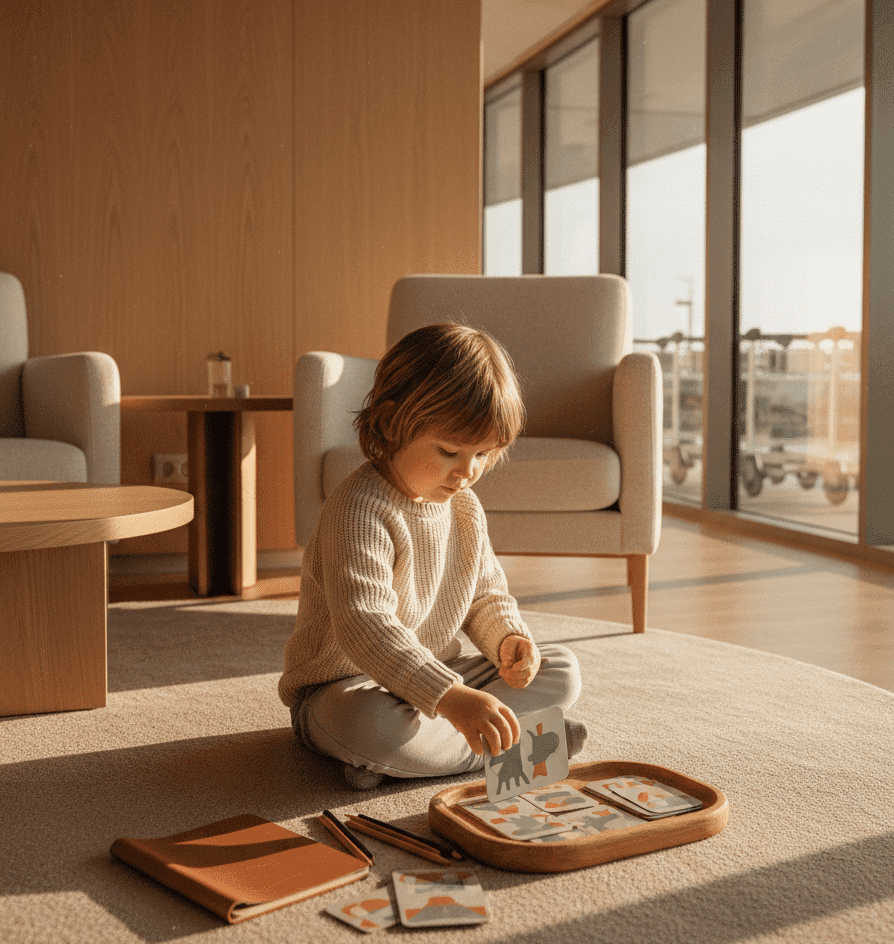
Building digital resilience is not about banning screens; it’s about giving kids the tools to navigate digital temptations safely and calmly with confidence. Research is clear: too much screen time, especially fast-moving content, can lead to cognitive fatigue, making it harder for children to focus, solve problems, or manage their emotions. Parents intuit this as “brain fog” :kids flitting from one activity to another, never settling, or unable to think clearly after a session of YouTube or games.
Digital resilience can’t come from avoiding technology altogether. We learn, practice, and build it together, day by day. Educating for mindful technology use is about more than timers. It’s about teaching kids to step back, observe how their minds and bodies feel post-screen, and communicate honestly about what supports their recalibration.
For 3–7 year-olds, this is most effectively learned in life, not by regulations. For instance, pause a video and inquire, “How’s your brain feeling at the moment?” Or, when a kid gets antsy at the dinner table, substitute a device for a straightforward hands-on project, and chat about how the rhythm has to feel different. These mini check-ins make digital literacy tangible and immediate, not theoretical.
Resilience in our digital world means helping kids rebound from overstimulation and discover what soothes their minds. They suggest cutting back on screen time, ditching hyper-distracting apps, and establishing tech-free rituals. This is only effective if parents participate. Kids mimic what they observe.
Families that openly discuss how screens may be affecting moods, attention, and sleep cultivate kids who detect these changes in themselves. Daily conversations are more important than once and done rules. Small steps, like “Let’s keep phones away during meals” or “Let’s see if we feel calmer after drawing instead of watching” cultivate a culture where healthy habits feel natural.
Community is at the heart of digital resilience. Families, schools, and communities all have to do their part. Research suggests that ages four to seven is a golden window for learning digital resilience, particularly through play and hands-on activities. This is why structure counts.
Tiny Thinks™ Workbooks, for example, are for the real moments: waiting rooms, car rides, and after school where screens usually win. These workbooks instill logic, focus, and problem-solving in a peaceful, screen-free manner, reclaiming attention and serene focus when kids need it most. The Free Calm Pack is a gentle way to start: simple, hands-on pages that children enjoy, with no pressure and no screens.
When families experience these side by side, they’re not simply passing hours. They’re cultivating a common vocabulary for control, regulation, and digital self-discipline.
Conclusion
Screen time brain fog in toddlers is not a buzzword; it’s a daily experience for many families, particularly with immediacy-driven experiences such as YouTube Kids. The science of fast, random-access content and its ability to diffuse attention and unsettle calm is significant. As with most things, the relief is in the taking of pragmatic action. Mini mind workouts think picture matches, basic patterns, or tactile pages encourage kids to press pause and concentrate, right in the thick of their hectic schedules.
Families see the difference quickly: fewer meltdowns, more quiet play, and easier transitions. Building digital resilience begins in these quotidian moments. With a peaceful, consistent routine, parents can assist their kids in busting the fog and rebooting grounded, reflective play at the dinner table, in the back seat, or settling down for bed.
With gentle structure and calm-learning tools, a screen time brain fog child can quickly regain clarity and ease.
The Free calm pack is often the first tool that helps a screen time brain fog child settle into quiet, focused attention again.
Age-specific Workbooks give a screen time brain fog child the steady, tactile structure their brain needs to reset after overstimulation.
Frequently Asked Questions
What is screen time brain fog in children?
Screen time brain fog, often linked to cognitive fatigue, is a state in which a child experiences mental sluggishness, cognitive fuzziness, or memory lapses due to excessive screen use. It impacts mood, memory, and attention.
How does excessive screen time affect a child’s brain?
Screen time brain fog child: This can decrease attention span, affect learning, and make it difficult for children to regulate emotions or concentrate.
Why is YouTube especially influential on young minds?
YouTube relies on rapid videos and compulsive suggestions. This can overstimulate young brains and makes it difficult for kids to stop watching or pay attention to other activities.
Are there signs that my child has screen time brain fog?
Yes. Typical symptoms are difficulty focusing, crankiness, headaches, and forgetting small things after prolonged exposure.
What practical steps can parents take to reduce brain fog?
Establish daily screen limits, promote outdoor activity, and implement device-free dining. Take screen breaks and discuss screen hygiene.
How can families build digital resilience together?
Parents of middle schoolers can build digital resilience by establishing common screen ground rules, modeling mindfulness, and communicating about their child’s online activity. This helps kids navigate screen time.
Is some screen time still safe for children?
Yes, healthy screen time for education and entertainment is fine. However, it is crucial to balance screen time with exercise, friends, and sufficient rest to prevent cognitive fatigue.