


Key Takeaways
- Working memory in children is the ability to hold information in mind long enough to use it while acting, not just to store it.
- A child who forgets an instruction halfway through a task is often showing a working memory limit, not defiance or poor listening.
- There is no fixed rule for how many directions a child should hold at once, but educators generally see two-step directions become manageable between ages four and five, growing toward three or more multi-step sequences by six or seven.
- Weak working memory can look like forgetting, losing your place, or needing constant reminders, and it can also appear alongside attention difficulties or, in some children, ADHD.
- Short, playful multi-step games that ask a child to remember, act, and check their own work give children a chance to practise holding information active, though they do not permanently change a child’s underlying memory capacity.
- Working memory is one of ten capabilities in the Pre-Seven Learning Method, a screen-free approach for ages 3 to 7 that builds thinking capabilities through small, calibrated missions before formal schooling begins.
Your child looks right at you, nods, and heads off to get their shoes. By the time they reach the hallway, they are holding one sock and staring at the wall, no idea what they were doing. You were three feet away. You said it once, clearly. And somehow it is already gone.
This is not a listening problem, most of the time. It is a working memory problem, and it is one of the most common and least understood parts of how young children think.
What working memory means in children
Working memory in children is the ability to hold a piece of information in mind long enough to use it while doing something else. It is different from simply remembering a fact. A child using working memory is holding an instruction, a rule, or a sequence active in their head while they act on it, and that holding takes real mental effort.
Picture a child told to put their cup in the sink, grab their backpack, and put on shoes. Remembering the words is easy. Holding all three steps active while walking to the kitchen, picking up the cup, grabbing the backpack, and still recalling the shoes at the end, that is working memory doing its job. It is less like a filing cabinet and more like a small mental workbench that can only hold so much at once before something slides off the edge.
How working memory differs from short-term memory
Short-term memory is passive storage. Working memory is active use. A child with strong short-term memory might repeat a phone number back to you perfectly. A child using working memory is doing something harder: holding that number in mind while dialing it, or holding a set of directions in mind while actually walking through them.
This distinction matters because a lot of parenting advice treats memory as one thing. It is not. A child can recite the words of an instruction back to you word for word and still lose the thread the moment they start moving. That gap between hearing and doing is exactly where working memory lives.
What weak working memory looks like at home
Most parents notice working memory struggles long before they have a name for them. It usually shows up as a pattern, not a single incident.
- You repeat the same instruction three times before breakfast is over.
- Your child starts a task, gets halfway, and stands there, having genuinely forgotten what comes next.
- Morning routines that should take ten minutes stretch into thirty.
- Homework turns emotional fast, because your child cannot hold the question and the steps to answer it at the same time.
- Two-step requests, like put your plate away and then wash your hands, reliably become one-step requests, because the second half disappears.
If this sounds familiar, you are not doing anything wrong, and your child is not ignoring you on purpose. Holding multiple pieces of information active while acting is a skill still under construction in the years before seven.
Why working memory matters for learning

Working memory is not a niche academic skill. It sits underneath most of what looks like following instructions or paying attention.
Reading comprehension depends on holding the beginning of a sentence in mind while reaching the end of it. Mental math depends on holding one number while operating on another. Following a teacher’s three-part direction depends on keeping all three parts active until the moment of acting on the last one.
A child who cannot yet do this reliably is not behind in intelligence. They are behind in a specific, learnable capacity that most classrooms assume is already in place by kindergarten (Alloway, 2006).
Research has also found that working memory is a strong predictor of academic attainment, often independently of IQ, which helps explain why difficulties with working memory can affect many areas of learning at once
This is also where independence lives. A child who needs an adult standing over them to complete every task is often not being defiant or lazy. They may simply be losing the instruction before they reach the end of the task, and asking again is the only way they know to get it back.
What is normal from ages 3 to 7
Working memory develops gradually and unevenly, and it looks different at each age.
- Ages 3 to 4: many children can reliably hold one rule or one instruction in mind while acting, such as put the blocks in the box.
- Ages 4 to 5: simple two-step sequences become manageable for many children, such as get your cup and bring it to me.
- Ages 5 to 7: many children begin combining instructions, checking their own progress partway through, and completing short multi-step tasks with less prompting.
There is no fixed, research-backed number for exactly how many directions a child of a given age should hold at once. Be cautious of any source that states one confidently. What is well established is the general direction of development: capacity for holding and using information grows steadily across these years, with wide variation between individual children. A four-year-old who needs an instruction repeated is well within typical range. A seven-year-old who still needs every single step restated may be worth a closer look, not because something is wrong, but because a small amount of targeted support tends to help.
When to worry about working memory
Most forgetting in young children is developmental, not a sign of a deficit. A few patterns are worth paying closer attention to, and mentioning to a pediatrician or teacher if they persist:
- Your child cannot hold even one simple instruction in mind for more than a few seconds, well past age five.
- Forgetting is paired with significant trouble sitting with a task, impulsivity, or difficulty with attention across many settings, which can sometimes be seen alongside ADHD.
- The pattern is getting worse over time rather than gradually improving.
- Forgetting is affecting friendships, confidence, or willingness to try new things.
A single calm conversation with your pediatrician is a reasonable next step if any of this feels persistent, not because something is necessarily wrong, but because it rules things out early. Working memory difficulty on its own is not a diagnosis, and most children who struggle with it simply need more practice holding information active, not a label.
The best activities for building working memory
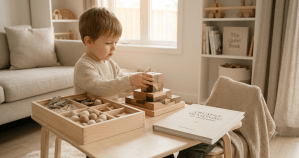
Working Memory Activities for Kids Ages 3–7 work best when they are short, playful, and embedded in something the child already wants to do. Long verbal instructions and repeated reminders tend to overwhelm rather than help. What tends to work instead:
- Simple sequence games: give two instructions at once, such as touch your nose then clap twice, and build to three as your child succeeds.
- Movement-based memory games: Simon Says naturally requires holding a rule in mind while acting, and adding a second rule increases the challenge.
- Repeat-it-back routines: ask your child to say the instruction back in their own words before starting, which forces the information to become active rather than passively heard.
- Visual step charts for routines: a simple picture sequence for mornings or bedtime reduces the memory load so a child can practise self-checking instead of just remembering.
- Cooking together: measuring, pouring, and following a short recipe naturally require holding a sequence and checking progress against it.
Reward charts alone tend not to fix forgetting, because the problem usually is not motivation. Apps and screen-based brain games have not reliably shown that improvement transfers to real daily tasks like getting dressed or following classroom directions. What tends to help more is short, repeated, real-world practice woven into things your child already does each day.
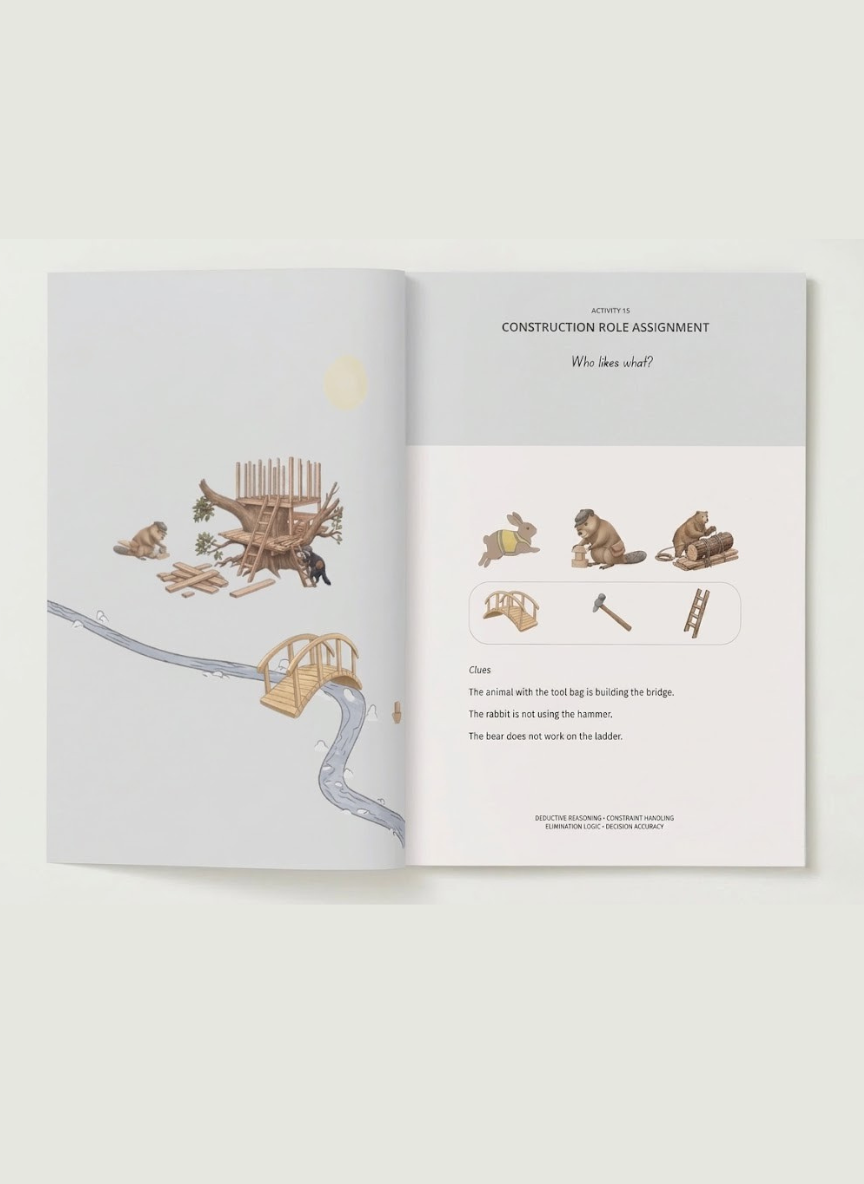
This is the kind of small, everyday practice Tiny Thinks designs around: not memory drills for their own sake, but short missions where a child has to hold, act, and check.
What Is The Pre-Seven Learning Method?
The Pre-Seven Learning Method is a four-stage, screen-free approach for children ages 3 to 7 that builds ten cognitive capabilities underneath learning and academics through small, calibrated thinking missions during the formative years before age seven.
Working memory is one of the ten capabilities the method is built around, and it develops alongside sustained attention, planning and self-control, and problem-solving, since holding an instruction in mind while acting almost always calls on more than memory alone. The method’s progression mirrors what actually happens in development: ages 3 to 4 focus on holding one rule, ages 4 to 5 on managing simple sequences, and ages 5 to 7 on combining instructions, checking progress, and finishing tasks with less prompting.
What parents should say during working memory practice
Language matters more than most parents expect here. A few small shifts that tend to help:
- Instead of repeating the same instruction louder, ask, what do you need to do first?
- After giving two steps, ask your child to repeat them back before starting, rather than assuming they heard.
- When a task is forgotten halfway through, resist finishing it for them. Ask, where did you get to? This builds the habit of checking their own progress.
- Praise the holding, not just the result: you kept both steps in your head, that was tricky.
Those small prompts turn ordinary routines into practice moments, which is often where working memory becomes most useful for a child.
The goal: a child who can hold, act, and finish
The real aim is not a child who never forgets. It is a child who can hold an instruction in mind, act on it, and check their own progress without an adult standing over their shoulder. Many families notice this shift arrives quietly, not as a dramatic before and after. One day a child pauses mid-task, glances back at what they have already done, and keeps going without being asked. That small pause, holding the instruction in mind while still finishing the task, is the whole skill working exactly as it should.
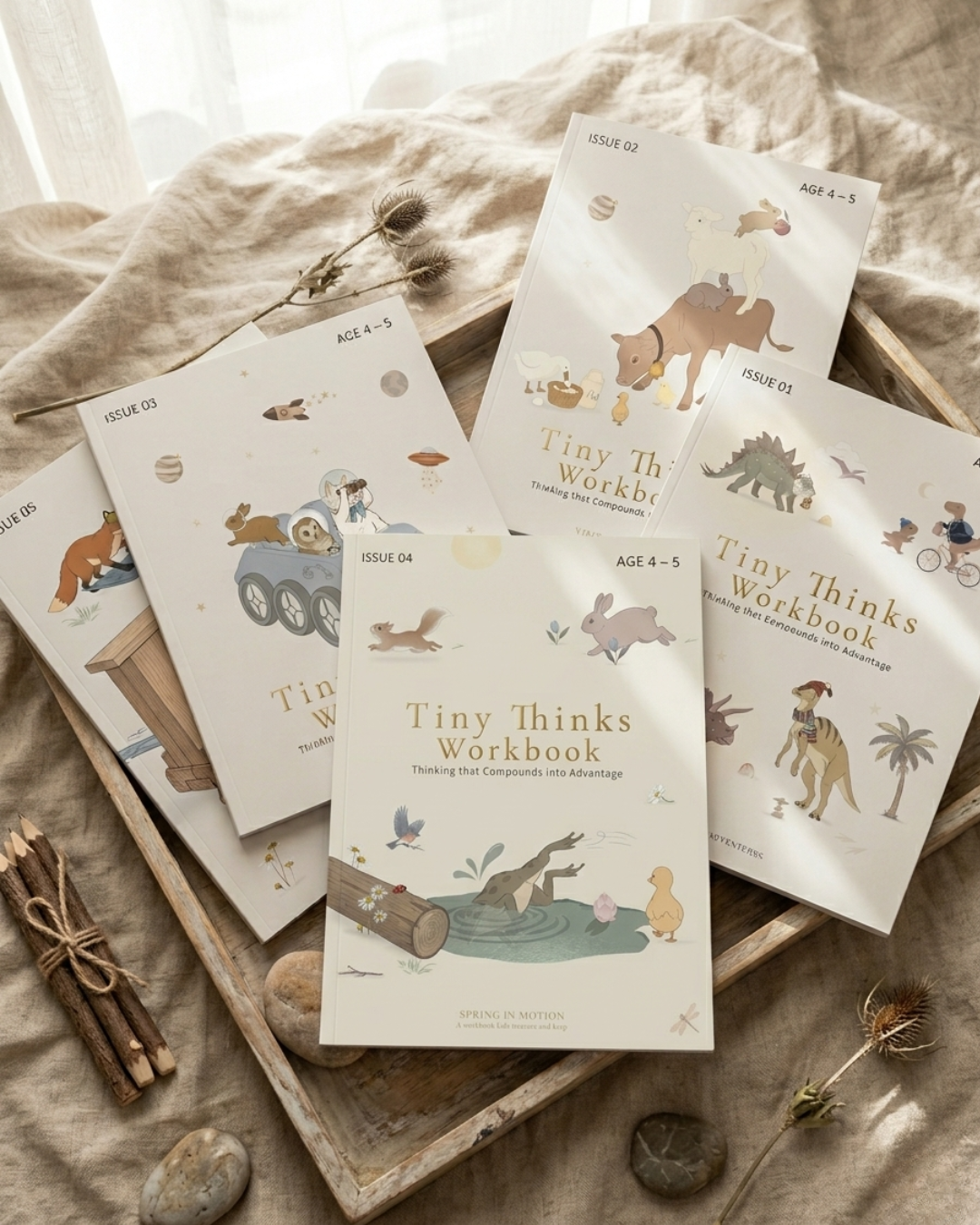
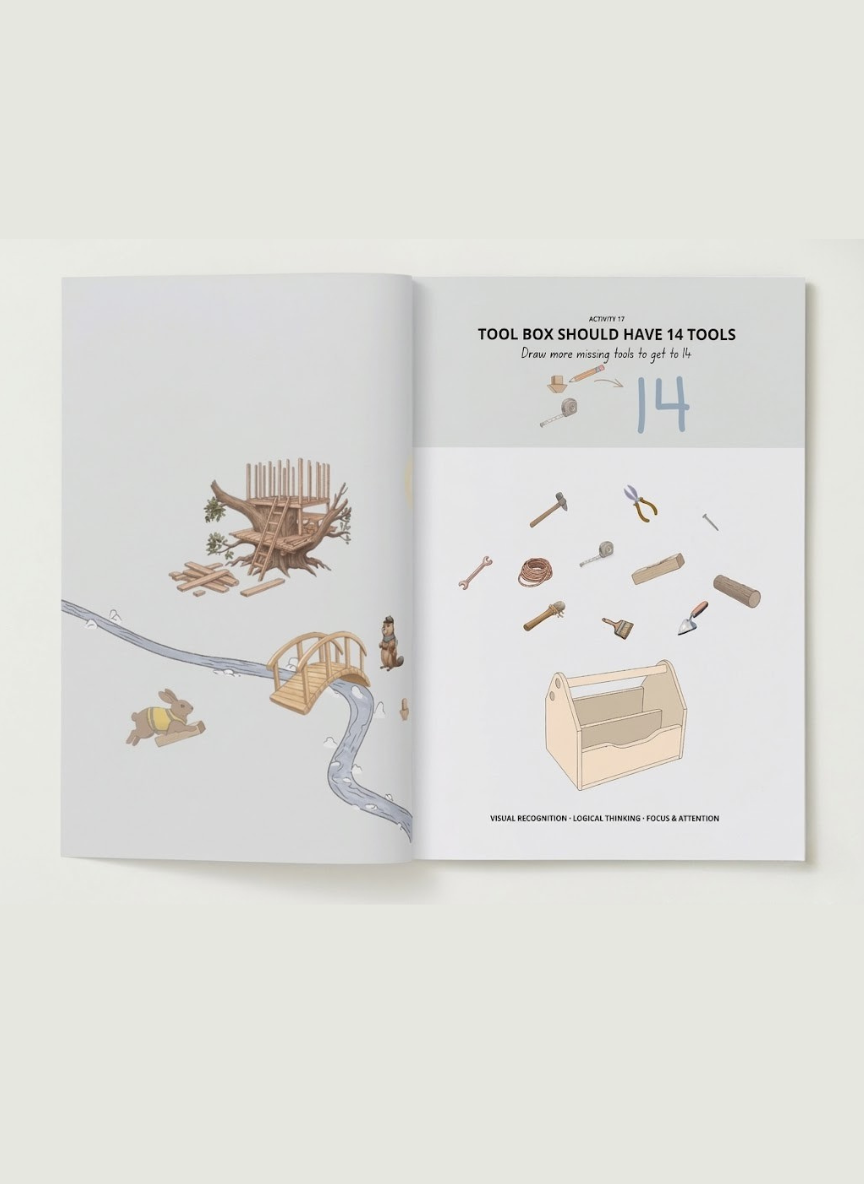
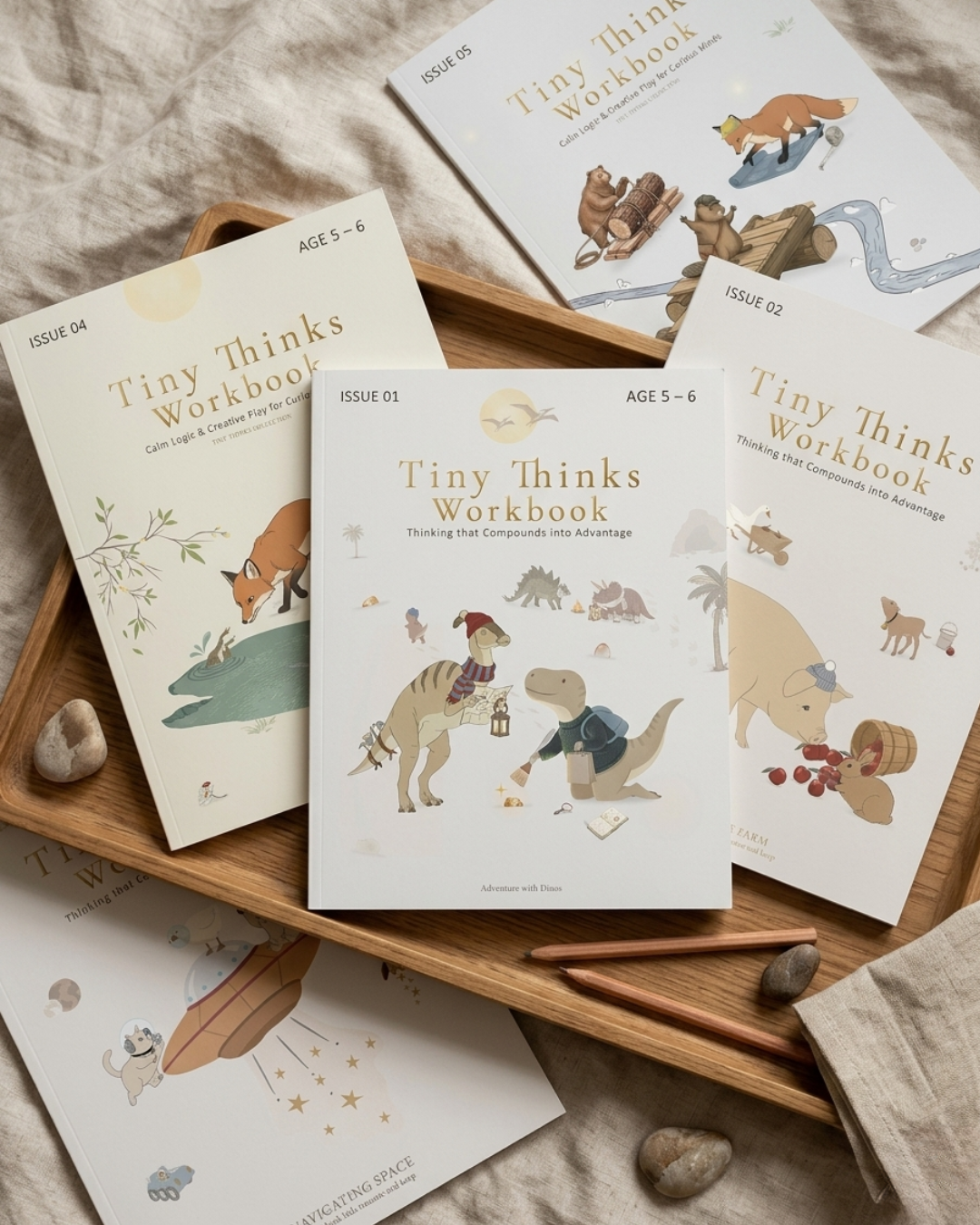
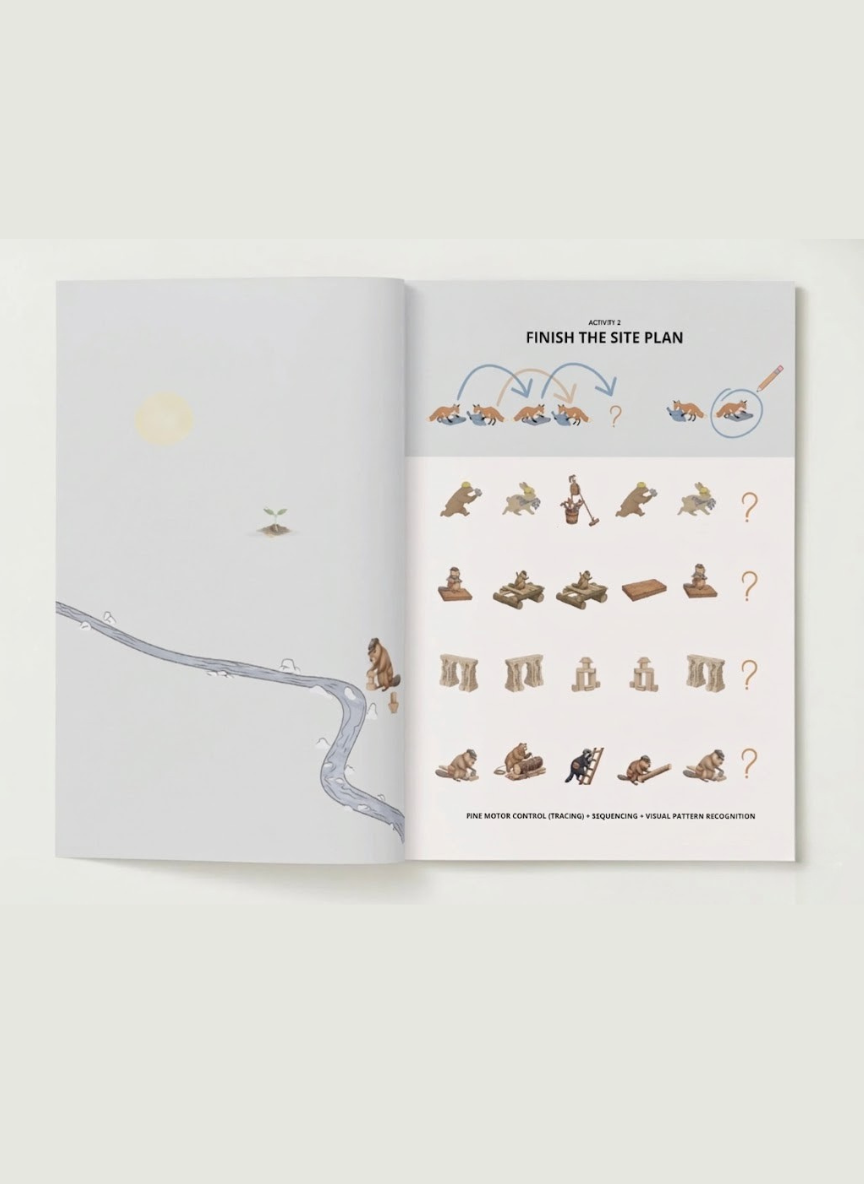
Tiny Thinks workbooks give children short, screen-free chances to practise holding instructions, following sequences, and checking their own progress through The Pre-Seven Learning Method. You can start gently with the Free Calm Pack, or explore the full range of Tiny Thinks workbooks for regular working-memory practice at home.
Frequently Asked Questions
What is working memory in children?
Working memory in children is the ability to hold information in mind long enough to use it while acting, such as remembering an instruction while walking to complete it.
How do I know if my child has poor working memory?
Signs include forgetting instructions moments after hearing them, losing their place partway through a task, and needing steps repeated far more often than peers of the same age.
Can working memory be improved in children?
Children can be given regular chances to practise holding and using information through short games and routines, which supports the development of this skill, though it does not permanently change underlying memory capacity. Everyday practice like this is what the Pre-Seven Learning Method focuses on in the years before seven.
What activities help working memory?
Short multi-step games, movement-based games like Simon Says, repeat-it-back instructions, and visual routine charts all give children practice holding information active while acting.
How does working memory affect learning?
Working memory underlies reading comprehension, mental math, and following classroom directions, since all three require holding information in mind while still working with it.
How many directions should a five-year-old remember?
There is no fixed research-backed number, but many five-year-olds can manage two connected steps, with three-step sequences becoming more manageable between ages six and seven.
Is forgetting instructions immediately normal for young children?
Yes, forgetting instructions quickly is common in children ages three to five and usually reflects a working memory system still developing rather than a lack of listening.
Should I get my child assessed for working memory problems?
A conversation with your pediatrician is reasonable if forgetting is severe, worsening over time, or paired with significant attention or impulsivity difficulties across many settings.
Does too much screen time cause working memory problems?
There is no established evidence that screen time directly causes working memory difficulties in young children, though screen-heavy routines can reduce opportunities to practise holding and acting on information.